
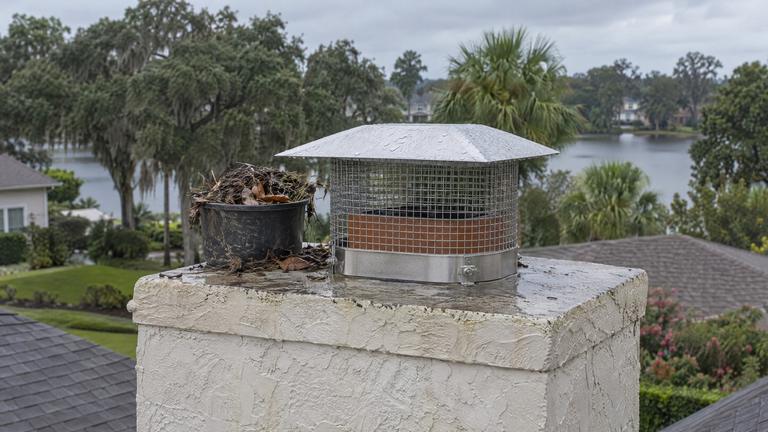
Animal removal from chimneys in Andover Lakes
Heard something in the chimney? Tell our Andover Lakes team what you heard and when, and we take it from there.
- Licensed & insured
- Locally run
- Family owned and operated
- Same-day service available



What your Andover Lakes chimney animal estimate covers
- Rules that apply to that animal, explained
- Smoke shelf cleared and checked
- Crown or chase cover gaps noted
- Cap fitted only after the flue is empty
What goes into chimney animal removal in Andover Lakes
Chimney swifts are protected birds
Chimney swifts nest inside chimneys, gluing small twig nests to the flue wall. The U.S. Fish and Wildlife Service notes they are protected under the Migratory Bird Treaty Act, which covers the birds, their eggs and active nests. That means an active swift nest stays put. We confirm what is nesting before anyone disturbs it, and the chimney is cleaned and capped after the birds leave for the season. Once the birds have left, removing the old nest and capping the flue is lawful and keeps the chimney clear.
Cracks in the crown around the flue
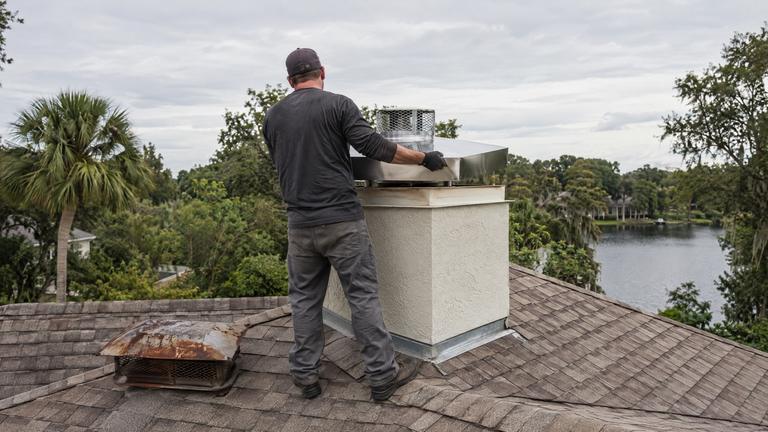
The crown is the concrete or mortar top that closes a masonry chimney around its flue. Cracks and gaps there let water in, and larger openings can give small animals a way into the chimney structure even under a cap. We look at the crown whenever we fit a cap. Sealing small cracks or rebuilding the crown is chimney crown repair and appears as its own line on the estimate. A cap sitting on a failing crown can also loosen over time, which reopens the route the cap was meant to close.
Another appliance venting through the chimney
Some chimneys carry more than one flue, and one of them may serve another appliance in the house. A nest in that flue matters as much as one above the fireplace. Mention every appliance that vents through the chimney when you call. We check each flue for nests and debris, and a blocked appliance flue goes to the top of the list for cleanup. Keep that appliance off if we advise it until its flue has been cleared.
Living with a new screened cap
A screened cap needs little attention, though it is not maintenance free. On a wood-burning chimney, the screen collects soot and should be checked during each sweep. After a storm, look at the cap from the ground to make sure it is still seated. If you hear sounds in the chimney again, call us before lighting a fire, so we can see what changed. Problems with a new cap usually show from the ground as a tilt, a gap or a torn screen.
Other work in Andover Lakes
-
-
-
-
-


Learn more about chimney animal removalAndover Lakes services
What Andover Lakes owners ask about animals in chimneys
Can I clean up the droppings myself?
It is better to leave them. The CDC notes that histoplasmosis spreads through spores in bird and bat droppings when they are disturbed. We remove and bag droppings with care as part of the cleanup.
Do you need access to the roof?
Usually. Most of the assessment and all of the cap work happen at the chimney top, so we need safe roof access. We also look from the firebox and tell you if any part has to wait for a second visit.
Request your free estimate
Share the job details and arrange a free inspection with our local team.
- Free inspection
- No hidden fees
- Family owned and operated
Need an answer now? Call (352) 675-6376
Your request is received
Thank you. We will contact you to discuss the job and confirm an appointment.