
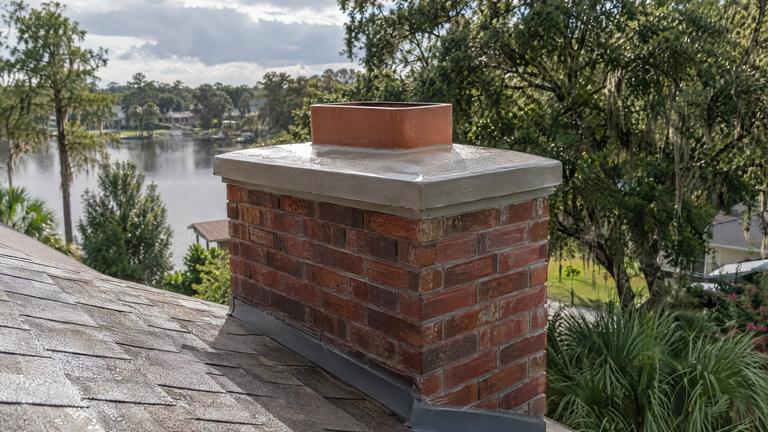
Chimney crown repair in Avalon Park
Crown coating when the concrete is sound, a new cast crown when it is failing. Your free inspection tells you which one fits.
- Licensed & insured
- Locally run
- Family owned and operated
- Same-day service available



Your crown repair estimate, line by line
- Crack mapping across the whole crown surface
- Bond break and sealant joint at each flue
- Crown coating where the concrete is sound
- Workmanship warranty on the finished crown
Chimney crown repair, explained for Avalon Park homeowners
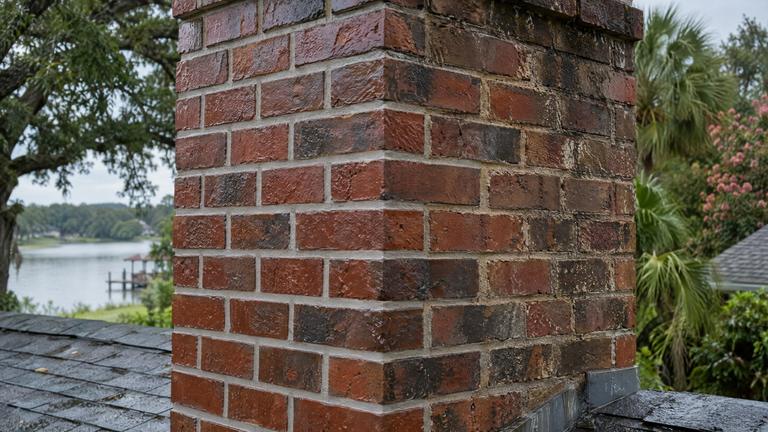
Loose brick under a failed crown
Water coming through a cracked crown for a long time loosens the top few rows of brick. The mortar washes out, the bricks shift, and a new crown would have nothing solid to sit on.
If we find loose brick at the top, we relay those courses before casting the new crown. That work goes on the estimate as masonry, separate from the crown itself, so you see what each part involves. The same local crew handles both, so nothing falls between two contractors.
Relaid courses use a mortar suited to the existing brick where practical, so the repair blends in. Once those courses have set, the crown forms go on and the job continues. Your estimate shows how many courses we expect to relay, based on what the inspection found.
Crowns on stone chimneys
Stone chimneys have irregular tops, and crowns on them often end up thin in some spots and thick in others. The low spots hold water and the thin spots crack first.
Our crown pros build the forms to the stone's shape so the new crown keeps a steady thickness and slope. If loose stones at the top need resetting first, that is listed separately. The free inspection gives you both answers at once.
Stone tops often have deep joints that hold water. Where the crown meets irregular stone, our crew fills and shapes the bedding so the crown sits solidly with no hollow pockets underneath, which keeps it from rocking or cracking over uneven support.
Checking the crown after a storm
Strong wind can knock a loose piece off a crown, and falling branches can crack it. After a big storm, look up at the chimney top from the yard. A missing corner, a new crack or chunks on the roof are all worth a phone call.
Please stay off the roof. Our crew checks the crown up close, along with the cap and flashing, and tells you whether it needs attention now or can wait. Same-day inspection slots are available when the schedule allows.
If a storm damaged the crown badly enough that pieces fell into the flue, stop using the fireplace until it has been checked. Debris can block the flue, and a broken flue tile needs repair before the next fire. Our technician checks both during the storm visit.
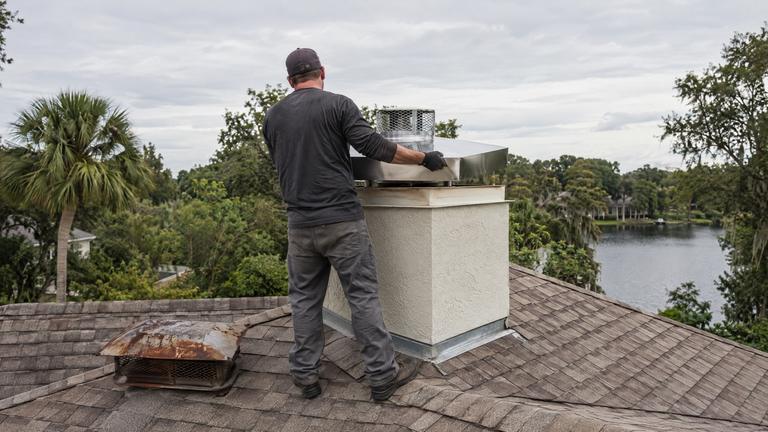
Crowns around a stainless liner top plate
When a metal liner has been installed in a chimney, it usually ends in a top plate that sits on the crown or the flue tile. The plate and the crown have to be sealed together so water cannot run down between them.
Our technicians check that seal during every crown inspection. If the crown is being recast, the liner top is protected during the work and resealed afterward. The estimate notes the liner connection so nothing gets overlooked.
Metal liners also expand and contract with heat, so the seal between the top plate and the crown needs some give. Our crew uses a sealant suited to that movement and checks that the rain cover on the liner is secure.
Other work in Avalon Park
-
-
-
-
-


Crown repair questions we hear often
How can you tell a crown leak from a flashing leak?
Water from a cracked crown tends to show up inside the flue or the firebox, while flashing leaks usually stain the ceiling or wall beside the chimney. Both can happen at once. Our technician checks the crown, the cap, the flashing and the brick during the free inspection and tells you which one is letting water in.
How soon can I use the fireplace after a new crown?
It depends on the material. A coating needs dry hours to set, and a newly cast crown needs time to cure before a hot fire runs beneath it. We give you the waiting time for your product in writing at handover.
Request your free estimate
Share the job details and arrange a free inspection with our local team.
- Free inspection
- No hidden fees
- Family owned and operated
Need an answer now? Call (352) 675-6376
Your request is received
Thank you. We will contact you to discuss the job and confirm an appointment.