
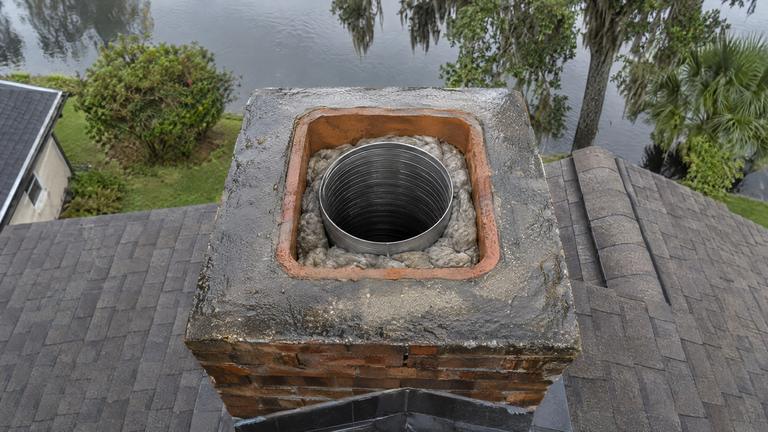
Insulated chimney liners installed in Baldwin Park
A liner sized to your appliance and proven through your flue before ordering. Free inspection from our local family-owned team in Baldwin Park.
- Licensed & insured
- Locally run
- Family owned and operated
- Same-day service available



Line by line, your liner proposal in Baldwin Park
Every line below is confirmed at the flue of your Baldwin Park home before a liner is ordered.
- Liner length from base to top
- Crown condition under the top plate
- Permit requirements for the job
- Product details left for your records
Relining explained for Baldwin Park homeowners
Questions every Baldwin Park homeowner deserves answered before a flue is relined.
A closer inspection comes before relining
NFPA 211 lists the relining of a flue, or replacement of flue lining, among the circumstances that call for a more thorough inspection. That means examining the accessible parts of the chimney inside and out, including areas reached through the attic, before the proposal is final.
We do that work first, so the liner is chosen for the chimney that is actually there rather than the one it appears to be from the roof. It also surfaces clearance, masonry and crown questions early, while they can still be planned into one visit instead of discovered halfway through the installation.
The cap at the end of the liner
A listed top kit pairs the top plate with a rain cap made for the liner. It keeps rain and debris out of the flue opening while leaving the gases a clear way out.
The liner cap is part of the relining system and separate from a chimney cap that covers a whole crown. We explain which one your chimney will have, and whether both can sit together. When a chimney cap is also wanted, we check that it clears the liner cap and does not trap it.
No change in flue shape at the roof line
Section R1003.6 says the chimney wall or flue lining shall not change size or shape within 6 inches above or below where the chimney passes through floor, ceiling or roof components.
When a relining plan involves a transition, an adapter or an oval section, we keep it clear of those zones and show where it falls on the route. That is one more reason the route is mapped before ordering, since the location of a transition is fixed by the chimney, not chosen on the day.
Rust streaks below an old liner top
Rust running down the crown or the masonry below a metal liner top can come from a failing cap, corroded clamps or a liner not suited to its appliance. The streak shows where to look, not what failed.
We check the cap, plate, clamps and liner end, and tell you which part needs attention. Sometimes a single part can be replaced, and sometimes the corrosion reaches the liner itself, in which case replacement of the whole system is the honest recommendation.
Other work in Baldwin Park
-
-
-
-
-


Learn more about chimney liner installation and reliningBaldwin Park services
Related chimney liner work
Chimney liner questions from Baldwin Park
What Baldwin Park homeowners ask us before a flue is relined.
How do you choose the liner size?
From the appliance first. For a stove we follow its outlet size or the maker's instructions, and for an open fireplace we measure the opening. We then check that size against the chimney route before anything is ordered.
Do I need to be home during the installation?
Someone needs to give us access to the fireplace or appliance area, since the job connects inside the house as well as on the roof. We agree on a time that suits you when we schedule.
Request your free estimate
Share the job details and arrange a free inspection with our local team.
- Free inspection
- No hidden fees
- Family owned and operated
Need an answer now? Call (352) 675-6376
Your request is received
Thank you. We will contact you to discuss the job and confirm an appointment.