
Stainless steel chimney liner installation in Belle Isle
Belle Isle homeowners save 10% on work booked within 72 hours after the free inspection. Relining starts with a free inspection and a written estimate.
- Licensed & insured
- Locally run
- Family owned and operated
- Same-day service available



Line by line, your liner proposal in Belle Isle
Every line below is confirmed at the flue of your Belle Isle home before a liner is ordered.
- Appliance type, fuel and outlet size
- Liner length from base to top
- Insulation, marked required or optional
- Tee, adapter or other base connection
Relining explained for Belle Isle homeowners
Where the code, the product and your appliance meet, on a relining job in Belle Isle.
Liquid fuel and solid fuel never share a liner
One liner maker states that an appliance burning a liquid fuel must not be connected to a chimney liner used to vent a solid-fuel appliance. It is a firm rule written into the instructions, not a preference.
We ask what burns in each connected appliance before proposing a layout, and we keep each flue to the use its listing allows. If two appliances would conflict, we explain the options in writing, such as separate flues or a change of appliance, and leave the choice with you.
How the installation day runs
Relining day follows a set order, and we tell you the plan the day before, including when the fireplace and the roof will be in use and roughly how long each stage takes for your chimney.
- The flue and smoke chamber are cleaned
- The route is proven with a test piece or guide cone
- Insulation, where required, goes on the liner
- The liner is lowered from the top
- The base connection is made and checked
- The top plate and liner cap are fitted and fastened
Questions worth asking before you approve relining
A sound relining proposal should answer each of these clearly. If one of them gets a vague answer, ask again, since each one affects how the liner performs or what the job includes.
- What finding makes the current lining unsuitable?
- Which listed product is proposed, and at what size?
- Is insulation required, or only recommended?
- What preparation happens before the liner goes in?
- Which old parts stay, and which come out?
- Which separate repairs, if any, are recommended?
Sealing the chimney top around the liner
The top plate closes the gap between the liner and the flue opening. One manufacturer describes fastening it to the masonry with silicone or masonry screws once the liner is clamped.
A tight, sealed top keeps rain out of the space around the liner, which is why the surface under it has to be sound. We check the seal at handover and again at the next yearly inspection, since this is a likely place for water to find its way in if anything has shifted.
Other work in Belle Isle
-
-
-
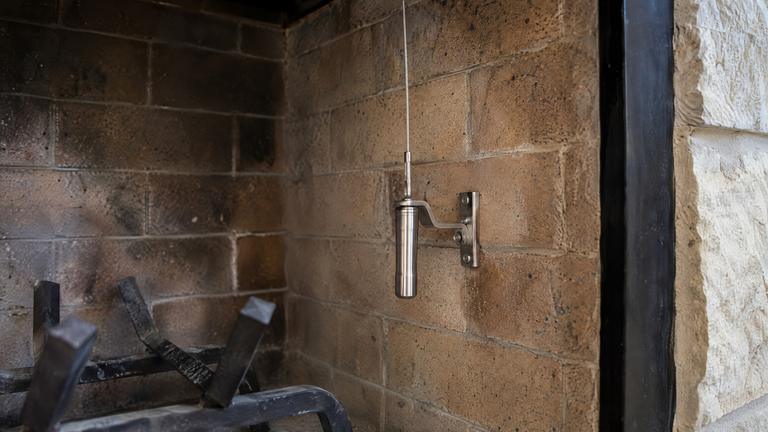


- Ventless Gas Fireplace ServiceService the unit within its exact installation limits.
- Fireplace RestorationBring an unused fireplace back with a coordinated plan.
- Stone Chimney RepairKeep stone repairs suited to the existing masonry.
Learn more about chimney liner installation and reliningBelle Isle services
Related chimney liner work

Before your relining in Belle Isle
Straight answers on relining from our Belle Isle team. Call if yours is not here.
What happens to my fireplace during relining?
We protect the hearth and nearby floor, keep the opening covered while we work above and clean up afterwards. The fireplace cannot be used again until the installation is finished and checked.
Will a new liner change how my chimney is swept?
It changes where the sweep works and where soot comes out. We show you the cleaning access and leave the product's care instructions for the next sweep.
Request your free estimate
Share the job details and arrange a free inspection with our local team.
- Free inspection
- No hidden fees
- Family owned and operated
Need an answer now? Call (352) 675-6376
Your request is received
Thank you. We will contact you to discuss the job and confirm an appointment.