
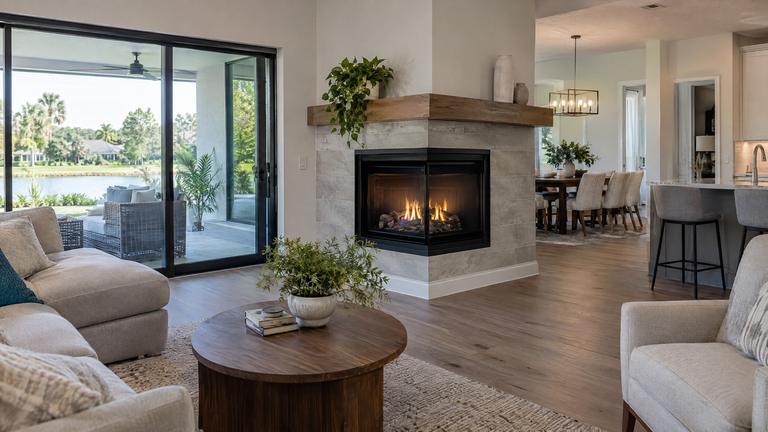
Gas log installation sized to your Catalina fireplace
Gas log installation from a local family team that answers the phone, inspects for free and stands behind the work with a satisfaction guarantee.
- Licensed & insured
- Locally run
- Family owned and operated
- Same-day service available



Your free gas log inspection in Catalina looks at
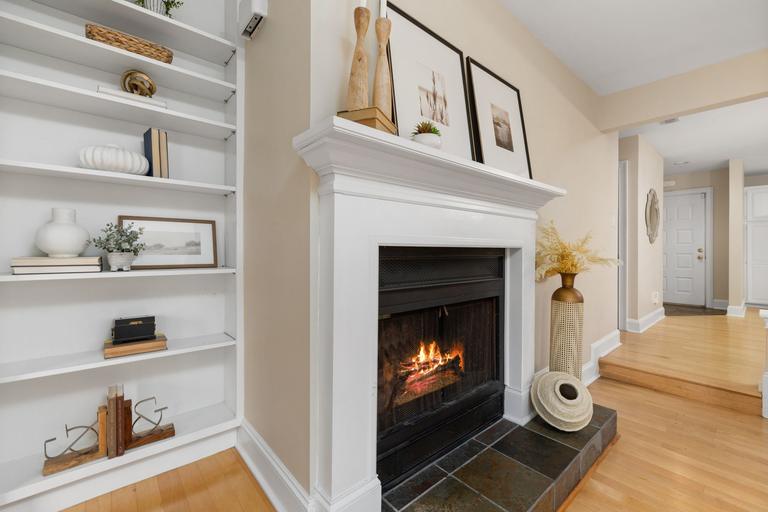
Checked in the firebox, at the damper and at the gas supply in Catalina, so the set you approve suits the fireplace you have.
- Fireplace type and whether it suits a log set
- Sand or vermiculite matched to the gas type
- Noncombustible facing and mantel clearance
- Outside air ducts or clean-out doors closed if required
Our approach to gas logs in Catalina
Useful to know before you approve a log set for your Catalina fireplace.
Placing each log by the diagram
Every log set comes with a placement diagram, and flames that strike a log in the wrong place leave soot. One maker allows some flexibility in placement to suit your taste, as long as significant sooting does not occur.
If black carbon keeps building on a log, the same manual calls it a sign of incomplete combustion and says to move that log so the flame touches it less. Our installers set the logs to the diagram and show you which ones not to move.
Downdraft and the height of the chimney
Wind swirling around a roof can push exhaust back down a short chimney. One log set maker lists poor draft or downdraft as a cause of smoking and sooting and asks for the chimney to be at least 3 feet taller than anything within 10 feet of it in all directions.
The same manual suggests a chimney cap or a fan may help where that height is not met. Our specialists look at the chimney and its surroundings before a vented set goes in and explain the options in writing.
Closing outside air ducts and clean-out doors
Air that leaks in through the bottom of a fireplace can blow out a pilot or disturb a flame. One vent-free manual requires any outside air ducts in the fireplace to be permanently closed when the set is installed.
It also asks for fresh air vents and ash clean-out doors on the floor or wall of the fireplace to be sealed with a heat-resistant sealant, while the chimney flue damper itself is never sealed. Our installers do all of that as part of the job.
Gas pipe sized for the burner
Pipe that is too small or too long starves a burner. One maker says the gas piping must be sized to provide the minimum inlet pressure at the set's maximum flow, with a supply pipe of at least 1/2 inch inside diameter.
The same manual adds that a line longer than 20 feet may need a larger diameter and points to NFPA 54 for the details. Our pros look at the existing line and tell you whether it suits the set before anything is ordered.
Taking out an old gas log set
Replacing a set means removing the old burner, logs, media and embers without leaving debris in the firebox. The old connection is shut off and made safe before anything is lifted out.
Our crew lists removal and disposal on its own line of the estimate. If parts of the old installation are reusable under the new set's manual, such as a sound shutoff valve, we say so and explain how that affects the price.
Other work in Catalina
-
-
-
-
-
-


Questions Catalina homeowners ask before gas logs
Straight talk on log sets from our specialists in Catalina, and no pressure to book.
Why does the damper have to stay open with gas logs?
The exhaust from a vented set rises up the chimney, which means the flue has to stay open. One maker ships a clamp that is fixed to the damper for good and wants the damper fully open any time the set is lit. Vent-free sets have their own rules in their own manuals.
Is the gas line part of the job?
New gas piping is separate work for a qualified gas contractor, and it appears as its own line on the estimate. Before that, our crew checks what the log set manual asks of the supply, such as the minimum pipe size and inlet pressure.
Request your free estimate
Share the job details and arrange a free inspection with our local team.
- Free inspection
- No hidden fees
- Family owned and operated
Need an answer now? Call (352) 675-6376
Your request is received
Thank you. We will contact you to discuss the job and confirm an appointment.