
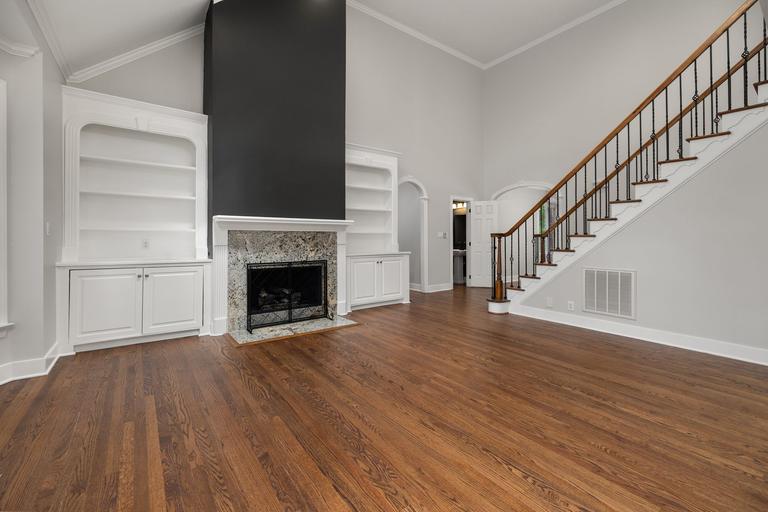
Family-owned chimney chase repair in College Park
Same-day chase inspections when available for College Park homeowners, plus a written repair plan you keep.
- Licensed & insured
- Locally run
- Family owned and operated
- Same-day service available



Each chase repair line, spelled out in College Park
- Moisture readings across each face of the chase
- Tap test for hollow or loose stucco
- Two-layer barrier behind stucco on wood sheathing
- Ladder, roof anchor or scaffold access
Our approach to chase repair in College Park
Carrying the barrier to the top of the chase walls
The top of a chase is where the barrier often goes wrong. Florida's code, in R703.2, calls for the barrier to run continuous to the top of walls and to be finished at penetrations so the wall stays weather-resistant. On a chase, that top edge sits right under the metal cover.
If the barrier stops short of the top plate, water that gets past the cover edge lands on bare sheathing. If it ends in a way that lets water track behind it, the result is the same.
With the upper siding off a chase in College Park, our crew runs the barrier up to the top plate and laps it so water sheds onto it, not behind it. That detail disappears once the siding is back, which is why it gets checked before the first board goes on.
Fiber-cement siding joints on a chase
Fiber-cement siding holds up well on a chase when its joints get the right detail. For panels, R703.10.1 puts vertical and horizontal joints over framing and protects them with caulking, battens, flashing or shiplap. For lap siding, R703.10.2 protects the ends with caulking, an H-section joint cover or a strip of flashing behind the joint. Fasteners follow the code table or the maker's instructions.
An unprotected joint lets water reach the cut edges and the sheathing behind them. Face nails driven too deep break the surface and give water another way in.
We cut and seal new fiber-cement pieces as the maker directs, protect the joints and set nails flush. Paint follows soon after installation, so no bare edge is left out in the weather. The estimate names the siding product and the joint detail we will use. Where old and new pieces meet, the joint is detailed the same way, so the patch does not become the next leak.
Approving added work before it is done
Hidden damage is part of chase work. Once the siding is off, the rot may reach further than the probe showed from outside. What matters is how that news reaches you. A careful probe narrows that risk, but it cannot see through sound siding into a soft stud.
Our rule is simple. If opening the chase shows more damage than the estimate covers, we stop, show you what we found and write up the added work with its price. Nothing extra happens until you approve it.
The change is added to your written estimate, so the final bill matches what you approved line by line. If you choose to stop at the approved work, we close the chase properly and note what was left. The written change covers these points.
- What we found and exactly where
- The added materials and labor, with a price
- How the change affects the schedule
- What happens if you decide to wait
Water or rust inside a factory-built firebox
In a factory-built fireplace, water from a leaking chase can run down the chimney pipe and into the firebox. Signs include rust streaks on the metal walls, damp ash, water marks on the refractory panels or a musty smell after rain. The leak may only show after long or wind-driven rains, which makes it easy to miss.
The metal parts of a factory-built firebox are not meant to be soaked again and again. Repeated wetting can rust them badly, and then the fireplace itself may need parts, which is a bigger job than stopping the leak.
When you see water in the firebox, stop using the fireplace until the source is found. Our crew traces the water from the top of the chase down, repairs the chase along that path, and notes any firebox damage for a separate fireplace estimate. Water that reaches the firebox has often sat in the chase for a while first.
Other work in College Park
-
-
-
-
-
-


Quick answers on chimney chase repair
Do I need a new cover on top when the chase is repaired?
Only if the cover has failed or no longer fits the repaired top. When it has, the cover goes on its own estimate line and is installed after the top framing is sound. If the cover is in good shape, we take it off carefully and put it back.
Can you match my existing siding or stucco?
We match profile, texture and color as closely as the materials allow, and we tell you before the job how close that will be. When an exact match is not available, we price options like re-siding one full face or painting the whole chase.
Request your free estimate
Share the job details and arrange a free inspection with our local team.
- Free inspection
- No hidden fees
- Family owned and operated
Need an answer now? Call (352) 675-6376
Your request is received
Thank you. We will contact you to discuss the job and confirm an appointment.