
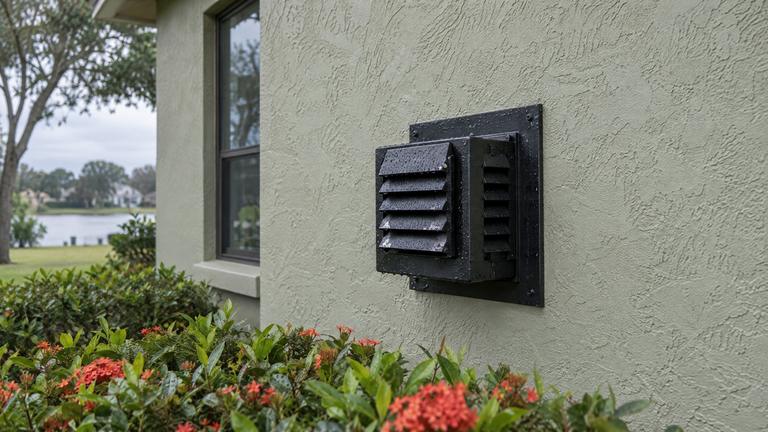
Your local gas fireplace venting team in College Park
New deck, new window or new roof near the vent in College Park? We check the clearances free and tell you plainly whether anything has to move.
- Licensed & insured
- Locally run
- Family owned and operated
- Same-day service available



Checked on every vent visit in College Park
Each point below is measured or checked at your College Park home and matched to the fireplace manual before it reaches your estimate.
- Every reachable joint checked for seating and seal
- Rise or level run of horizontal pipe against the manual
- Listed replacement parts named for your model
- A written record of the vent for the next service
Gas fireplace venting details that matter in College Park
How a vent repair unfolds in College Park, and where your choices come in.
Room to breathe in front of the cap
A sealed fireplace pulls its combustion air in at the cap, so the space in front of the cap matters. One direct-vent manual keeps a 24 inch zone in front of the termination hood free of shrubs, garden sheds, fences, decks and utility buildings.
Yards change. A hedge fills in, a shed gets delivered, a gate goes in. Our crew measures that 24 inch zone on every sidewall vent and tells you exactly what has to move.
- Bushes and hedges
- Garden sheds and utility buildings
- Fences and gates
- Decks built after the fireplace
Vinyl siding near a vent cap
Vinyl siding has less tolerance for heat than masonry or stucco. In one maker's alcove figures, the minimum distance from a cap to a vinyl sidewall is 12 inches, against 2 inches for other sidewall materials.
Alcoves are spaces open on only one side with an overhang, and the same manual permits caps there only within its listed dimensions. Our crew identifies the siding, measures the alcove and explains whether the cap can stay or needs a different location.
A new window or door near an existing cap
Window and door upgrades often change openings near a fireplace. The Florida fuel gas code table sets the minimum distance from a direct-vent cap to a window or door that opens, and it grows with the fireplace's input.
Our pros read the input from the rating plate, measure the planned opening and tell you whether the window or door plan works as drawn. When it does not, the estimate shows the vent change next to the window work, so you can compare the options.
Re-siding the wall around a vent
New siding changes the surface a sidewall cap mounts to, and often its thickness. One maker says terminals must not be recessed into a wall or siding, and its alcove figures ask for more room next to vinyl than next to other sidewall materials.
Our technicians check the cap's position against the finished wall after re-siding, confirm the seal around the pipe and list any wall extension parts your manual allows. Siding work itself stays with the siding contractor.
A new roof around a vertical vent
Reroofing disturbs everything at a vertical gas vent, from the flashing to the storm collar to the cap. Section 503.6.7 of the Florida fuel gas code calls for gas vents to pass through a roof flashing, roof jack or roof thimble and end with a listed cap or listed roof assembly.
A generic cap from the roofing supply is not always the listed one. Our crew checks the cap, the collar and the height above the new roof surface and replaces what does not belong.
Other work in College Park
-
-
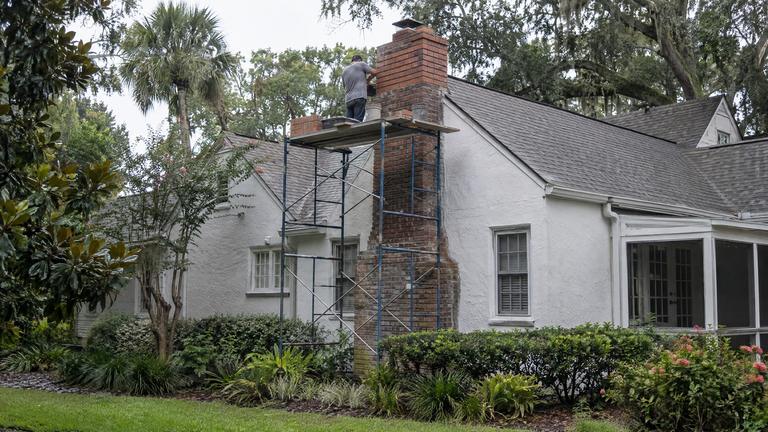


- Smoke Chamber RepairRepair the transition above the fireplace opening.
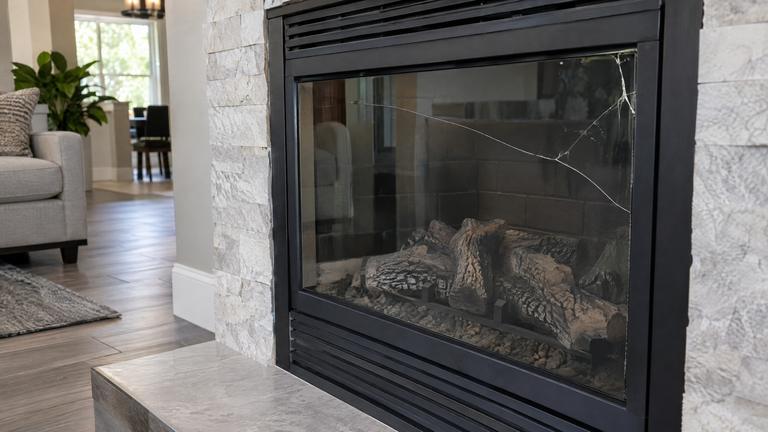
- Fireplace RestorationBring an unused fireplace back with a coordinated plan.
- Prefab and Zero-Clearance Fireplace RepairRepair the fireplace according to its model.
- Ventless Gas Fireplace ServiceService the unit within its exact installation limits.
Fireplace vent questions from College Park, answered
Not seeing your question? Our College Park vent crew will answer it over the phone.
Can a gas fireplace share a vent with another appliance?
No. One maker's direct-vent manual says each gas appliance needs its own vent system and that the vent must never be attached to a chimney serving a separate solid-fuel appliance. A shared vent is also a listed cause of poor draft on natural-vent units.
What does a B-vent fireplace need from its vent?
Type B pipe listed to UL 441, a listed cap and enough height. The Florida fuel gas code asks for the vent to end at least 5 feet above the draft hood, and the manual adds limits on offsets, elbows and slope.
Request your free estimate
Share the job details and arrange a free inspection with our local team.
- Free inspection
- No hidden fees
- Family owned and operated
Need an answer now? Call (352) 675-6376
Your request is received
Thank you. We will contact you to discuss the job and confirm an appointment.