
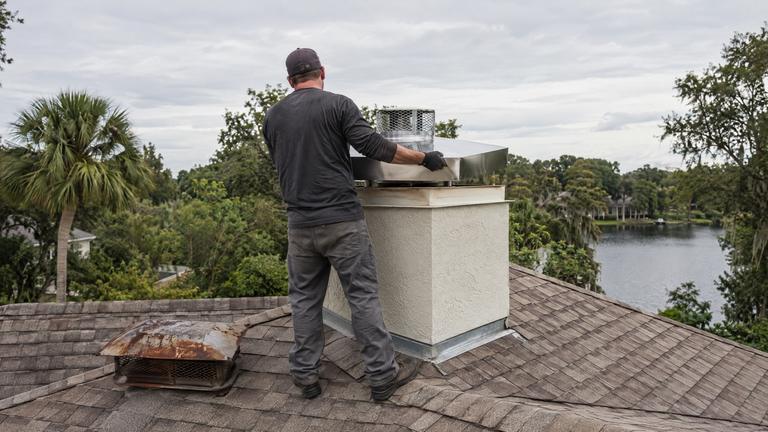
Honest chimney chase repair for Conway homes
Framing, sheathing, barrier, flashing and finish, each priced on its own line before a single board comes off.
- Licensed & insured
- Locally run
- Family owned and operated
- Same-day service available



Siding to framing, what gets priced
- Two-layer barrier behind stucco on wood sheathing
- Cricket behind a wide chase where needed
- Seam and flashing where the chase meets the house
- Air space around the chimney pipe kept clear
What goes on inside a chase repair in Conway
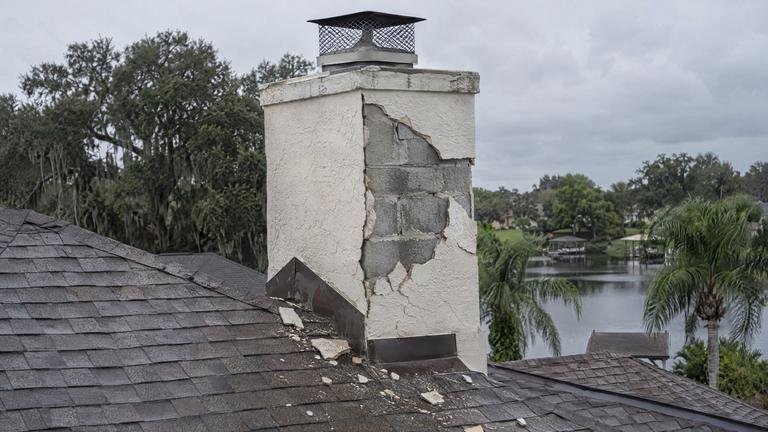
Open siding joints that let rain behind the finish
Siding on a chase takes wind-driven rain on all four sides, and the joints are the weak spots. Butt joints, where two boards meet end to end, open up as the boards dry and shrink. Nail holes near those ends can let water into the board itself. Joints in the lowest course and just under the top tend to take the most water.
Once water is behind the siding, the barrier underneath has to carry it down and out. If that barrier is torn or missing, the sheathing takes the water instead.
On a chase in Conway, our crew looks at every joint on every face, including the side nobody sees from the street. Open joints on sound boards can be sealed or backed with flashing. Boards that are swollen or split at the ends are replaced, and the barrier behind them is checked before new siding goes up.
Peeling paint and what it says about the wall
Paint peeling off a chase is more than a cosmetic problem. Paint tends to fail from behind, when water in the wood or sheathing pushes it off. Blisters and peeling that come back soon after repainting point to water getting in somewhere. On a chase, peeling tends to start at the base, under trim ledges and just below the top.
Painting over a wet chase traps the moisture and hides the rot for another season. The next coat often fails sooner than the last one did. It also makes the next repair harder to read, because fresh paint hides the stains that show where water has been.
Our crew probes the wood behind any peeling area before recommending paint. If the wood is sound, prep and paint are enough. If it is soft, we find the water path and repair the wall first, then paint. Your written scope in Conway says which case you have.
The insulation shield at an insulated attic
When a factory-built chimney passes through an insulated attic, the insulation has to be held back from the pipe. Florida's code, in R1005.8, calls for an insulation shield that keeps insulation at the clearance the chimney maker specifies, and where the chimney passes through attic space, the shield ends above the insulation.
DuraVent's DuraChimney II manual, as one example, calls for its attic insulation shield where the chimney passes into an attic, unless the chimney is fully enclosed through the attic. The same maker's DuraTech instructions say an installed shield must be high enough to cover current or future insulation. Insulation added in later years is worth checking against the shield height.
On roof-mounted chases, our technicians look at the attic side of the chimney during the inspection when it can be reached. A missing or buried shield is written up with the chase repair, since the two share the same opening.
The ventilation gap at the chase top stays open
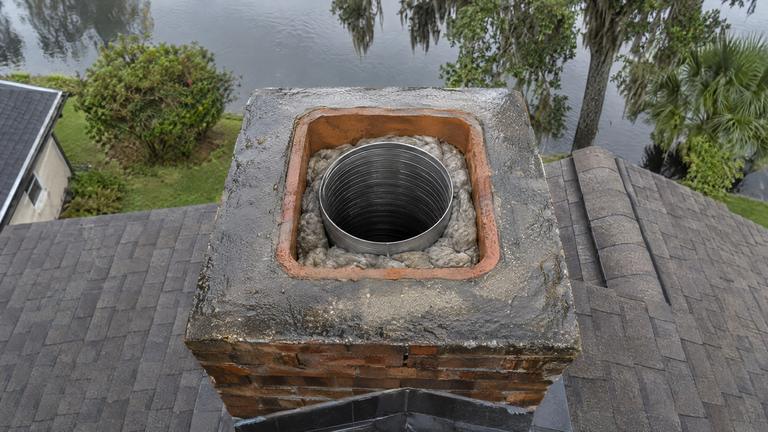
Some chimney systems need air to move around the pipe at the top of the chase. DuraVent's chase top flashing, for example, leaves a ventilation opening around the pipe and sits on spacers above the chase framing. Other systems use different parts at the top, which is why we read the instructions for the one in your chase.
A repair that seals that gap with caulk, foam or a tight wood block works against the design. It blocks the ventilation air that the manual says the opening is there to provide, right where the framing is closest to the pipe.
When our crew rebuilds the top framing, we leave the openings and spacers the chimney maker calls for. If an earlier repair sealed them, we note it and open them back up. The cover itself is a separate job, and whoever fits it has to respect the same gaps.
Other work in Conway
-
-
-
-
-


Before you book chase repair in Conway
Can you repair only the rotted part of my chase?
Often, yes. When rot is limited to the base, a corner or the top, our crew removes siding in that area, replaces the damaged wood and laps new barrier and flashing into the old. If probing shows rot running through most of the framing, we price a rebuild alongside the repair so you can compare.
How long will my chase be open to the weather?
That depends on how much of the wall comes off and on curing time if the finish is stucco. We give you the plan at the start, and any open section is covered before the crew leaves each day.
Request your free estimate
Share the job details and arrange a free inspection with our local team.
- Free inspection
- No hidden fees
- Family owned and operated
Need an answer now? Call (352) 675-6376
Your request is received
Thank you. We will contact you to discuss the job and confirm an appointment.