
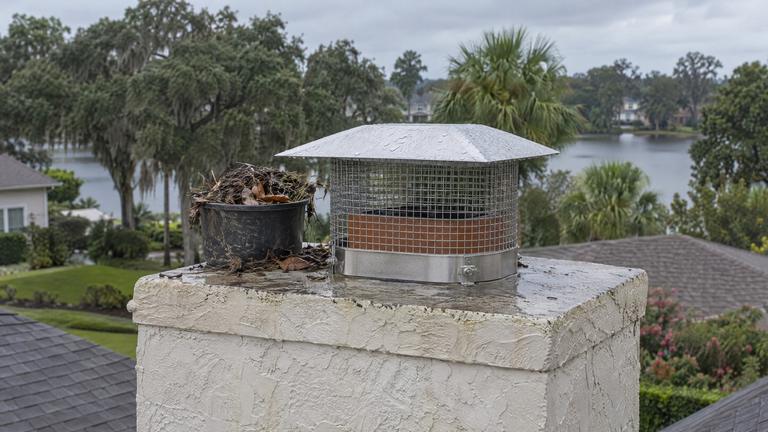
Chimney animal removal by local pros in Crescent Park
From the first sound in the flue to the new cap on top, one family-owned team handles your Crescent Park chimney animal problem.
- Licensed & insured
- Locally run
- Family owned and operated
- Same-day service available



Written down for your Crescent Park chimney
- Rules that apply to that animal, explained
- Specialist coordination where needed
- Damper operation and seal checked
- Written record of the work
Chimney animal know-how for Crescent Park homes
Animals inside a factory-built chase
On a factory-built fireplace, the chimney pipe runs inside a framed chase, and an animal can get into the enclosure without entering the pipe. Entry is usually through a gap at the chase cover or a damaged cap. Removal may need access at the top of the chase, and soiled insulation may have to come out. We explain the plan for that space and price the cover or cap work that closes it. Animals in a chase can also reach insulation around the pipe, which may need replacing to keep the clearances right.
Noises in the wall beside a prefab fireplace
With a factory-built fireplace, the chimney pipe and its chase run behind a wall or through a framed box on the outside of the house. An animal inside the chase can sound as if it is in the wall. We check the chase top, cover and cap for openings and look for signs of activity. If the animal is in the house framing instead, we say so. Noises near the ceiling of that wall may come from where the chase meets the attic, which we check as well.
Nest material and creosote together
In a wood-burning chimney, dry nest material sits on or near creosote that has built up on the flue walls. Both are combustible, and together they make the flue a poor place for a fire. That is why the fireplace stays off until both are cleared. A chimney sweep removes the creosote, and our cleanup removes the nest, before any fire is lit again. On a chimney that sees regular fires, the sweep and nest removal are easiest to do on the same visit.
The screen also stops embers
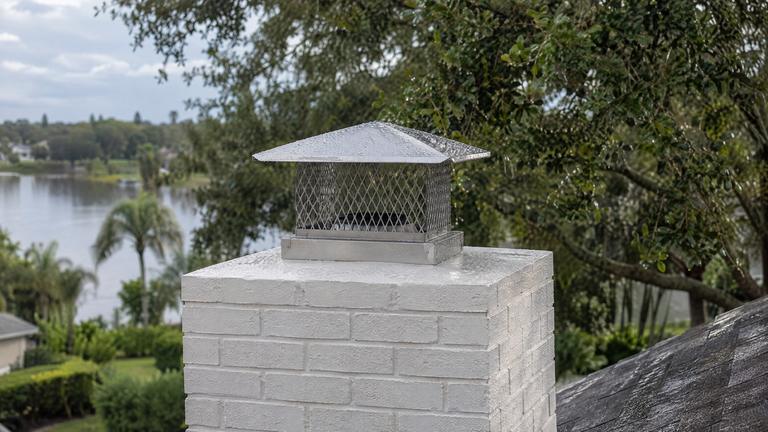
The screen on a cap does two jobs. It keeps animals out, and on a wood-burning chimney it catches larger embers before they leave the flue. A torn screen fails at both. That is one more reason to replace a damaged screen promptly and to size it to the code range, which balances protection against keeping the flue open enough to draw. We check both jobs of the screen whenever we inspect the cap. On a wood-burning fireplace, a torn screen can also let larger embers land on the roof around the chimney.
Other work in Crescent Park
-
-
-
-
-


Learn more about chimney animal removalCrescent Park services
Chimney wildlife answers for Crescent Park homeowners
What does the code say about a chimney cap screen?
For masonry chimneys, the Florida residential code (R1003.9.2) calls for screen openings that do not pass a 1/2 inch sphere nor block a 3/8 inch sphere, a net free area at least four times the flue outlet and a screen that can be removed for cleaning. We size the cap to those rules.
Do you need access to the roof?
Usually. Most of the assessment and all of the cap work happen at the chimney top, so we need safe roof access. We also look from the firebox and tell you if any part has to wait for a second visit.
Request your free estimate
Share the job details and arrange a free inspection with our local team.
- Free inspection
- No hidden fees
- Family owned and operated
Need an answer now? Call (352) 675-6376
Your request is received
Thank you. We will contact you to discuss the job and confirm an appointment.