
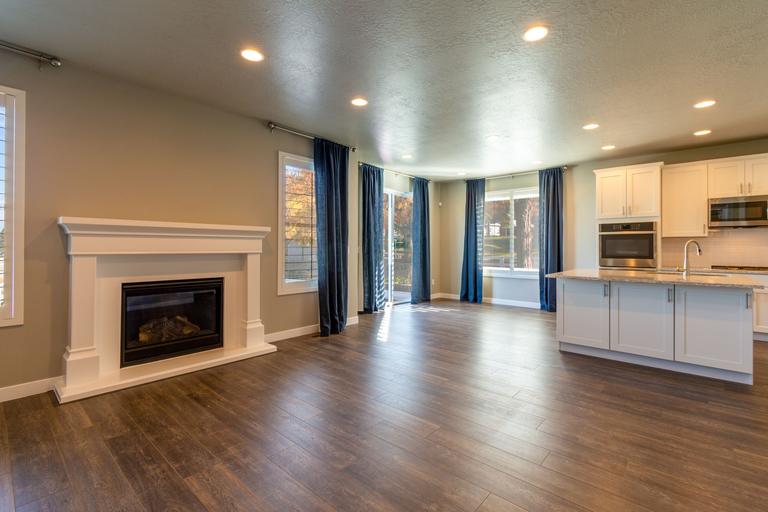
Gas fireplace repair and yearly service in East Park
Describe the start-up, from the click to the flame, and our technicians find where your East Park fireplace stops.
- Licensed & insured
- Locally run
- Family owned and operated
- Same-day service available



What a free gas fireplace inspection looks at
- Inlet and manifold pressure read with a manometer
- Remote, receiver, wall switch and control wiring
- Glass, venting and vent-free items routed to their service
- Access needed through a surround or TV wall
Gas fireplace repair, explained for East Park homeowners
How a millivolt standing pilot system works
A millivolt system makes its own power from the pilot. On the millivolt pilots in two vent manuals, the pilot splits into three distinct flames. One heats the thermocouple, one heats the thermopile and one reaches toward the main burner.
Each of those two parts turns the heat into a small voltage. The thermocouple's output holds the pilot safety in the gas valve, and when it fades the pilot safety drops out. The thermopile's output powers the switch or remote circuit that opens the main burner, which is why one Heatilator manual says house power on its standing pilot units serves optional accessories and warns that wiring line voltage to the millivolt valve damages it.
A fault can sit in any link of that chain, from a weak thermocouple or tired thermopile to a loose lead, a switch or the valve itself. For East Park homeowners, each link is tested in order before a part goes on the estimate.
A spark igniter that clicks without lighting
The click tells you the igniter button works. It does not prove a spark is reaching the pilot, or that gas is there to catch it.
The standing pilot charts we have read give four causes, and two of them are not igniter faults at all. Gas has to reach the pilot before any spark can light it, and those supply causes are sent to a plumber or the gas supplier. A spark that jumps somewhere other than the pilot belongs to the igniter check.
We find which cause applies before quoting a pilot assembly, and a supply problem goes on the estimate as a referral rather than a part. The four are checked in this order.
- A spark wire that has come off the igniter
- A faulty igniter with no spark at the electrode
- A closed shutoff or low gas pressure
- An empty propane tank
Converting between propane and natural gas
A fireplace built for natural gas cannot just be switched to propane, or the other way round. Each manual we checked says the appliance runs only on the gas type on its rating plate unless the maker's conversion kit is used, and one insert maker adds that a qualified service technician makes the conversion with its specified and approved parts.
A conversion changes more than a label. The orifice size differs between the two gases, and the air shutter table in that maker's installation manual gives different settings for natural gas and propane on several models. The same manual opens its conversion steps by asking for the appliance to be checked against the gas types actually available.
If the gas at the house has changed, or the fireplace came from somewhere else, the plate and the parts inside are compared with the gas actually supplied. A kit conversion, where the maker offers one, is quoted as its own line on the estimate.
Hot glass, children and pets around the fireplace
The glass on a gas fireplace gets hot enough to burn, and it stays hot for a while after the flame goes out. The manuals we have read warn that surfaces remain hot after shutdown and that toddlers, young children and others may be susceptible to accidental contact burns. Glass cleaning instructions from another maker also say to keep children and pets a safe distance away.
That concern runs through an insert owner's manual as well, which lists practical steps for households with small children or other at-risk people. Each one is easy to keep up.
Some remotes also have a child lock switch tucked inside the battery compartment. Before a serviced unit is lit again, the barrier's fit is checked.
- Keep the barrier in place whenever the fireplace runs
- Fit a switch lock or a remote with a child lockout
- Keep remote controls out of reach
- Never leave children alone near it, lit or cooling
Other work in East Park
-
-
-
-
-
-


Learn more about gas fireplace repair and serviceEast Park services

Gas fireplace answers for East Park homes
Do you work on the gas line to the fireplace?
No. Work on the gas supply piping is done by a qualified gas installer or plumber. On the appliance side, our technicians read the gas pressure and check the accessible connections for leaks, and the estimate says plainly if the piping needs a plumber.
Do I pay anything for the gas fireplace inspection?
No. There is no charge for the inspection or the written estimate that follows, and no obligation to book the work. If you do go ahead within 72 hours after the inspection, 10% comes off.
Request your free estimate
Share the job details and arrange a free inspection with our local team.
- Free inspection
- No hidden fees
- Family owned and operated
Need an answer now? Call (352) 675-6376
Your request is received
Thank you. We will contact you to discuss the job and confirm an appointment.