
Your local chimney repair team in Fullers
Our family-owned crew repairs crowns, flashing, brick, liners and chases for Fullers homes, with every price in writing first.
- Licensed & insured
- Locally run
- Family owned and operated
- Same-day service available



What the free chimney inspection looks at
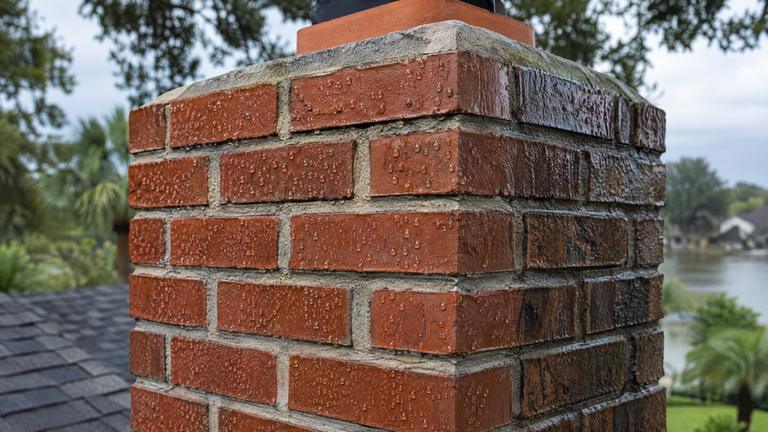
- Spalled or broken brick to replace
- Chase top, collar and cap on metal chimneys
- Old mounts and anchor holes to remove and patch
- Items for an engineer's evaluation, listed separately
Getting your Fullers chimney back in shape
Masonry chimney or factory-built system
Two chimneys can look alike from the yard and be built in completely different ways. A masonry chimney is built on site from solid brick, block grouted solid, stone or concrete, and the Florida Building Code sets how it is constructed, anchored, supported and lined. A factory-built chimney is a metal system that is listed and labeled, and the code requires it to be installed and terminated according to its maker's instructions.
That difference decides every repair method and every part. Masonry is repaired with mortar, brick, flue lining and a sloped cap on top. A factory-built system stays within its listing, so repairs follow the maker's instructions for that model and use the parts they call for.
The outside finish does not settle the question, because the code also covers masonry used as a veneer over a framed chimney. Our crew confirms the construction at the start of each visit and names it at the top of the estimate, so every line below it follows the right rules.
Tracing water from the top of the chimney down
Water runs downhill, so a leak investigation starts at the top and works down. BIA guidance on chimney construction shows how much of the design is about the top, from the cap and its drip to the flue liner and the flashing at the roof, and a failure high up can show as a stain well below it.
Order matters because water entering near the top can run down the faces and through the masonry before it appears. New flashing fitted under a cracked crown can leave the leak running, and the flashing takes the blame.
When several entry points fail at once, the highest one goes first. Chimneys in Fullers get the same top-down check, and each entry point is priced on its own line so the order of the work is clear.
- The crown and any cap or screen above it
- The top of each flue liner and its joint with the crown
- Brick faces and mortar joints on every side
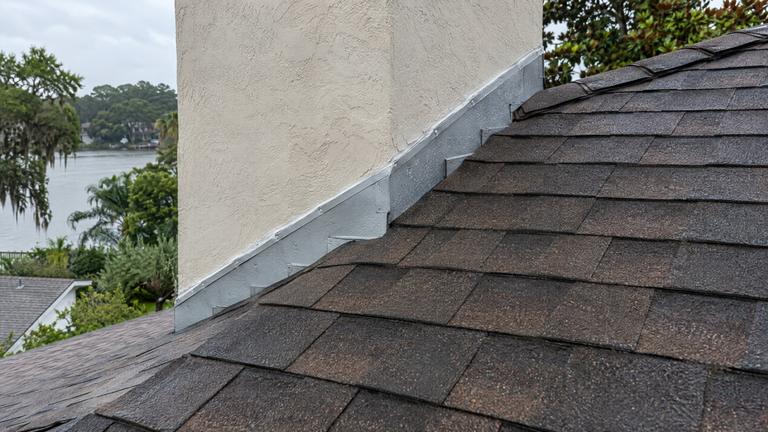
- Flashing where the chimney meets the roof, or siding on a framed chase
White deposits on the brick
A white, powdery film on chimney brick is likely efflorescence. BIA guidance explains that it needs three conditions at the same time, and it forms when water carrying dissolved salts reaches the surface and evaporates, leaving the salts behind.
Those salts show on the brick but usually come from what touches it, such as mortar, concrete or soil. That makes efflorescence a water sign more than a brick defect, and BIA notes it is usually not harmful to the brick itself.
Cleaning comes last. BIA guidance says to identify and correct the source of water and let the brickwork dry before cleaning recurring efflorescence, and light deposits can be removed by dry brushing or with a stiff fiber brush and water. On the estimate, the water repair comes first and any cleaning follows it.
- Soluble salts in or touching the brickwork
- Water in contact with them long enough to dissolve them
- A path through the masonry to a surface where water can evaporate
Insulation and a metal chimney in the attic
Where a factory-built chimney passes through an insulated ceiling, the Florida Building Code calls for an insulation shield that holds insulation back at the clearance the chimney maker specifies. In an attic, the shield has to stand above the insulation and be secured so it cannot shift.
Attic work is where this gets undone. Blown insulation is topped up and piles against the pipe, a shield gets knocked loose or wiring is run along the chimney. DuraVent's instructions for one of its chimneys say never to fill the required air space with insulation or any other material, and to keep wiring and building insulation away from all chimneys.
Our technicians check the attic run whenever the chimney is part of a repair. They look for the three things below, and anything out of place goes on the estimate with its fix.
- A shield in place where the pipe enters the attic
- Insulation held back from the pipe on every side
- No wiring, boxes or stored items against the chimney
Other work in Fullers
-
-
-
-
-


What homeowners ask about chimney repair
Can we keep using the fireplace until the repair is done?
It depends on what is damaged. A cracked flue lining, a damaged smoke chamber or a damaged firebox means no fires until the repair is finished. Outside damage lower down, such as a worn joint, may not affect use, and the estimate states which case applies to your chimney.
What if the crew finds more damage once work begins?
Nothing beyond the approved estimate is done without you. What was found and what it changes are explained, the added work is priced in writing and it goes ahead only with your approval. The original estimate stays the reference for everything else.
Request your free estimate
Share the job details and arrange a free inspection with our local team.
- Free inspection
- No hidden fees
- Family owned and operated
Need an answer now? Call (352) 675-6376
Your request is received
Thank you. We will contact you to discuss the job and confirm an appointment.