
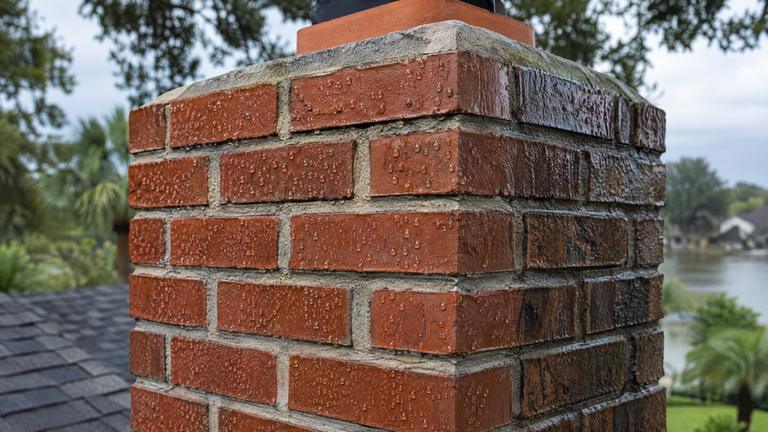
Chimney waterproofing done in the right order in Horizon West
Repairs first, then a breathable water repellent on sound masonry. Our local family-owned team in Horizon West starts with a free inspection.
- Licensed & insured
- Locally run
- Family owned and operated
- Same-day service available



What we look at on Horizon West chimneys before sealing
Every line here is part of the free inspection in Horizon West, with no charge and no obligation.
- Test patch location and what we check on it
- Protection for roof shingles, windows and plants
- Cure time after any repointing or brick work
- Areas we recommend leaving untreated, and why
What goes into a waterproofing job in Horizon West
What our pros check and why, on waterproofing jobs across Horizon West.
Why a chimney treatment has to breathe
Water gets into masonry from more than rain on the face. It rises from the roof line, condenses inside and moves through from behind. That water has to leave through the surface, and a coating that blocks vapor can hold it inside the brick.
Masonry guidance treats water vapor transmission as the single most important property when choosing a coating for exterior brick, and it recommends only breathable products. Every repellent we apply is a vapor-permeable penetrant, and we show you where its data sheet says so. If a product cannot show that, it does not go on your chimney.
Protecting windows and glass nearby
Siloxane and silane repellents react with silica, and glass is mostly silica. Masonry guidance warns that both can bond with glass that is not properly protected, and that many coating chemicals can etch glass and damage paint.
Before we spray, our crew covers windows, skylights and glass doors within reach of the work, along with painted trim close to the chimney. If a drop of product lands where it should not, product makers direct cleaning it off right away with soap and water, and that is what we do. Your estimate lists this protection as part of the job.
The masonry above the roofline
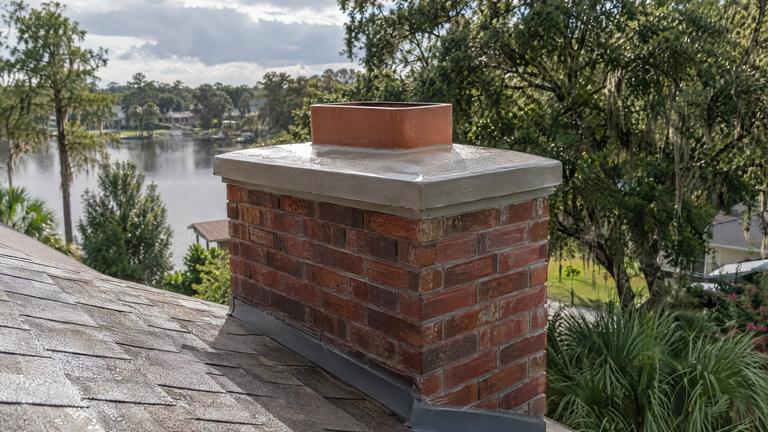
The part of a chimney above the roof stands in the open, catches rain from every direction and has no eaves to shelter it. Masonry guidance points out that chimneys take a lot of wind-driven rain, plus water running down off the crown.
That exposed section is usually where the inspection starts and where the treatment matters most. We look at the joints, the brick faces, the crown and the flashing together, repair what needs it and then treat the masonry that is taking on water. The rest of the chimney is judged on its own condition.
How we set the treatment date
The treatment date depends on three things: cure time after any repairs, a dry surface and a weather window that suits the product. We work backward from those, not from a slot on the calendar.
Once the repairs are done and cured, we watch the forecast with you. When a suitable stretch comes, we confirm the day and arrive ready to protect the roof and landscaping. If rain moves in unexpectedly, we pause or reschedule without charging you for the change.
Other work in Horizon West
-
-
-
-
-


Chimney waterproofing questions from Horizon West
Still deciding? These answers help, and the inspection in Horizon West is free.
How long does a water repellent last?
Not forever, and there is no fixed schedule. Life depends on the product, the exposure and the brick, and extra coats put on too early can make the masonry less breathable. We suggest watching whether rain still beads on the treated faces, and the product record we leave makes the next coat an easy call.
Our chimney is new. Does it need a repellent?
Usually not. Masonry guidance does not recommend repellents on newly built brick veneer, and well-built brickwork handles water on its own. A new chimney that takes water points to the crown, the flashing or joints that were not filled, and those get checked first.
Request your free estimate
Share the job details and arrange a free inspection with our local team.
- Free inspection
- No hidden fees
- Family owned and operated
Need an answer now? Call (352) 675-6376
Your request is received
Thank you. We will contact you to discuss the job and confirm an appointment.