
Family-owned chimney animal removal in Isleworth
Save 10% on chimney animal work in Isleworth when you book within 72 hours after your free inspection. The inspection is free.
- Licensed & insured
- Locally run
- Family owned and operated
- Same-day service available



The parts of an animal removal job in Isleworth
- Flue inspected top to bottom
- 10% off any service booked within 72 hours
- Timing set around protected species
- Repairs priced as separate items
Our approach to chimney wildlife in Isleworth
Screen sizes the residential code sets
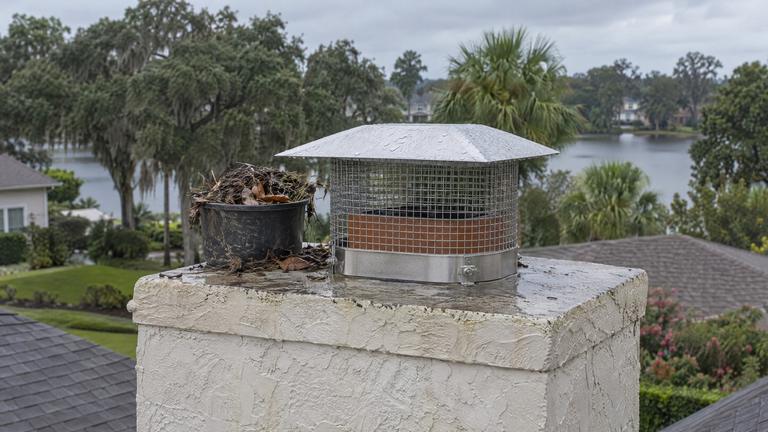
The Florida residential code, in section R1003.9.2, sets the size of spark arrestor screen openings on masonry chimneys. The openings must not pass a sphere larger than half an inch and must not block a sphere smaller than three-eighths of an inch. That range keeps out birds, bats and squirrels while letting smoke through. Caps we install on masonry flues follow it. A screen with larger openings may look sturdier and still let bats and small birds slip through.
A cap that seats with no gaps
A cap that is too small for the flue or has worked loose leaves space at its base where a determined animal can squeeze through. Flue-mounted caps must match the outside of the flue tile, and crown-mounted caps must sit flat on the crown. We measure before ordering and fasten the cap so it stays seated, then check the base all the way around once it is on. On a crown that is uneven or cracked, the cap may need a repaired surface before it can sit tight.
How animals get into masonry chimneys
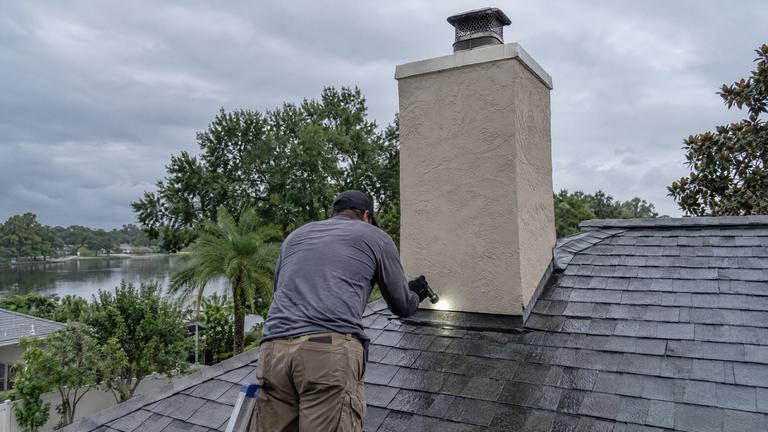
On a masonry chimney, the entry point is usually the top of the flue. An uncapped flue, a cap with a torn or rusted screen, a cap loose on its base or gaps in the crown all let animals in. We inspect each of those points from the roof, and the fix follows what we find, from a new screen to a new cap or crown repair. On an older chimney, gaps where the flue meets the crown can let small animals slip in beside the flue.
Cleaning the firebox after an animal
The firebox is where much of the mess ends up, from nest material and droppings to feathers and fur. We bag that material before it leaves the house, clean the firebox floor and walls we can reach, and protect the hearth and room around the fireplace while we work. If the firebox needs repair once it is clean, that is described separately. Clean firebrick also lets us see cracks or gaps that debris was hiding. Ash left in the firebox is removed with the rest, since it often mixes with nest material and droppings.
Other work in Isleworth
-
-
-
-


Asked in Isleworth about chimney animal removal
Can I clean up the droppings myself?
It is better to leave them. The CDC notes that histoplasmosis spreads through spores in bird and bat droppings when they are disturbed. We remove and bag droppings with care as part of the cleanup.
Do squirrels and raccoons fall under the same rules as bats?
No. Bats have a maternity season when exclusion is not allowed, and chimney swifts are protected while nesting. Other nuisance wildlife falls under Florida's general nuisance wildlife rule, which still limits the methods used and where a live animal may be released.
Request your free estimate
Share the job details and arrange a free inspection with our local team.
- Free inspection
- No hidden fees
- Family owned and operated
Need an answer now? Call (352) 675-6376
Your request is received
Thank you. We will contact you to discuss the job and confirm an appointment.