
Chimney chase repair for Kirkman North homeowners
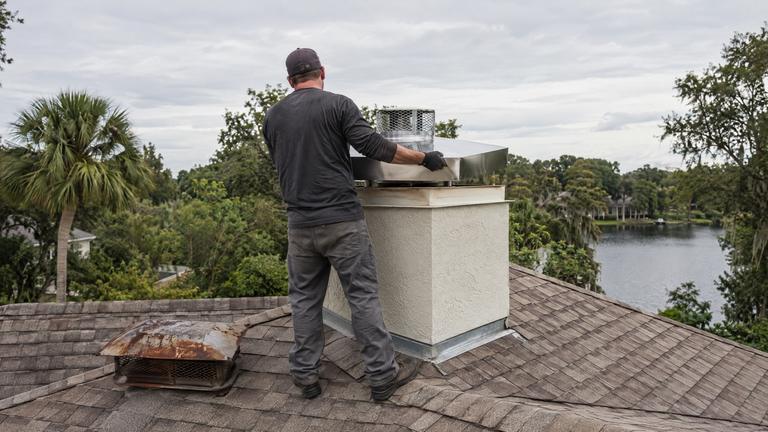
Stucco over a framed chase rebuilt with two barrier layers, corrosion-resistant lath and three full coats.
- Licensed & insured
- Locally run
- Family owned and operated
- Same-day service available



Your chase repair scope, layer by layer
- Probe test of siding, corners and the chase base
- Seam and flashing where the chase meets the house
- Roofer coordination at the chase base
- Ladder, roof anchor or scaffold access
The wall behind the siding
Open siding joints that let rain behind the finish
Siding on a chase takes wind-driven rain on all four sides, and the joints are the weak spots. Butt joints, where two boards meet end to end, open up as the boards dry and shrink. Nail holes near those ends can let water into the board itself. Joints in the lowest course and just under the top tend to take the most water.
Once water is behind the siding, the barrier underneath has to carry it down and out. If that barrier is torn or missing, the sheathing takes the water instead.
On a chase in Kirkman North, our crew looks at every joint on every face, including the side nobody sees from the street. Open joints on sound boards can be sealed or backed with flashing. Boards that are swollen or split at the ends are replaced, and the barrier behind them is checked before new siding goes up.
Front and back flashing that follows the shingle maker
The downslope face of a chase gets an apron flashing that lies over the shingles, and the upslope face gets a back flashing or a cricket. Under R905.2.8.4, chimney flashing on a shingle roof is applied following the asphalt shingle manufacturer's instructions.
So the details can change with the shingle brand, and a repair should follow the instructions for the roof you actually have. A bead of tar along the joint is not flashing. It usually hides a gap rather than closing it, and it can trap water against the siding.
We look at the apron and back flashing whenever the lower chase siding is off. Your estimate states whether that flashing is reused, replaced or left for a roofer, so nobody assumes someone else handled it. If the apron has been caulked or tarred over, the old material comes off so the flashing can be judged properly.
What the attic side of the chase can show
On a roof-mounted chase, the attic is the one place to see the chase from inside without opening a wall. Wet stains on rafters around the chimney, dark wood on the roof deck, damp insulation or daylight around the opening all say something about the chase above.
Looking into an attic means staying on the framing and keeping clear of the chimney pipe and any wiring. If the attic is hard to reach, leave it for the inspection. Blown insulation can hide the joists, so step only where you can see framing.
During the free inspection for homes in Kirkman North, our technicians check the attic side when there is a safe way in. What we find is written into the estimate next to what we saw on the outside of the chase. A damp spot on the attic floor under the chase is often the clearest sign that water is getting past the chase walls.
Ladders and scaffolding for tall chases
A chase on a two-story home can reach well above the second-floor eave, and working on it safely takes the right setup. Some jobs can be done from ladders and roof anchors. Others need scaffolding set on the ground or on a lower roof. Roof pitch, roof material and where the chase sits on the house all change the setup.
Scaffolding takes longer to set up, but it lets the crew reach every face of a tall chase with both hands free, which matters when a whole face is being stripped and reframed. It also keeps ladders off gutters and fresh siding.
Our crew plans access at the inspection and includes it in the estimate as a line of its own, so the day of the job holds no surprises. We protect landscaping and walkways wherever ladders and scaffolding stand at your Kirkman North home.
Other work in Kirkman North
-
-
-
-


Chase repair questions we hear
How do you price damage you cannot see yet?
The estimate prices what the inspection can confirm and explains how hidden damage is handled. If opening the chase shows more rot, we stop, show you and write up the added work with its price. Nothing extra is done until you approve it.
Can a chase be changed from siding to stucco?
Yes, as long as the framing is sound and flat. Stucco over wood needs a two-layer barrier, corrosion-resistant lath and three coats, so we price it as its own option next to a like-for-like siding repair.
Request your free estimate
Share the job details and arrange a free inspection with our local team.
- Free inspection
- No hidden fees
- Family owned and operated
Need an answer now? Call (352) 675-6376
Your request is received
Thank you. We will contact you to discuss the job and confirm an appointment.