
Your local chimney sweep in Lake Cherokee
Our family-owned crew sweeps chimneys in Lake Cherokee with a free inspection first and 10% off work booked within 72 hours after it.
- Licensed & insured
- Locally run
- Family owned and operated
- Same-day service available



What the sweep price covers for Lake Cherokee homes
- Damper plate, frame and pivot cleaned
- Damper tested open and closed from the room
- Firebox, grate and old ash cleaned out
- Written record of deposits and areas cleaned
What goes into a proper chimney sweep
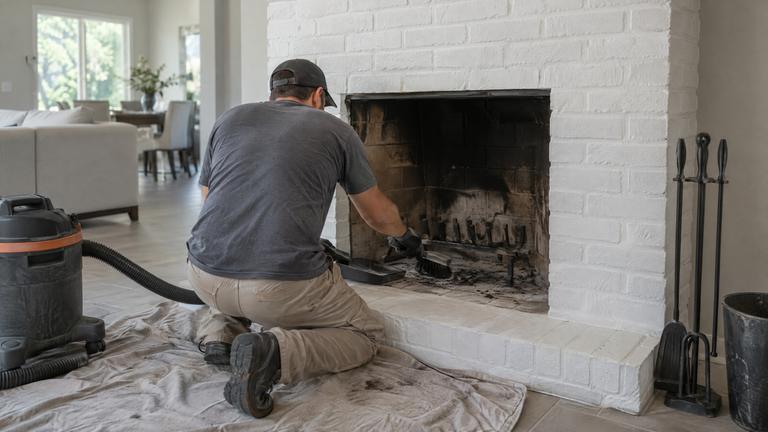
Clearing ash, grate and debris from the firebox
The firebox is where the sweep starts and ends. Before any brushing, our technicians remove the grate, andirons and old ash, so the floor and walls can be seen and the debris from above has somewhere clean to land.
After the flue and smoke chamber are done, the firebox gets cleaned again. The walls are brushed down, the floor is scraped and vacuumed, and any ash dump door in the floor is opened and checked. The grate and andirons are brushed off outside, so their soot stays out of the room, and go back in place last.
With the firebox clean, the firebrick and the mortar joints between the bricks are easy to see. Cracked bricks or open joints are fireplace repair work, and our crew notes them on your written estimate instead of hiding them under a fresh cleaning.
Which flue gets swept in a multi-flue chimney
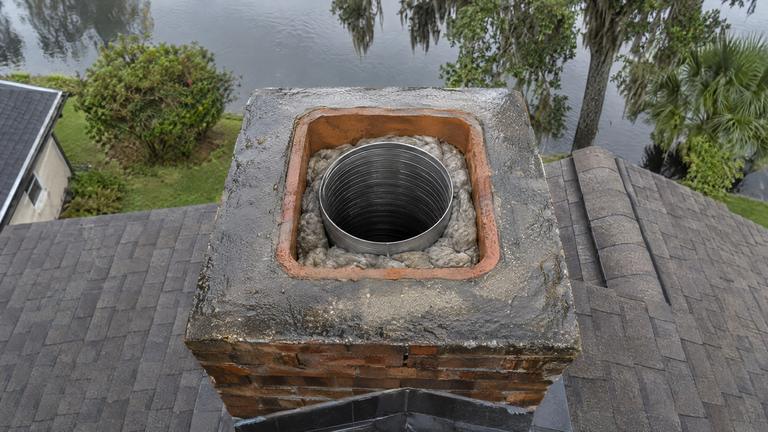
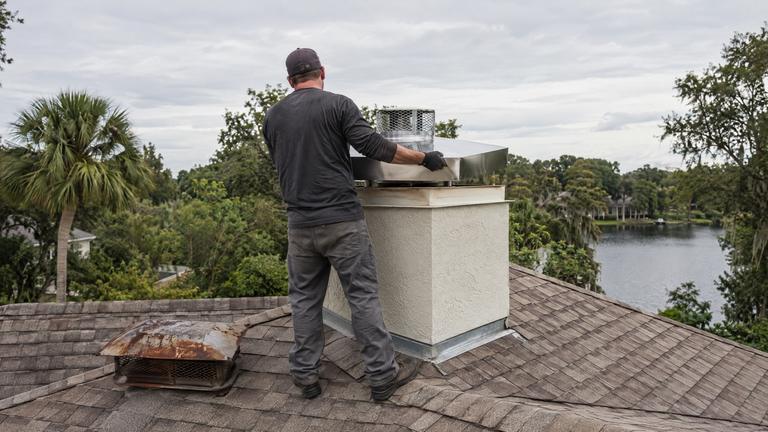
Some chimneys carry more than one flue inside a single stack. From the roof you may see two or three openings side by side. Each serves a different fireplace or appliance, and each holds its own deposits.
Before cleaning, our technicians match every flue to what it serves, by checking the draft from each opening or tracing each one from the top, so the flue brushed is the one connected to the fireplace you use.
The written estimate names each flue by what it serves, such as the living room fireplace or a stove in the family room, so you know which ones are included. A flue that serves nothing, or one you stopped using, is noted too, since it may still need a cap. With several openings on the roof, no Lake Cherokee homeowner pays for a flue that was never touched.
Where the ashes go after a fire
Ashes can hold heat long after a fire looks out. NFPA safety advice has ashes cool down first, then go into a metal container set well away from the house. EPA guidance adds a covered metal container stored outdoors on a nonflammable surface.
Old ash left in the firebox for weeks also holds moisture and adds to the smell of an idle fireplace. During a sweep, our crew removes the old ash and debris for you. Between visits, emptying the firebox into the right container is the homeowner's part.
- A metal container with a tight lid
- Set outside on concrete or bare ground, not a wood deck
- No paper bags, plastic bins or cardboard boxes
- Kept away from the house, fences and the garage
NFPA 211 and the yearly look at your chimney
NFPA 211, the national fire safety standard for chimneys, fireplaces and vents, asks for a chimney inspection at least every year, looking at whether the chimney is sound, whether deposits have built up and whether its clearances are right. Cleaning, maintenance and repair follow when the inspection shows they are needed.
In other words, cleaning depends on what is found. A fireplace used every week may need a sweep at each yearly check, while one lit a few times may not. Fire safety advice from NFPA and the U.S. Fire Administration says the same in plain terms, with chimneys cleaned and inspected every year by a qualified professional.
We follow that order. The free inspection comes first, and a sweep is recommended when the deposits call for it. What the inspection found goes into your written record, so each year has something to compare against.
Other work in Lake Cherokee
-
-
-
-
-


Learn more about chimney sweep and chimney cleaningLake Cherokee services
Related chimney sweep work

Common questions about chimney sweeping
Will a sweep fix a fireplace that smokes?
It fixes the part caused by deposits in the flue. A damper that does not open fully, a clogged cap screen or wet wood can also cause smoke, so we check those too and note the results on the written record.
Can I use the fireplace the same day it is swept?
Usually, yes, once our crew has finished and the damper has been tested. The exceptions are a glazed treatment that is still drying and a repair finding that should be settled first, and we tell you about either before we leave.
Request your free estimate
Share the job details and arrange a free inspection with our local team.
- Free inspection
- No hidden fees
- Family owned and operated
Need an answer now? Call (352) 675-6376
Your request is received
Thank you. We will contact you to discuss the job and confirm an appointment.