
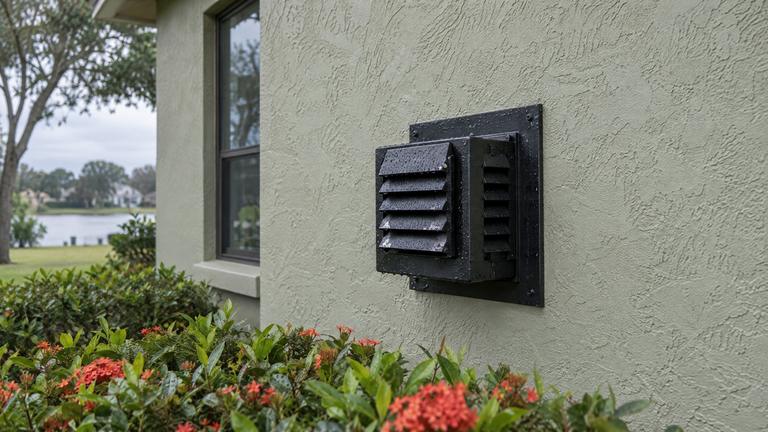
Gas fireplace venting by local pros in Lake Formosa
We check the cap, the joints and every clearance against your fireplace manual before recommending a single part. The inspection is free for homes in Lake Formosa.
- Licensed & insured
- Locally run
- Family owned and operated
- Same-day service available



The written venting scope for your Lake Formosa home
These checks decide whether a vent run is right for your fireplace, and our Lake Formosa crew writes each result down before any work.
- Every reachable joint checked for seating and seal
- Clearance above the ground, decks and porches
- Firestops and wall passes at each penetration
- Finish repairs after access, priced line by line
Vent know-how from our Lake Formosa crew
Notes from our gas fireplace vent technicians in Lake Formosa.
Flexible vent where rigid pipe is allowed
One maker allows flexible venting listed to UL 1777 anywhere its rigid direct-vent pipe could be used, with every restriction, clearance and length limit of the rigid pipe still applying. The same manual says flex kits may not be modified.
A flex kit can be added to the end of a rigid run only with the pipe maker's approved adapters and only if the whole run still meets the height, length and routing rules. Our crew checks those limits on paper before any flex goes in.
Counting the turns in a vent run
Every elbow adds resistance to a vent. One maker caps the total of all elbow angles in a direct-vent system at 270 degrees, so a run with two 90 degree elbows and two 45 degree elbows has used its whole allowance.
Remodels tend to add elbows as the pipe is steered around new framing. Our pros count every elbow they can see or trace and compare the total with your manual. An extra turn hidden behind a wall is one of the reasons a relocated fireplace starts misbehaving.
Caps that sit on the wall face
One maker states plainly that a vent terminal may not sit recessed into the wall or the siding. A cap sunk into a thick finish can trap exhaust and change how the intake draws air.
Recessed caps usually come from a finish added after the fireplace went in, such as new siding or a thicker stucco coat. Our pros check the cap's position against the finished wall and list any extension part your manual allows to bring it back to the surface.
Debris in the termination cap
A cap is small, and it does not take much to choke it. One direct-vent manual asks owners to inspect the outside vent cap regularly so no debris interferes with the airflow.
Leaves, lawn clippings, insect nests and nesting material all turn up in caps. Our crew clears what it finds, checks the cap's screen and body for damage, and runs the fireplace afterward to make sure the flame looks the way the manual describes.
Why a missing odor does not prove there is no gas
Natural gas and propane have no smell of their own. One maker's manual explains that an odor-making agent is added to both so people can notice a leak, and it warns that the added odor can fade, so gas may be present even when nothing can be smelled.
That is one reason manuals ask for gas connections to be leak tested after service with a soap solution or an approved leak test spray and never with an open flame. Our technicians test every connection they disturb before leaving.
Other work in Lake Formosa
-
-
-
-
-


Asked in Lake Formosa about gas fireplace venting
Quick answers from our gas fireplace vent team in Lake Formosa. Anything else, just call.
Why does my gas fireplace go out after a few minutes?
On a direct-vent unit, one maker lists a leak in the inner exhaust pipe, a horizontal run with the wrong pitch and a blocked or badly fitted cap as causes. Pilot and control faults can do the same thing, so our technicians test both before quoting.
What does a B-vent fireplace need from its vent?
Type B pipe listed to UL 441, a listed cap and enough height. The Florida fuel gas code asks for the vent to end at least 5 feet above the draft hood, and the manual adds limits on offsets, elbows and slope.
Request your free estimate
Share the job details and arrange a free inspection with our local team.
- Free inspection
- No hidden fees
- Family owned and operated
Need an answer now? Call (352) 675-6376
Your request is received
Thank you. We will contact you to discuss the job and confirm an appointment.