
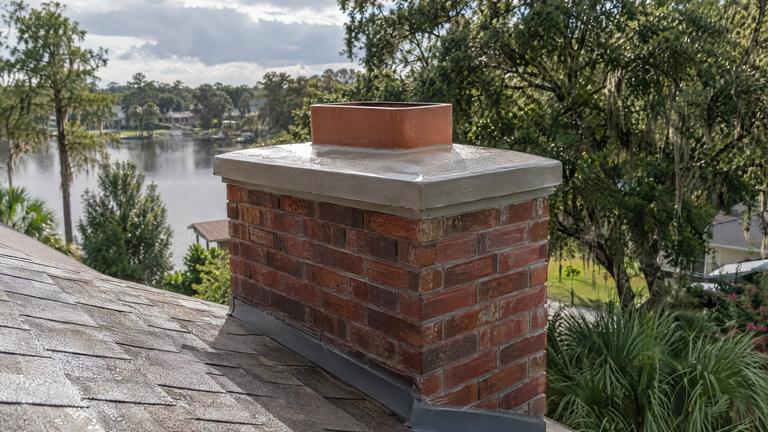
Family-owned chimney crown repair in Lake Hart
Book within 72 hours after your free inspection and 10% comes off. Our Lake Hart crew inspects the crown for free and puts every option in writing.
- Licensed & insured
- Locally run
- Family owned and operated
- Same-day service available



Inside a written chimney crown estimate
- Crown coating where the concrete is sound
- Forms, reinforcement and a new cast crown
- Sealant at a metal liner top plate
- Debris removal and roof cleanup
What goes into a lasting crown repair
Thin mortar washes that pass for crowns
Many chimneys were topped with a mortar wash, a thin layer of mortar troweled over the top bricks and feathered to nothing at the edges. It looks like a crown from below, but it has no overhang, no drip and often very little slope. Heat and rain break it into plates that lift and let water underneath.
Brick Industry Association guidance cautions against tapering a cap to a thin edge. When our crew finds a mortar wash, we usually recommend removing it and casting a proper crown. The free inspection shows how far gone yours is before you decide anything.
Taking off a mortar wash is usually quick work, since the layer is thin and already loose. What sits underneath tells the rest of the story. If the top bricks are sound, a new crown can go straight on. If they are loose, they get relaid first, and the estimate shows that as its own line.
Casting a new crown on the chimney
A cast-in-place crown is built right on top of your chimney. Our crew removes the failed top, builds forms around the chimney, sets reinforcement and places the concrete with a slope running away from the flue. The forms create the overhang and the drip on the underside of the edge.
In section R1003.9.1, the Florida Building Code, Residential, calls for a masonry chimney cap made of concrete, metal or stone, pitched to throw off water, with a drip edge and a caulked bond break at every flue liner. We build to that description and walk you through each detail when the forms come off.
A cast crown also lets us correct what the old one got wrong. If the flue tile was buried, the new crown sits lower around it. If water ran down the face, the new overhang and drip send it clear. Tell us what bothered you about the old crown and we build the answer into the new one.
Hollow spots under the crown surface
Some crowns look fine but sound hollow when tapped. The top layer has separated from the concrete underneath, usually because water got in and worked between the layers. Those sections can break away without much warning.
Our technicians tap every part of the crown during the inspection, including areas that look perfect. A coating over a hollow surface peels off with the loose layer, so hollow sections change the recommendation to a rebuild. You hear the reason before you approve anything.
Hollow areas often sit near the edges and around the flue, where water enters first. Tapping maps them out, and the pattern shows whether the whole crown is separating or only one area. That pattern is written into your estimate so the recommendation is easy to follow.
Diagonal cracks spreading from the flue
Cracks that run from the flue toward the corners of the crown are a classic sign that the crown was built tight against the liner. As the liner heats and grows, it pushes on the crown until something gives.
Filling those cracks without freeing the liner brings them straight back. Our crew cuts the crown away from the tile and installs a proper bond break and sealant, or recasts the crown with one. The estimate explains which route fits.
After the repair, the flexible joint at the flue is what keeps the problem from coming back. It needs to stay intact, so we explain how to spot a failing joint from the ground and when to call us for a quick look.
Other work in Lake Hart
-
-
-
-
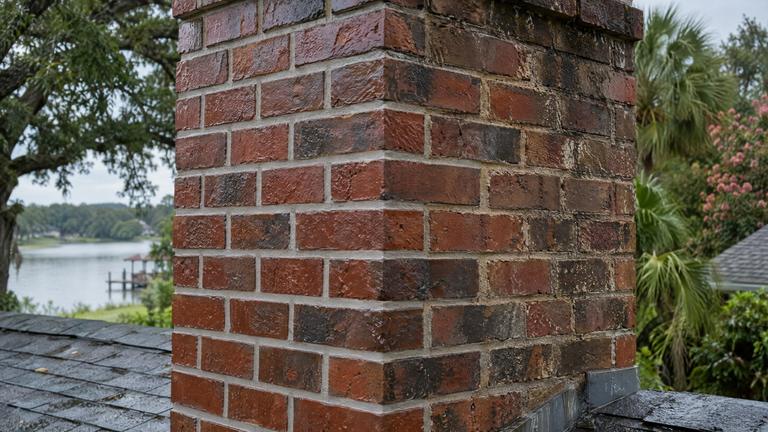
-
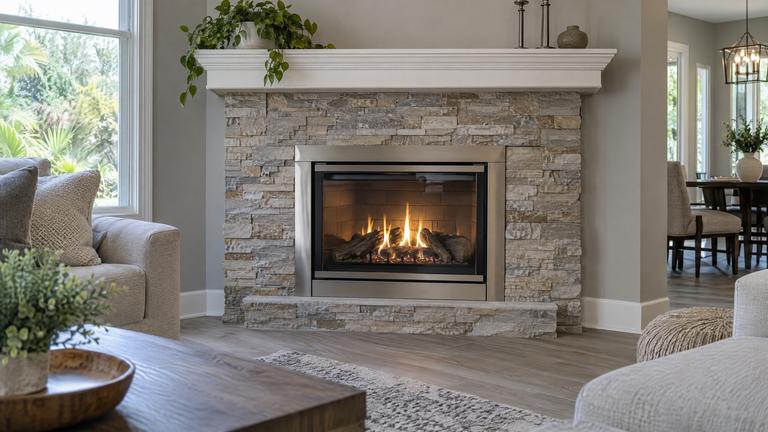
-
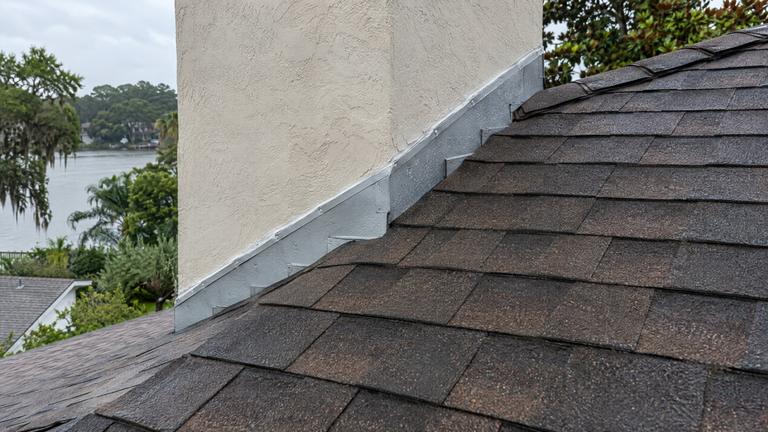


Your chimney crown questions, answered
Is the crown inspection really free?
Yes. The inspection and the written estimate are both free, and whether to book is your decision alone. You keep the estimate either way.
Can you repair the crown on a stucco or block chimney?
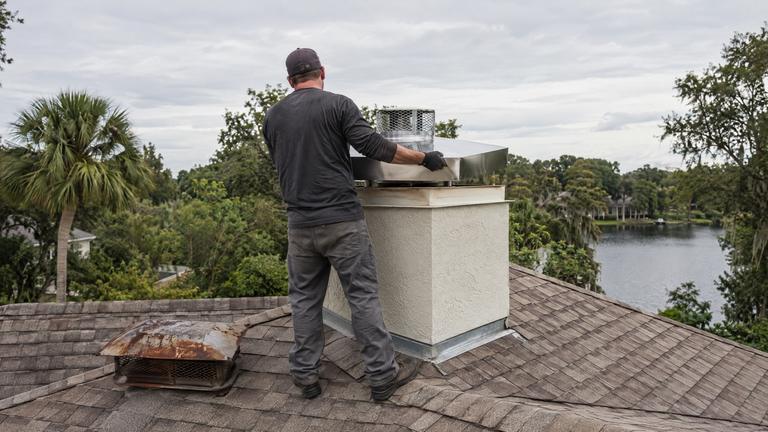
Yes. Stucco and block chimneys have crowns too, and the edges need extra care where the crown meets the finish. We look at how water leaves the top and how the crown ties into the wall below before recommending a repair.
Request your free estimate
Share the job details and arrange a free inspection with our local team.
- Free inspection
- No hidden fees
- Family owned and operated
Need an answer now? Call (352) 675-6376
Your request is received
Thank you. We will contact you to discuss the job and confirm an appointment.