
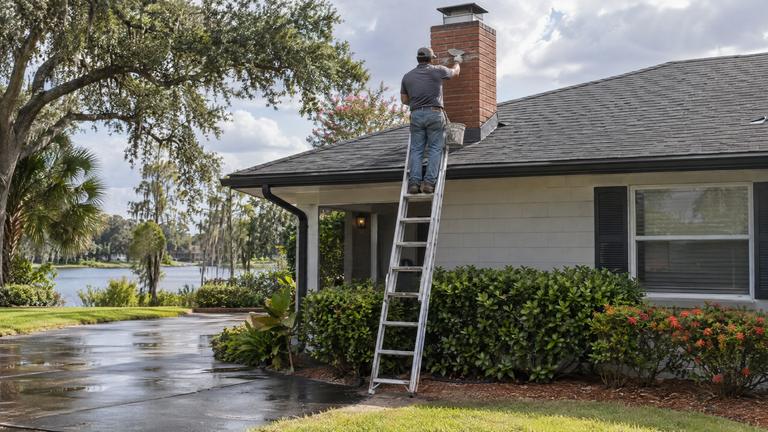
Chimney repair for homes in Lake Pickett
Tell us what the chimney is doing in Lake Pickett, and our crew will find out why at no charge.
- Licensed & insured
- Locally run
- Family owned and operated
- Same-day service available



Chimney repair items we put in writing in Lake Pickett
- Chimney construction confirmed, masonry or factory-built
- Base flashing and counterflashing at the roof line
- Mortar joints to repoint, marked by area
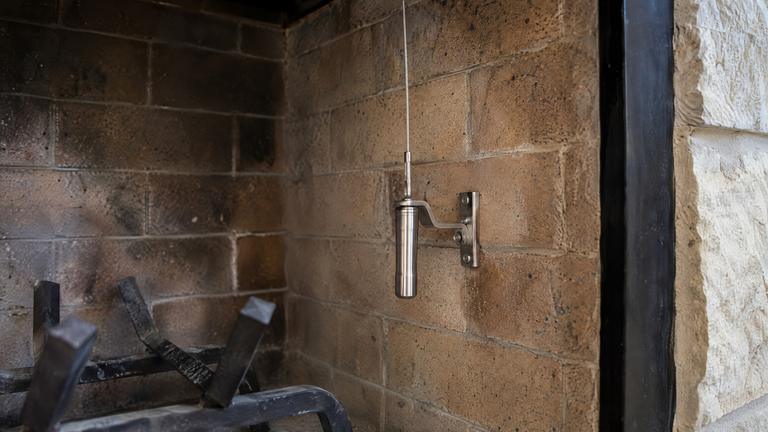
- Damper plate, frame and handle
Chimney repair, explained part by part
Matching brick color, size and texture
A repair that stops water can still look wrong if the new brick stands out. BIA maintenance guidance says replacement brick must match the existing brick in its looks and in its physical properties, and it admits that locating a match may take considerable effort.
The guidance recommends judging the match with a mock-up or sample panel that shows the full range of colors and textures in the chosen brick, laid to match the existing brickwork. Seen that way, the whole range of the new brick is judged, not one well-chosen sample.
An honest match is close, not identical, and new brick will not share the weathering of the rest of the chimney at first. The estimate for homes in Lake Pickett names the brick we propose and says how close a match to expect.
- Color, judged across the whole range of the wall
- Size, so the new courses line up with the old
- Surface texture
- Physical properties that suit the existing brick
Weep holes and through-flashing at the base of veneer
At the bottom of a brick or stone veneer chimney there should be flashing under the first course, with small openings called weep holes just above it. Together they give water that gets behind the veneer a way out. The Florida Building Code requires both where masonry veneers a frame chimney.
Weeps are easy to spoil by accident. They get filled with caulk by someone who takes them for gaps, painted over or clogged from inside by mortar droppings. Brick Industry Association guidance treats flashing and weeps as essential details that no coating replaces, and it describes clearing clogged weeps with a thin dowel or stiff wire without damaging the flashing behind them.
Any water complaint on a veneer chimney includes a look at its base for the points below. Reopening blocked weeps, or adding them where they were left out, is priced as a separate line from the repair higher up.
- A row of open weeps just above the base flashing
- Flashing visible at the bottom course
- No caulk, paint or mortar plugging the openings
Loose brick above a door or walkway
A loose brick, a cracked piece of crown or a tilted cap over an entry, a patio or a driveway is a falling hazard before it is a repair. Brick Industry Association maintenance guidance counts chimneys among the parts of a building with more severe exposure, which may need repairs at shorter intervals.
When you describe it, say where it sits over the house, what has already come down and whether people walk under it. That tells us how soon the visit is needed and where a ladder can go safely. Keep the area below clear in the meantime.
Loose masonry over a path goes to the top of the estimate, ahead of cosmetic items and even ahead of some leak repairs. The first step is taking down or securing what is loose, then rebuilding on sound material. That order is explained before any work, and nothing begins until you approve it.
What a finished repair should show you
When the job is done, you get a written record of the work we did, and you should be able to understand it without climbing onto the roof. Each line on it names a part and a repair, and each one should match something you can see or have explained to you.
Some results take time to show, like mortar color that evens out as it dries. When the job calls for it, a leak repair is checked with a water test from a hose.
Keep the record with the house paperwork and look at the repaired area from the ground now and then. If a line does not match what you see, ask us about it. Depending on the job, results like these should be easy to confirm.
- New or rebuilt masonry visible from the yard or a window
- Counterflashing set into the joints, not glued to the face
- A damper or cleanout door that opens and closes by hand
- A clear answer on when the fireplace can be used again
Other work in Lake Pickett
-
-
-
-
-


Questions to ask before a chimney repair
Can we keep using the fireplace until the repair is done?
It depends on what is damaged. A cracked flue lining, a damaged smoke chamber or a damaged firebox means no fires until the repair is finished. Outside damage lower down, such as a worn joint, may not affect use, and the estimate states which case applies to your chimney.
Do you repair factory-built metal chimneys as well as brick ones?
Yes. A factory-built chimney is a listed system, so repairs use the maker's listed parts and follow its installation instructions, as the Florida Building Code requires. Masonry chimneys are repaired to the code's masonry rules, and the estimate says which approach applies.
Request your free estimate
Share the job details and arrange a free inspection with our local team.
- Free inspection
- No hidden fees
- Family owned and operated
Need an answer now? Call (352) 675-6376
Your request is received
Thank you. We will contact you to discuss the job and confirm an appointment.