
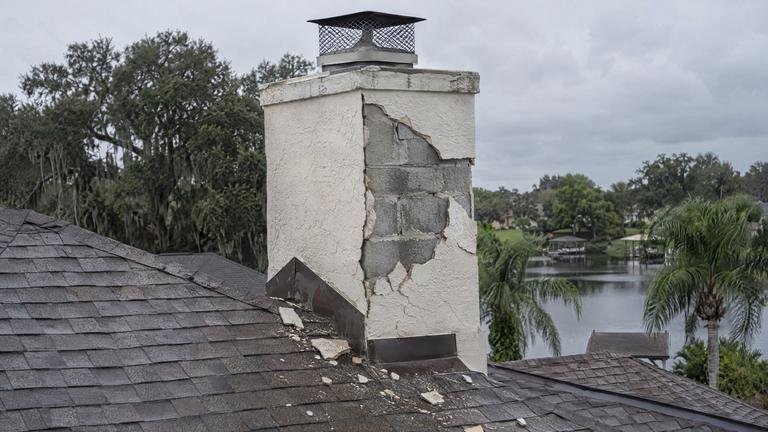
Loose chimney brick and open joints repaired in Lake Terrace
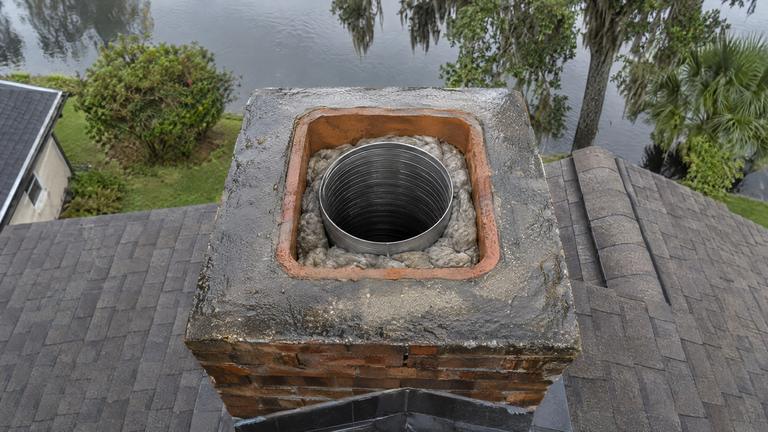
Start with what you see from the yard. Our local pros in Lake Terrace check the masonry up close and put the repair scope in writing.
- Licensed & insured
- Locally run
- Family owned and operated
- Same-day service available



Checked before any joint is cut in Lake Terrace
Checked up close on the chimney in Lake Terrace, then written into your free estimate.
- Loose or displaced masonry near the top
- Signs that call for an engineer's evaluation
- Stucco, stone or historic work referred separately
- A repair record for your files
Chimney masonry details that matter in Lake Terrace
Questions every Lake Terrace homeowner should have answered before chimney masonry is cut out.
Packing new mortar in layers
New mortar goes into a deep joint in layers, not all at once. The guidance calls for packing it tightly in layers no more than a quarter inch thick, with each layer allowed to firm up before the next.
Layering keeps the mortar dense and reduces shrinkage cracks in the finished joint. It takes longer than filling a joint in one pass, which is one reason a proper repointing estimate reflects more time than a quick patch. The first layers fill the deepest part of the joint, and only the final layer is tooled to the finished profile.
No change in shape at the roof
Section R1003.6 of the residential code says the chimney wall or flue lining shall not change size or shape within 6 inches above or below where the chimney passes through floor, ceiling or roof components.
When masonry near the roofline is rebuilt, the rebuilt courses keep the chimney's shape through that zone. It is a detail that matters most on partial rebuilds, and we plan around it rather than discovering it with the flashing off. It is also where flashing, framing and masonry meet, so careful planning here pays off in more than one way.
Pieces of masonry on the roof or ground
Brick fragments, mortar crumbs or grit in the gutter or at the base of the chimney tell you something above is letting go. The pieces themselves can help show where.
Leave them where they are if it is safe to do so, and tell us where you found them. We match the material to its source on the chimney, which can separate a failing joint from a spalled brick face or a crumbling crown. A piece of smooth, curved clay often came from the flue tile, a rough gray chunk from the crown, and a brick face from the masonry itself.
Joint-only work has its own service
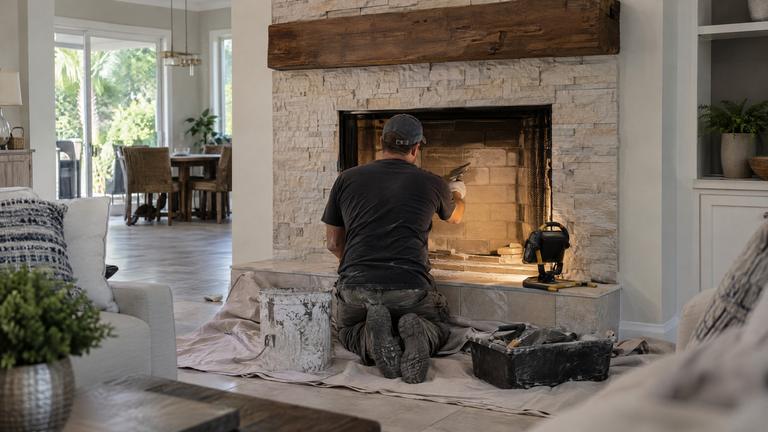
When the brick is sound and only the mortar joints have worn, the job is repointing, often called tuckpointing, and it has its own service with its own scope.
Chimney masonry repair is for the broader job, where joints, cracked units, loose sections or cracks through the masonry need attention together. We tell you which describes your chimney, so the estimate matches the work rather than a label. The distinction also matters for price, because a mixed repair includes brick work and crack repair that a joint-only job does not.
Other work in Lake Terrace
-
-
-
-
-
-


Learn more about chimney masonry repairLake Terrace services
Related chimney masonry work

Brick and mortar answers for Lake Terrace homeowners
Masonry questions we hear most around Lake Terrace, answered plainly.
Is paint or a coating a repair for cracked masonry?
No. A coating does not replace missing mortar or broken brick, and film-forming coatings are not recommended on exterior brick. We repair the masonry first and discuss a breathable water repellent only afterward, if it suits the chimney.
Why are there white deposits on my chimney?
White deposits usually mean water is moving through the masonry and leaving dissolved minerals behind as it dries. Brick industry guidance says to find and fix the water source first, or the deposits come back. We look for that source during the inspection.
Request your free estimate
Share the job details and arrange a free inspection with our local team.
- Free inspection
- No hidden fees
- Family owned and operated
Need an answer now? Call (352) 675-6376
Your request is received
Thank you. We will contact you to discuss the job and confirm an appointment.