
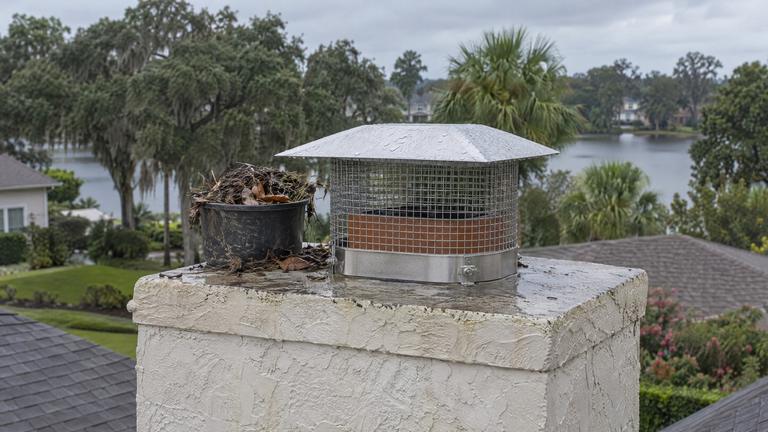
Chimney animal removal in Lockwood
Nest removal, flue cleanup and a sturdy screened cap for Lockwood chimneys, priced in writing with no hidden fees.
- Licensed & insured
- Locally run
- Family owned and operated
- Same-day service available



On the estimate for your Lockwood chimney
- Chimney sweep after nesting
- Cap fitted only after the flue is empty
- Room protected during cleanup
- 10% off any service booked within 72 hours
Chimney animal details for Lockwood homeowners
Clearing the odor after removal
Odor can outlast the animal because nest material, droppings and fluids soak into debris on the smoke shelf and firebox floor. Taking the animal out is only part of the job. We remove the soiled material, clean the surfaces we can reach and check the flue for anything left above. If odor remains after cleanup, we look again rather than covering it with a fragrance. Warm weather can make a lingering odor stronger, so tell us if it returns after a few days.
What nest material does to a flue
Nests are built from twigs, leaves, grass and whatever else an animal can carry, and a large one can close most of a flue. Smoke that cannot rise has to go somewhere, and debris sitting in a warm flue can catch an ember. The fireplace should stay unused until the flue is clear from top to bottom, and until a sweep has confirmed nothing is left above the damper. Nesting material can also sit above a closed damper for months without anyone noticing it from the room.
Checking the flue before the next fire
Once the animal and the nest are gone, the flue still needs a look from top to bottom. We check for leftover material, damage to the liner and anything that would block smoke from rising. NFPA 211 calls for chimneys to be inspected annually and for obstructions to be cleared, and that standard applies with extra weight after nesting. Any repair we find is priced separately for your approval. On your Lockwood chimney, the flue check is part of the same visit as the cleanup whenever access allows it.
Chimneys that are never used
A fireplace that sits idle for years gives animals a quiet, sheltered space, and without regular use nobody notices the early signs. If you inherited or bought a home with an unused fireplace, have the chimney inspected before anyone lights it. We check for nests, droppings and debris, confirm the flue is clear and fit a screened cap if the top is open. An idle chimney that is capped and clean stays ready for the day someone wants a fire.
Other work in Lockwood
-
-
-
-
-
-


Your Lockwood chimney animal questions, answered
Do raccoon droppings need special handling?
Yes. The CDC notes that raccoon feces can carry roundworm eggs, so a latrine in a chimney or firebox calls for careful cleanup with protective equipment. Leave it for us rather than sweeping it up yourself.
Is it legal to catch the animal and let it go elsewhere?
Florida's rule on nuisance wildlife, F.A.C. 68A-9.010, lets a property owner, or someone the owner authorizes, remove nuisance wildlife only by permitted methods, and it limits where a live-caught animal can be released. Bats and nesting birds come with separate limits, so we bring in a wildlife specialist when one is needed.
Request your free estimate
Share the job details and arrange a free inspection with our local team.
- Free inspection
- No hidden fees
- Family owned and operated
Need an answer now? Call (352) 675-6376
Your request is received
Thank you. We will contact you to discuss the job and confirm an appointment.