
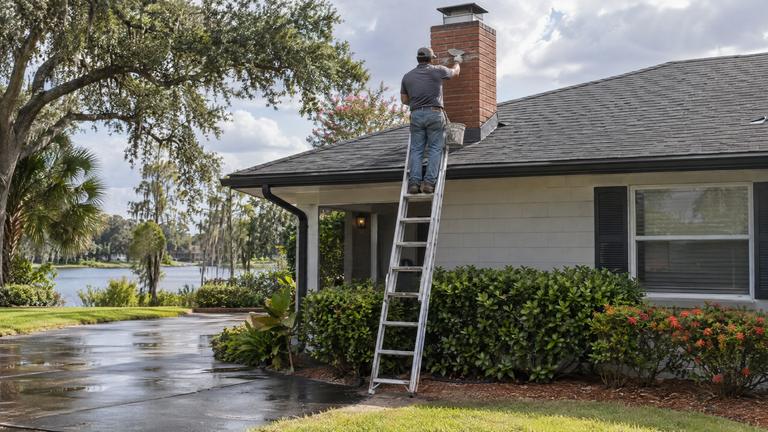
Honest chimney repair for McDonald homeowners
Several chimney problems at once get one clear written plan, ordered by what has to come first.
- Licensed & insured
- Locally run
- Family owned and operated
- Same-day service available



The chimney parts we price for McDonald homes
- Rust on lintels, support angles and ties
- Chase siding, barrier and framing condition
- Chimney height against the code's termination rule
- Repair order, with safety items first
Chimney repair, explained part by part
Overhang and drip edge keep water off the faces
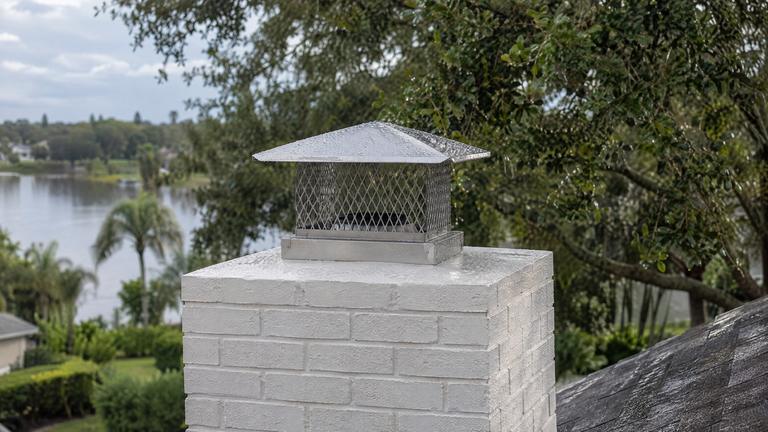
Rain leaving a chimney top has to fall clear of the brick, or it runs down the faces and soaks in. BIA guidance shows the cap overhanging the faces. Where a cap does not overhang, it calls for the last two courses of brick to be corbeled out to form a drip, to help reduce the water running down the face.
A drip edge is also required by the Florida Building Code on the cap of a masonry chimney. The drip is simply the edge that water falls from, set out beyond the brick so the water drops free instead of creeping back to the masonry.
You can often read a missing drip from the ground. Streaks, dark wet patches or white deposits that start just under the top and spread down the faces can point to water leaving the top the wrong way. A flush top with those marks gets its own estimate line for a cap that overhangs.
Insulation and a metal chimney in the attic
Where a factory-built chimney passes through an insulated ceiling, the Florida Building Code calls for an insulation shield that holds insulation back at the clearance the chimney maker specifies. In an attic, the shield has to stand above the insulation and be secured so it cannot shift.
Attic work is where this gets undone. Blown insulation is topped up and piles against the pipe, a shield gets knocked loose or wiring is run along the chimney. DuraVent's instructions for one of its chimneys say never to fill the required air space with insulation or any other material, and to keep wiring and building insulation away from all chimneys.
Our technicians check the attic run whenever the chimney is part of a repair. They look for the three things below, and anything out of place goes on the estimate with its fix.
- A shield in place where the pipe enters the attic
- Insulation held back from the pipe on every side
- No wiring, boxes or stored items against the chimney
Chimney questions to ask when you buy a home
A chimney can look fine from the street and still need work. Before closing, ask the seller a few direct questions, and ask for receipts or past estimates rather than a verbal answer. Paperwork tells you what was done and when.
The general home inspection that comes with a purchase may only cover what can be seen from the ground and the firebox. If there is no history at all, treat the chimney as unknown rather than sound, and budget for what a closer look may find.
A chimney inspection before closing turns those unknowns into lines with prices. Our crew can look at the chimney you are buying and write an estimate you can use in negotiation or for planning. Start with the seller questions below.
- When the chimney was last swept and inspected
- Repairs to the crown, flashing, flue or firebox
- Whether the flue was relined, and for which appliance
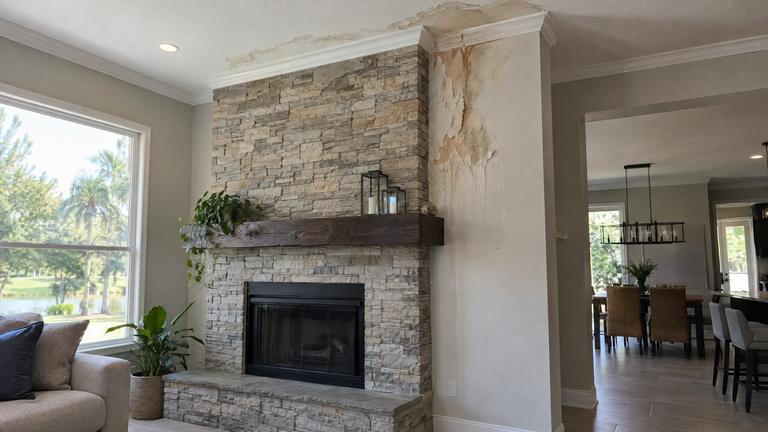
- Any past leaks or stains around the chimney
A chimney too short for the roof around it
The Florida Building Code sets a minimum height. A chimney must extend at least three feet above the highest point where it passes through the roof, and at least two feet higher than any part of the building within ten feet. Brick Industry Association guidance names chimney height and flue area as the two most critical factors in chimney design.
Chimneys come up short when the house changes around them. A second story, a raised roof, a dormer or an addition inside that distance can leave a chimney that met the rule when it was built now too low. Smoke that lingers at the opening or drifts back indoors can be one result.
The fix is extending the chimney to the height the code calls for, in masonry on a masonry chimney or in listed sections on a factory-built one, then finishing the new top. Our crew in McDonald measures the chimney against the roof and any wall within that distance, and the estimate shows the added height and how it will be finished.
Other work in McDonald
-
-
-
-
-


Before you schedule chimney repair in McDonald
Do you repair factory-built metal chimneys as well as brick ones?
Yes. A factory-built chimney is a listed system, so repairs use the maker's listed parts and follow its installation instructions, as the Florida Building Code requires. Masonry chimneys are repaired to the code's masonry rules, and the estimate says which approach applies.
Is there someone to call when chimney damage cannot wait?
For fire or smoke in the house, get everyone out and call 911 first. Our 24/7 emergency line is for chimney damage that cannot wait, such as masonry coming loose above a door or a walkway. The repair itself is still priced in writing before work starts.
Request your free estimate
Share the job details and arrange a free inspection with our local team.
- Free inspection
- No hidden fees
- Family owned and operated
Need an answer now? Call (352) 675-6376
Your request is received
Thank you. We will contact you to discuss the job and confirm an appointment.