
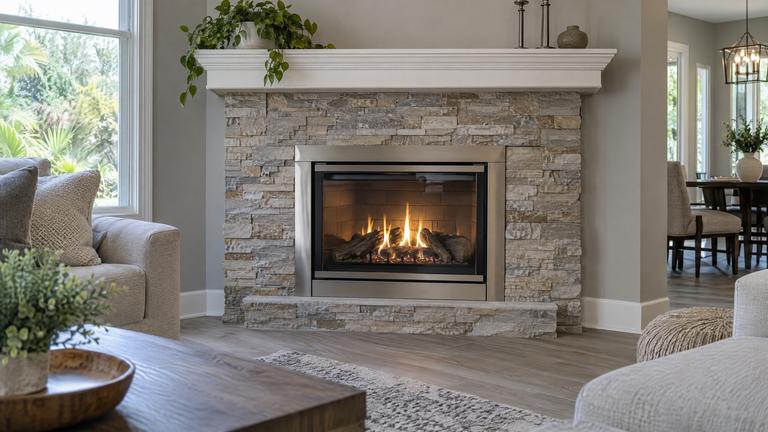
Family-owned chimney chase repair in Meridian Park
Same-day chase inspections when available for Meridian Park homeowners, plus a written repair plan you keep.
- Licensed & insured
- Locally run
- Family owned and operated
- Same-day service available



What we check on a framed chase
- Two-layer barrier behind stucco on wood sheathing
- Paint on new siding and trim
- Roofer coordination at the chase base
- Ladder, roof anchor or scaffold access
What a lasting chase repair takes
Flashing that laps the right way and drains out
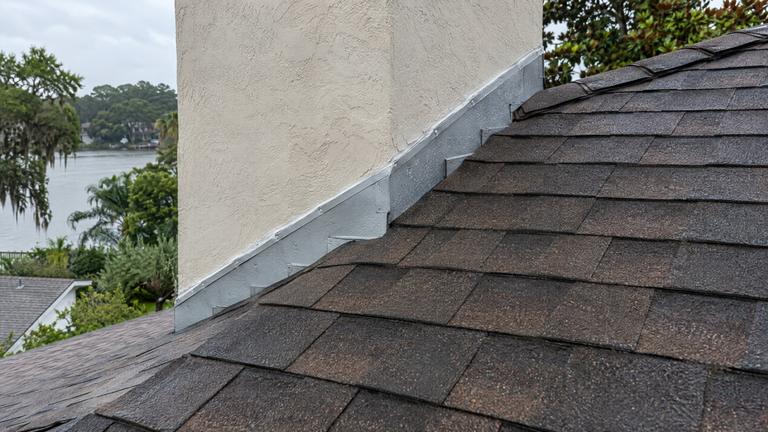
Flashing on a chase works by lapping. The upper layer goes over the lower layer, so water runs down and out instead of behind. R703.4 of the Florida Building Code calls for flashing applied shingle-fashion or per the maker's instructions, placed so water stays out of the wall cavity and away from the framing.
The same section says flashing extends to the surface of the exterior finish. A flashing that ends behind the siding can dump water onto the sheathing instead of outside.
We check laps at the base, around trim that breaks the wall and where the chase meets the house. A reversed lap can stay hidden until the rot is deep, so our crew points out each one we find and corrects it in the new work. Trim ledges and horizontal joints get a small flashing that kicks water out past the siding face.
Carrying the barrier to the top of the chase walls
The top of a chase is where the barrier often goes wrong. Florida's code, in R703.2, calls for the barrier to run continuous to the top of walls and to be finished at penetrations so the wall stays weather-resistant. On a chase, that top edge sits right under the metal cover.
If the barrier stops short of the top plate, water that gets past the cover edge lands on bare sheathing. If it ends in a way that lets water track behind it, the result is the same.
With the upper siding off a chase in Meridian Park, our crew runs the barrier up to the top plate and laps it so water sheds onto it, not behind it. That detail disappears once the siding is back, which is why it gets checked before the first board goes on.
Patching chase stucco or stripping a whole side
A small stucco repair on a chase is cut out square, the barrier and lath are lapped into the old, and the coats are built back up. That works when the damage is local and the stucco around it is sound and firmly attached. The edges of a patch are cut back to firm, well-attached stucco, never feathered over a loose area.
When a whole face of the chase is cracked, hollow or stained, patching one spot at a time tends to chase the damage around the wall. Stripping that face lets our crew see and replace every soft sheet of sheathing at once, and it gives a single, even finish.
We explain which approach fits your Meridian Park home and why. The estimate prices the patch and, where it makes sense, the full-face option, so you can choose with both numbers in front of you.
Animals that move into chase gaps
Gaps in a chase are an open door for animals. Squirrels, birds, rats and insects move into openings at the top, at loose trim and at rotted corners. Once inside, they can nest in insulation, chew wiring and leave droppings that hold moisture against the wood.
Animal damage and water damage tend to go together, since the same gap lets in both. Birds and squirrels also pull at loose barrier and insulation to build nests, which opens new paths for rain.
Our crew closes animal entry points as part of the chase repair and checks inside for nests and chewed wiring. If an animal is still living in the chase, we tell you before closing it so the right next step can be arranged, because sealing one inside creates a bigger problem. The estimate lists each opening we closed. Screens or metal patches used to close gaps stay clear of the air space around the pipe.
Other work in Meridian Park
-
-
-
-
-


Quick answers on chimney chase repair
Can a chase be changed from siding to stucco?
Yes, as long as the framing is sound and flat. Stucco over wood needs a two-layer barrier, corrosion-resistant lath and three coats, so we price it as its own option next to a like-for-like siding repair.
Should I repair the chase before putting my home on the market?
A chase with visible rot or leaks tends to come up in a buyer's inspection. Repairing it first, with the work put in writing layer by layer, gives buyers a clear answer. If you would rather sell as is, our written estimate helps both sides agree on the work.
Request your free estimate
Share the job details and arrange a free inspection with our local team.
- Free inspection
- No hidden fees
- Family owned and operated
Need an answer now? Call (352) 675-6376
Your request is received
Thank you. We will contact you to discuss the job and confirm an appointment.