
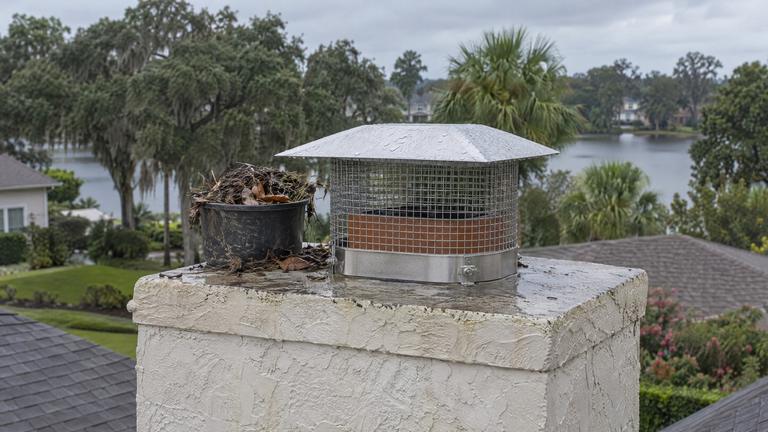
Family-owned chimney animal removal in Mills 50
Scratching, chirping or fluttering in your Mills 50 chimney? Our family-owned team assesses it and plans the lawful next step.
- Licensed & insured
- Locally run
- Family owned and operated
- Same-day service available



The parts of an animal removal job in Mills 50
- Assessment of the animal and any nesting
- Smoke shelf cleared and checked
- Chimney sweep after nesting
- Timing set around protected species
Our approach to chimney wildlife in Mills 50
Enough open area for the flue to work
A screened cap must still let the chimney breathe. The same code section sizes the screen's open area, its net free area, at four times or more that of the flue outlet below it, and it calls for screen material with heat and corrosion resistance equal to set gauges of galvanized or stainless steel. A cap that is too small or too fine chokes the flue. We size each cap to the flue it covers. A screen that meets the area rule still needs cleaning, since soot can close it down over time.
Cracks in the crown around the flue
The crown is the concrete or mortar top that closes a masonry chimney around its flue. Cracks and gaps there let water in, and larger openings can give small animals a way into the chimney structure even under a cap. We look at the crown whenever we fit a cap. Sealing small cracks or rebuilding the crown is chimney crown repair and appears as its own line on the estimate. A cap sitting on a failing crown can also loosen over time, which reopens the route the cap was meant to close.
An old nest found at the start of the season
Nests built in spring are often found in fall, when someone looks up the flue before the first fire. By then the nest is usually empty, though that still needs confirming, and for swifts the birds must have left. We remove the material, sweep the flue and check the damper and cap, so the first fire of the season starts in a clear chimney. If the nest turns out to be active, the plan changes to match the animal and the rules for it.
What to tell us when you call
A few details from you help us plan the visit and bring the right equipment to your Mills 50 home. You do not need to climb anything or look up the flue. If you have seen an animal on the roof or near the chimney top, describe it as well as you can.
- What the sound is like and what time of day you hear it
- Whether anything has fallen into the firebox
- Whether the chimney has a cap you can see from the ground
- Whether the fireplace is wood-burning, factory-built or unused
Other work in Mills 50
-
-
-
-
-
-


Chimney animal questions from Mills 50
How much does chimney animal removal cost in Mills 50?
It depends on the animal, access to your Mills 50 roof, how much cleanup is needed and the cap required. The inspection is free, and you get a written price for each part before any work.
Is it legal to catch the animal and let it go elsewhere?
Florida's rule on nuisance wildlife, F.A.C. 68A-9.010, lets a property owner, or someone the owner authorizes, remove nuisance wildlife only by permitted methods, and it limits where a live-caught animal can be released. Bats and nesting birds come with separate limits, so we bring in a wildlife specialist when one is needed.
Request your free estimate
Share the job details and arrange a free inspection with our local team.
- Free inspection
- No hidden fees
- Family owned and operated
Need an answer now? Call (352) 675-6376
Your request is received
Thank you. We will contact you to discuss the job and confirm an appointment.