
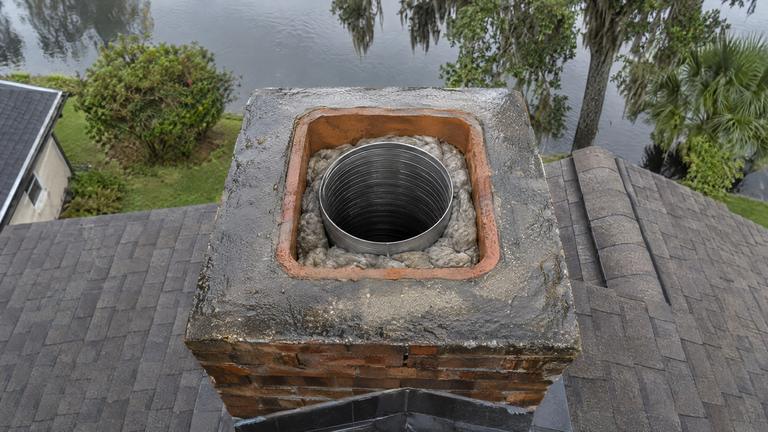
Chimney relining and liner installation in Moss Park
Clear relining proposals for Moss Park homeowners, from a family-owned team that installs what it quotes and stands behind it.
- Licensed & insured
- Locally run
- Family owned and operated
- Same-day service available



What we measure in Moss Park before relining
The flue tells us most of what the liner needs. Here is part of what we record in Moss Park.
- Flue dimensions and the usable route
- Cleaning of the flue and smoke chamber
- Clearances to combustibles we could confirm
- Permit requirements for the job
What goes into a liner job in Moss Park
Worth reading before you approve a liner for your Moss Park home.
Four kinds of lining the residential code accepts
Section R1003.11.1 lists four ways to line a flue for residential appliances. Clay flue lining made to ASTM C315, chimney lining systems listed to UL 1777, factory-built chimneys or chimney units listed to go inside masonry, and other approved materials that flue gases and condensate as hot as 1,800 degrees Fahrenheit cannot corrode, erode, soften or crack.
Relining an existing chimney usually comes down to one of the first three. Your estimate names which route we propose, why it suits the chimney and the appliance, and what the other routes would involve if you want to compare them.
How far a clay lining is meant to run
For clay flue liners, section R1003.12 of the residential code calls for installation to ASTM C1283, running from at least 8 inches below the lowest inlet, or from the top of the smoke chamber on a fireplace, to a point above the enclosing walls.
When we judge an old clay lining, gaps in that run, missing sections or tile that stops short of the top all count as findings. We note where each one sits in the flue, because their position and number help explain whether a repair or a full relining is the sensible answer for your chimney.
Proving the flue before the liner is ordered
It pays to prove the inside of a chimney before installing a liner. One manufacturer suggests lowering a short piece of liner of the intended size down the chimney, or using a liner guide cone, to see whether it passes all the way to the bottom.
We do that before parts are ordered, so a hidden restriction shows up on inspection day rather than installation day. If the test piece stops, we find where and why, whether it is an offset, a broken tile or old debris, and the estimate reflects what it will take to get past it.
Smoke at the start of a fire
Smoke that spills from the opening for the first minutes of a fire can point to a flue that is cold, too large or too short, though a blocked cap or a closed damper can do the same.
Relining with the right size and insulation helps when sizing is the cause. We check the simpler causes first, and we tell you if a liner would not solve it. Knowing when it happens, whether every fire or only in certain weather, helps narrow it down.
Other work in Moss Park
-
-
-
-
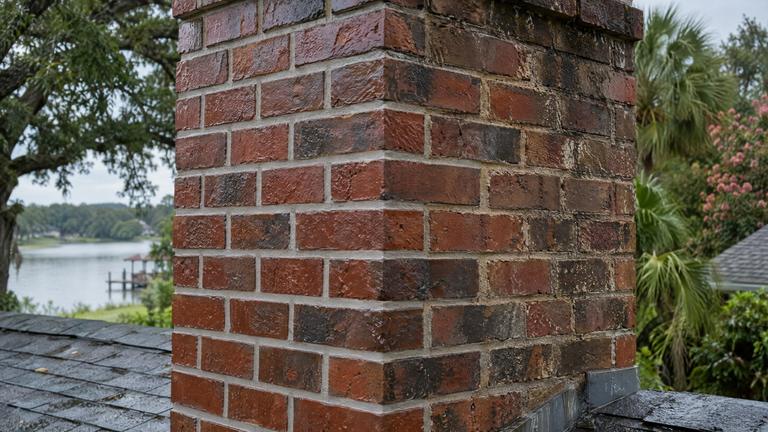
-
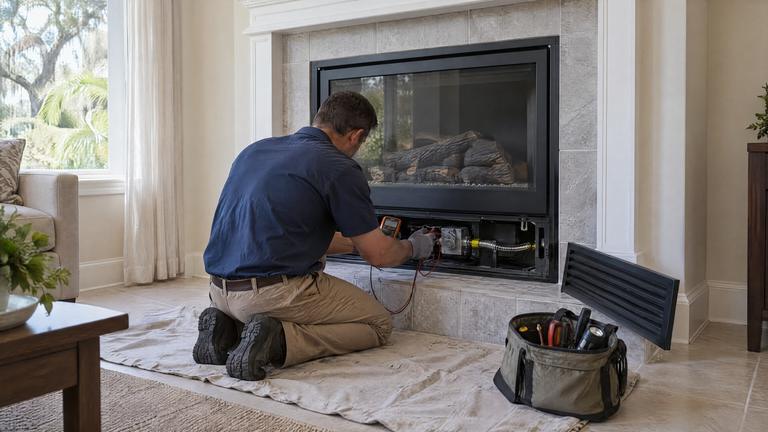
-
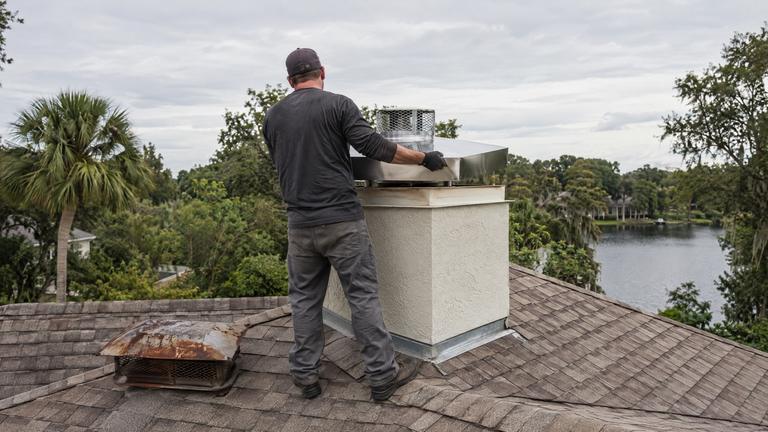


Learn more about chimney liner installation and reliningMoss Park services
Related chimney liner work

Before your relining in Moss Park
Relining questions answered by our family-owned crew in Moss Park.
Will relining fix a fireplace that draws poorly?
It can when the flue size or temperature is the cause. Poor draw can also come from a blocked cap, a closed damper or a short chimney. We check those first and recommend relining only when it answers the actual problem.
Do I need to be home during the installation?
Someone needs to give us access to the fireplace or appliance area, since the job connects inside the house as well as on the roof. We agree on a time that suits you when we schedule.
Request your free estimate
Share the job details and arrange a free inspection with our local team.
- Free inspection
- No hidden fees
- Family owned and operated
Need an answer now? Call (352) 675-6376
Your request is received
Thank you. We will contact you to discuss the job and confirm an appointment.