
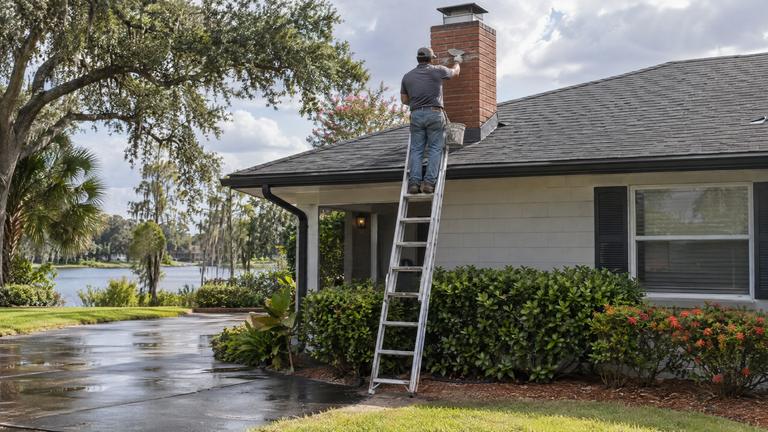
Family-owned chimney repair serving Orlo Vista
Free chimney inspection in Orlo Vista, a written estimate for each repair and 10% off work booked within 72 hours after it.
- Licensed & insured
- Locally run
- Family owned and operated
- Same-day service available



How we scope a chimney repair in Orlo Vista
- Flue tiles, liner joints and relining options
- Smoke chamber walls and their parging
- Cleanout door and any stovepipe entry
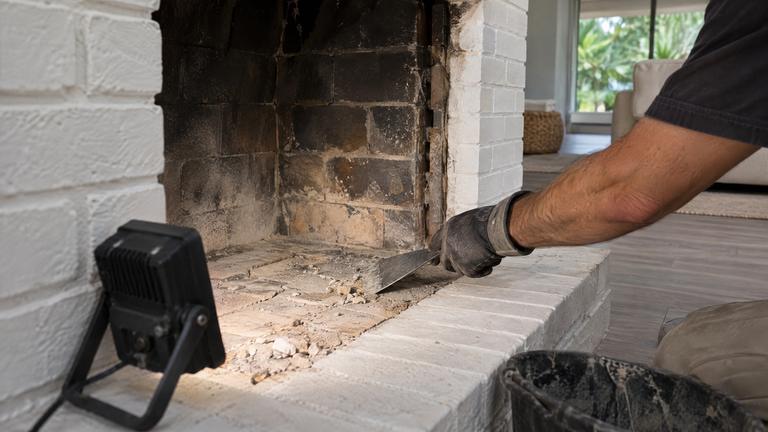
- Old mounts and anchor holes to remove and patch
Repairs that fit the way your chimney is built
Overhang and drip edge keep water off the faces
Rain leaving a chimney top has to fall clear of the brick, or it runs down the faces and soaks in. BIA guidance shows the cap overhanging the faces. Where a cap does not overhang, it calls for the last two courses of brick to be corbeled out to form a drip, to help reduce the water running down the face.
A drip edge is also required by the Florida Building Code on the cap of a masonry chimney. The drip is simply the edge that water falls from, set out beyond the brick so the water drops free instead of creeping back to the masonry.
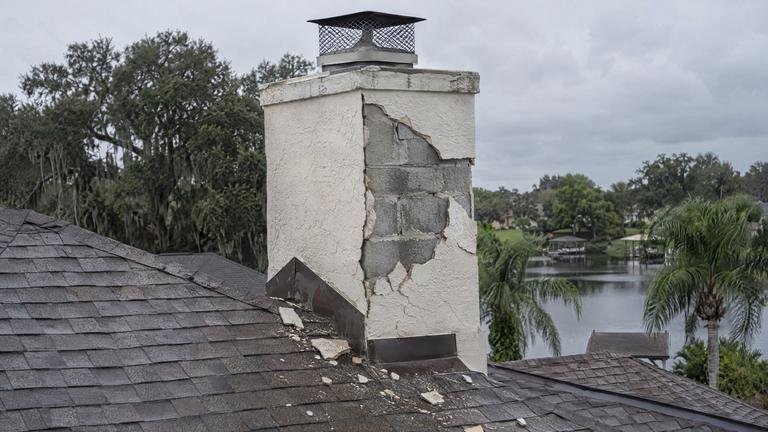
You can often read a missing drip from the ground. Streaks, dark wet patches or white deposits that start just under the top and spread down the faces can point to water leaving the top the wrong way. A flush top with those marks gets its own estimate line for a cap that overhangs.
Base flashing and counterflashing work as a pair
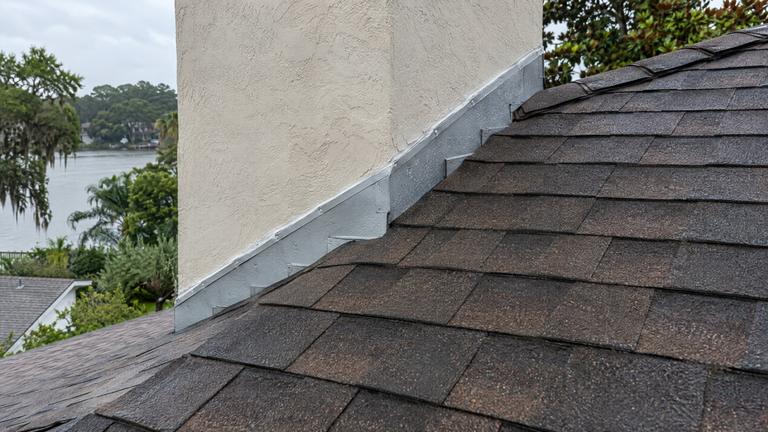
Where a chimney passes through the roof, two layers of metal keep water out. Base flashing goes in first. It turns up the face of the chimney and runs out along the roof, and the roofing laps over it, so water on the roof flows across the metal rather than into the joint.
Counterflashing comes second. It is set into the chimney masonry and laps down over the top edge of the base flashing, covering the gap where that layer meets the brick. BIA guidance has the counterflashing lap the base flashing by at least three inches, while the Florida Building Code requires counterflashing on a shingle roof to be corrosion-resistant metal of a set minimum thickness.
When either layer is missing, bent, loose or rusted, water can find its way behind the other. The fix belongs to our chimney flashing repair service, and the estimate says which layer failed and which one stays.
Weep holes and through-flashing at the base of veneer
At the bottom of a brick or stone veneer chimney there should be flashing under the first course, with small openings called weep holes just above it. Together they give water that gets behind the veneer a way out. The Florida Building Code requires both where masonry veneers a frame chimney.
Weeps are easy to spoil by accident. They get filled with caulk by someone who takes them for gaps, painted over or clogged from inside by mortar droppings. Brick Industry Association guidance treats flashing and weeps as essential details that no coating replaces, and it describes clearing clogged weeps with a thin dowel or stiff wire without damaging the flashing behind them.
Any water complaint on a veneer chimney includes a look at its base for the points below. Reopening blocked weeps, or adding them where they were left out, is priced as a separate line from the repair higher up.
- A row of open weeps just above the base flashing
- Flashing visible at the bottom course
- No caulk, paint or mortar plugging the openings
Decorative shrouds on a factory-built chimney top
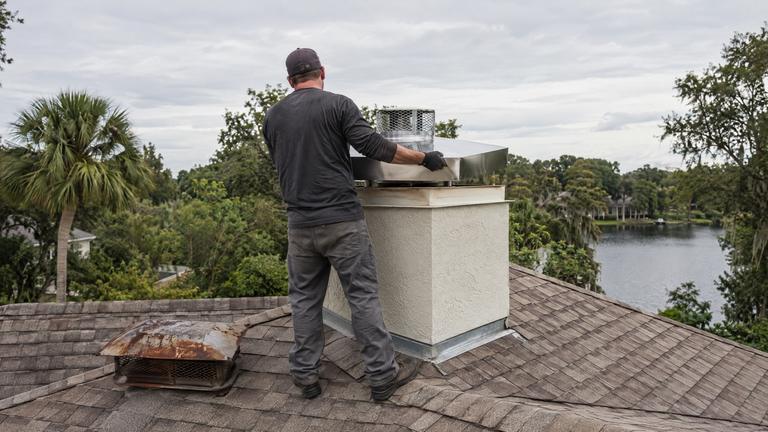
A shroud is a decorative metal housing set over the top of a chimney to hide the cap and pipe. On a factory-built chimney, the Florida Building Code allows one only where it is listed and labeled for that specific chimney system and installed per the maker's instructions.
The top of a factory-built chimney is part of what was tested. A shroud that encloses the cap can change conditions at the outlet, and the code ties it to the system's own listing. A catalog shroud can look right and still sit outside it.
If a shroud is already in place, the details below show whether it was made for your system. A listed one is repaired or replaced with the listed part. An unlisted one comes off, and the estimate shows the cap or listed shroud that replaces it.
- The maker and model on the chimney label
- A matching listing for the shroud itself
- An install that follows the shroud maker's instructions
Other work in Orlo Vista
-
-
-
-
-
-


What Orlo Vista homeowners ask about chimney work
How do I set up a chimney repair visit?
Call (352) 675-6376 or use the form, and tell us what you see and where on your Orlo Vista home. Same-day visits are available when the schedule allows. The visit starts with a free inspection, and you get a written estimate before any repair begins.
Can you turn a home inspector's notes into a repair plan?
Yes. We check each chimney item the report mentions, name the component and write the repair on the estimate with its price. The estimate is ready to share with the other side of a sale.
Request your free estimate
Share the job details and arrange a free inspection with our local team.
- Free inspection
- No hidden fees
- Family owned and operated
Need an answer now? Call (352) 675-6376
Your request is received
Thank you. We will contact you to discuss the job and confirm an appointment.