
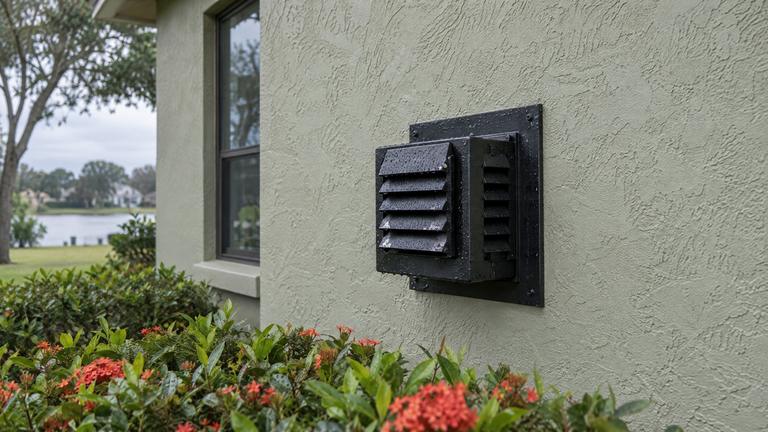
Gas fireplace venting from a family-owned team in Park Central
From a crushed cap to a joint that leaks exhaust back into the air side, our technicians find the vent fault and fix it the maker's way.
- Licensed & insured
- Locally run
- Family owned and operated
- Same-day service available



Line by line, your venting proposal in Park Central
Four of the vent points our specialists record in Park Central, priced line by line wherever a repair is needed.
- Clearance from the cap to windows and doors that open
- Distance from the cap to the gas meter and regulator
- Roof penetration, storm collar and flashing
- Draft check and spill switch on natural-vent units
Gas fireplace venting explained for Park Central homeowners
Plain answers about fireplace vents in Park Central, from the people who repair them.
Aluminum liners that need checking later
Flexible aluminum liners are light and easy to install, and they need watching. One maker's co-linear instructions say aluminum venting should be professionally inspected periodically for corrosion and damage and replaced when necessary.
If the installation will not allow future inspection or replacement, the same instructions call for stainless steel liners instead. Our pros ask that question at the planning stage in Park Central, so the liner you pay for suits the access your chimney actually offers.
Soot on the glass is not always the vent
When glass turns black, owners often suspect the vent first. Troubleshooting tables in two maker's manuals start somewhere else, with flames touching the logs, and tell the installer to place the log set as the instructions show and to inspect the injector and air intake area for debris.
Our pros follow the same order. They check the log layout against the diagram before opening the vent run, and they only quote vent work when the logs and air intake check out.
Looking inside a framed chase
A framed chase hides the vent between the fireplace and the roof. Some have an access panel, and many do not. One B-vent fireplace manual asks for the chase to be insulated like an outside wall while keeping clearances to the pipe.
Our crew checks whatever the chase lets us reach and states what it could not see. If opening the chase is the only way to settle a question about the vent, the estimate shows the access and the patch as their own lines.
Add-ons the listing does not include
A gas fireplace is tested as a complete package. One manual says not to use a blower insert, heat exchanger insert or any other accessory not approved for that fireplace, and not to modify the fireplace under any circumstances.
The same manual lists unauthorized modification of the venting system as an action that voids the venting warranty. Our technicians remove parts that do not belong, restore the listed configuration and tell you which accessories your model does allow.
When a porch around the cap gets walls
Sidewall caps are meant to end outdoors. Turning an open porch into a sunroom, adding glass panels to a lanai or framing in a covered patio can leave the cap inside a space that is no longer outdoors in the sense the manual means.
Our specialists look at the finished enclosure, or the plans for one, and tell you whether the vent has to move. When it does, the estimate shows the new route and the wall and finish work on separate lines.
Other work in Park Central
-
-
-
-
-
-


Fireplace vent questions from Park Central, answered
Vent questions we hear on service calls in Park Central, answered in plain terms.
Can I plant shrubs or build a deck near the vent cap in Park Central?
Check the distances first. One maker keeps bushes, fences, sheds and decks at least 24 inches from the front of the cap and allows a cap under a deck only when it is open on two sides. We measure your layout for free.
Can attic insulation touch the vent pipe?
No. One maker asks for air space all around the pipe and warns against packing it with insulation, which can cause high temperatures. Where the pipe passes into an attic, a firestop or insulation shield keeps that space open.
Request your free estimate
Share the job details and arrange a free inspection with our local team.
- Free inspection
- No hidden fees
- Family owned and operated
Need an answer now? Call (352) 675-6376
Your request is received
Thank you. We will contact you to discuss the job and confirm an appointment.