
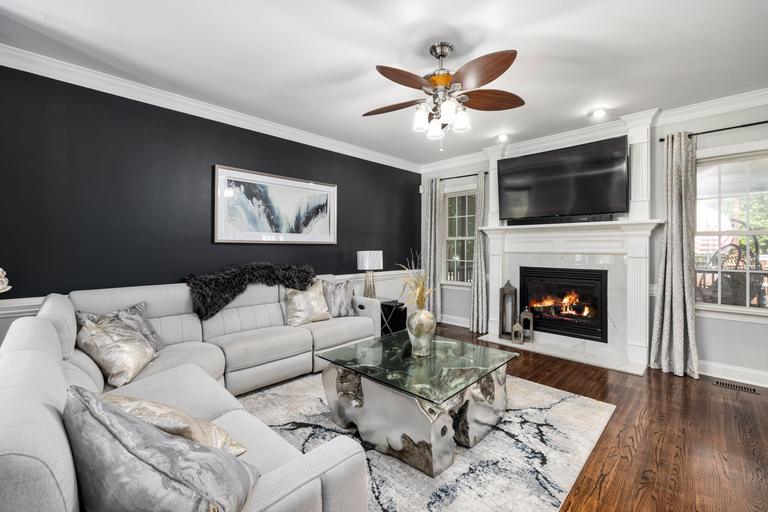
Ventless gas fireplace repair with a free inspection in Pershing
Straight answers on your ventless fireplace in Pershing, from the room size to the mantel, on a free written estimate.
- Licensed & insured
- Locally run
- Family owned and operated
- Same-day service available



Measured and tested at your Pershing vent-free fireplace
Vent-free units depend on the pilot, the logs and the room together, so the Pershing visit covers all three.
- Pilot air inlet and orifice checked for lint
- Log placement matched to the model's diagram
- Room volume measured against the rated Btu input
- Mantel, side wall and ceiling clearances measured
Ventless gas fireplace repair, the way we do it in Pershing
Pulled from the manuals and code sections our Pershing technicians work from on every vent-free job.
The confined space worksheet in a vent-free manual
Vent-free manuals include a worksheet built on the fuel gas figure of 50 cubic feet per 1,000 Btu per hour. One maker's example is a 20 by 16 foot room with an 8 foot ceiling, which holds 2,560 cubic feet and supports 51,200 Btu per hour of total appliance input.
During the free inspection our technicians run that arithmetic for your room and show you the result. It takes a few minutes and settles whether the space counts as confined before anyone blames the pilot.
Ventless firebox enclosures and their listing
Ventless fireboxes are listed products in their own right. Section 621.7.1 requires ventless firebox enclosures used with unvented decorative heaters to be listed to ANSI Z21.91, and one maker's firebox manual says its units were tested only with ANSI Z21.11.2 vent-free gas logs.
That pairing matters during repair. We match the log set to the firebox label, since a burner that fits the opening may still be the wrong system for the box. Where the pairing is wrong, you learn about it before any part is ordered.
Yellow tipping and carbon monoxide
One manual warns that yellow tipping of the burner flame could mean higher levels of carbon monoxide, and tells owners to turn the heater off and follow the troubleshooting steps. It also says not to confuse this with brief orange patches from dust or fine particles burning in the flame.
Telling the two apart takes a trained eye. Our technicians watch the burner through a full cycle, then clean or adjust only as the manual directs.
Vent-free units in a garage
One log set manual covers garages directly. If the heater goes in a home garage, the pilot and burner must sit at least 18 inches above the floor, and the unit must stand where a moving vehicle cannot hit it.
Its instructions keep these heaters away from places where flammable liquids or vapors are used or stored, which rules out many garages. We check both conditions before servicing a garage unit.
Renovation dust and a running vent-free burner
Drywall sanding and floor refinishing fill a room with fine dust. One manual says not to run a vent-free heater under dusty conditions, and a firebox maker warns that heavy dust on the burner and logs increases carbon monoxide formation.
Keep the fireplace off until the dust settles and the room is cleaned. After a renovation, our technicians clean the burner, pilot and logs, then test the flame before you use it again.
Other work in Pershing
-
-
-
-
-


Learn more about ventless gas fireplace servicePershing services
Ventless fireplace answers from our Pershing team
Short answers from our Pershing technicians. Call with anything we have not covered.
Is soot on vent-free logs normal?
No. One maker says properly installed and maintained log sets do not deposit soot, and that owners who see it should stop using the set and call for service. Log position, drafts, dust and gas pressure are the usual suspects.
How often should a ventless gas fireplace be serviced?
Makers want a professional service person to inspect it before first use and then every year at minimum. Homes with pets, carpet or heavy lint may need cleaning more often, and one maker suggests cleaning the burner air openings every three months while the heater is in use.
Request your free estimate
Share the job details and arrange a free inspection with our local team.
- Free inspection
- No hidden fees
- Family owned and operated
Need an answer now? Call (352) 675-6376
Your request is received
Thank you. We will contact you to discuss the job and confirm an appointment.