
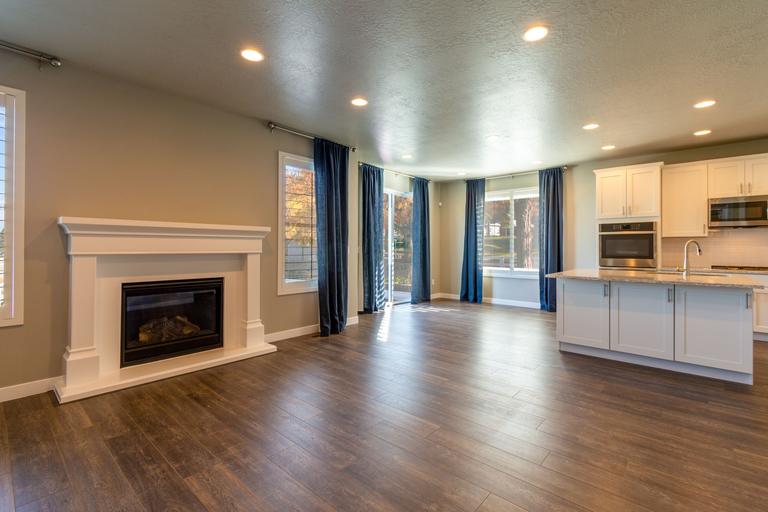
Insulated chimney liners installed in Piedmont
A liner sized to your appliance and proven through your flue before ordering. Free inspection from our local family-owned team in Piedmont.
- Licensed & insured
- Locally run
- Family owned and operated
- Same-day service available



Line by line, your liner proposal in Piedmont
Every line below is confirmed at the flue of your Piedmont home before a liner is ordered.
- Appliance type, fuel and outlet size
- Test piece or guide cone run through the flue
- Offsets and changes of direction
- Listed liner product and diameter
Relining explained for Piedmont homeowners
Plain explanations of relining in Piedmont, from the crew that installs the liners.
Liquid fuel and solid fuel never share a liner
One liner maker states that an appliance burning a liquid fuel must not be connected to a chimney liner used to vent a solid-fuel appliance. It is a firm rule written into the instructions, not a preference.
We ask what burns in each connected appliance before proposing a layout, and we keep each flue to the use its listing allows. If two appliances would conflict, we explain the options in writing, such as separate flues or a change of appliance, and leave the choice with you.
Where the insulation wrap stops
When a liner is insulated with a wrap, one manufacturer has the insulation run from the bottom of the tee, including the tee cap, and stop about 3 inches below the crown to allow for vertical thermal expansion.
Details like that decide whether the liner can move freely as it heats and cools. A wrap that runs too high can bind at the top plate, and one that stops too low leaves part of the flue bare. We install to the instructions line by line and note the insulation on your records.
Water in the flue and the liner cap
A cap on the liner keeps rain from falling straight down the flue. Water that enters through the crown, the brick or the flashing takes a different path and needs its own repair.
We trace where water is actually getting in before crediting a liner or cap with a fix it cannot deliver. Stains on the ceiling beside the chimney, damp in the firebox and rust at the damper each point to different paths, so tell us exactly where you have seen water.
Tile and mortar pieces at the base of the flue
Pieces of clay tile or mortar collecting on the smoke shelf, in the cleanout or in the firebox suggest the lining is breaking down somewhere above.
We trace the source before recommending anything, because a single loose piece and a failing lining call for different answers and very different scopes. Keep a piece or two if you find them, since their shape and material help show where they came from.
Other work in Piedmont
-
-
-
-
-
-


Learn more about chimney liner installation and reliningPiedmont services
Related chimney liner work

Liner questions we hear in Piedmont
No sales pitch, only answers from our liner specialists in Piedmont.
Is the relining inspection really free in Piedmont?
It is. We inspect the flue at your Piedmont home without charge and without any obligation to book. The findings and a written estimate are yours either way.
Does a relined flue need a new chimney cap?
The relined flue gets its own liner cap as part of the system. A separate chimney cap is needed only in some layouts, and we explain yours before quoting.
Request your free estimate
Share the job details and arrange a free inspection with our local team.
- Free inspection
- No hidden fees
- Family owned and operated
Need an answer now? Call (352) 675-6376
Your request is received
Thank you. We will contact you to discuss the job and confirm an appointment.