
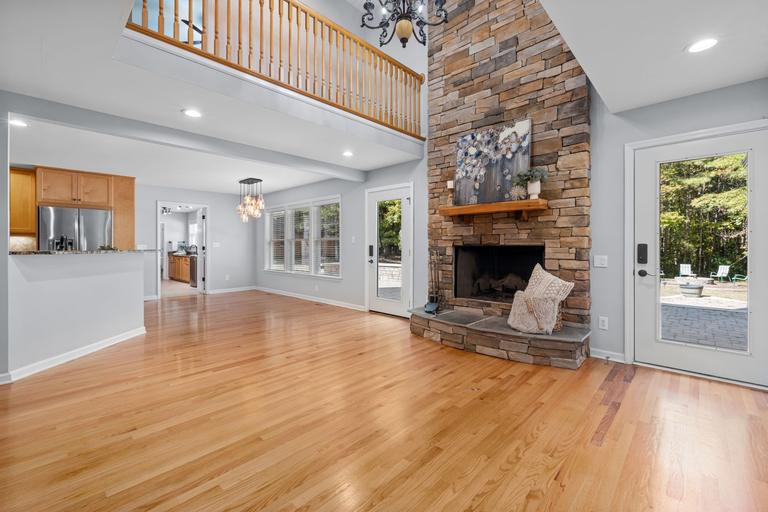
A new fireplace framed, installed and finished in Pine Hills
Wood-burning fireplaces installed in Pine Hills by a family-owned team that treats your home like its own.
- Licensed & insured
- Locally run
- Family owned and operated
- Same-day service available



Measured on your Pine Hills roof and walls, then written down
None of this comes from a showroom. Our installers confirm it on site during the free visit.
- Fireplace model and placement agreed against the manual
- Noncombustible face finish chosen with you
- Reframing for a replacement unit
- Drop cloths and dust control during the work
Before any wall is opened for a fireplace in Pine Hills
Explained by the crew that frames and pipes fireplaces in Pine Hills.
No vapor barrier or loose insulation against the unit
The E-series manual warns that the fireplace must not be installed against vapor barriers or exposed insulation, because sagging or loose insulation touching the unit could cause localized overheating and a fire. Other factory-built manuals carry similar warnings about air spaces.
On an exterior wall, that means the wall cavity behind the fireplace is finished before the unit goes in, so insulation stays where it belongs. We check that detail during framing, when it can still be corrected easily.
Counting chimney sections before ordering
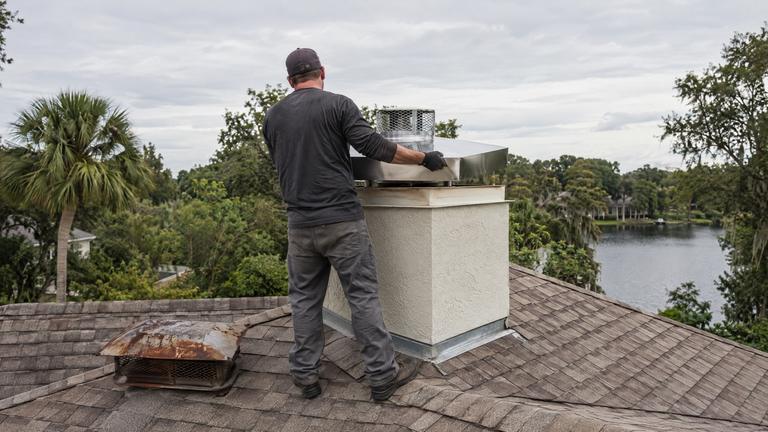
A factory-built chimney is ordered as a parts list: straight sections, any offsets and their straps, a firestop for each floor or ceiling, an attic shield, the roof parts, a storm collar and the listed cap. The count comes from floor heights, attic depth, roof pitch and the ten-foot rule.
We measure each of those at the planning visit and build the list from them, with a little margin where the manual allows. That way the crew arrives with the right chimney for your house and no second trip to the supplier.
Firebox depth in a masonry fireplace
The code sets a minimum firebox depth for concrete and masonry fireplaces, with a separate provision for shallow Rumford-style fireplaces built to specific proportions. Depth is what lets smoke rise into the throat instead of rolling into the room.
When we plan a masonry fireplace, depth, opening size and throat are laid out together from the code. A beautiful face with a shallow box behind it is a smoky fireplace, and we would rather draw it right than fix it later.
The flue of a new masonry chimney
A new masonry chimney carries its smoke through a flue liner sized to the fireplace opening. The code sets how the liner is built and supported and how much space surrounds it.
We size the flue to the firebox and the chimney height at the design stage, because an undersized flue makes a smoky fireplace and an oversized one draws poorly. The flue size appears on the drawings and on the estimate, so it is settled before the chimney rises past the roof.
Other work in Pine Hills
-
-
-
-
-


What Pine Hills homeowners want to know about adding a fireplace
Answered by the family-owned team that builds fireplaces in Pine Hills.
Is a masonry fireplace better than a factory-built one?
Neither is automatically better. Masonry is heavier, needs a footing and takes longer to build; factory-built frames in faster and lighter. We lay out the trade-offs for your house and recommend the one that suits it.
Do you install gas or electric fireplaces too?
Yes, as separate services with their own requirements. This service covers wood-burning fireplaces and their chimneys. If you are undecided, we can compare the options at the same free visit.
Request your free estimate
Share the job details and arrange a free inspection with our local team.
- Free inspection
- No hidden fees
- Family owned and operated
Need an answer now? Call (352) 675-6376
Your request is received
Thank you. We will contact you to discuss the job and confirm an appointment.