
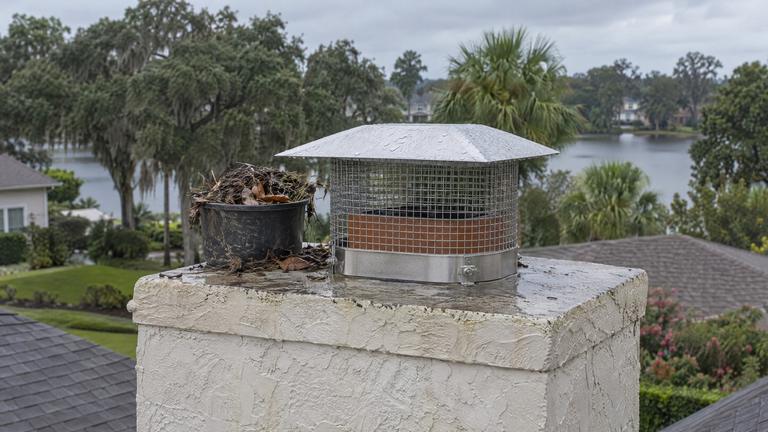
Chimney animal removal by local pros in Pineloch
Nest removal, flue cleanup and a sturdy screened cap for Pineloch chimneys, priced in writing with no hidden fees.
- Licensed & insured
- Locally run
- Family owned and operated
- Same-day service available



Written down for your Pineloch chimney
- Damper operation and seal checked
- Listed cap for factory-built chimneys
- Workmanship warranty on the cap
- Timing set around protected species
Chimney animal know-how for Pineloch homes
What happens when swifts are nesting
When swifts are raising young in your chimney, the work waits. Keep the damper closed so no bird drops into the room, and keep the fireplace off. After the birds have left for the season, we remove the nest material, clean the flue and fit a screened cap so the chimney is closed before they would return. The written plan gives you both steps so nothing is forgotten in between. If a young bird falls into the firebox in the meantime, keep the doors closed and ask us or a wildlife rehabilitator for advice.
Enough open area for the flue to work
A screened cap must still let the chimney breathe. The same code section sizes the screen's open area, its net free area, at four times or more that of the flue outlet below it, and it calls for screen material with heat and corrosion resistance equal to set gauges of galvanized or stainless steel. A cap that is too small or too fine chokes the flue. We size each cap to the flue it covers. A screen that meets the area rule still needs cleaning, since soot can close it down over time.
The order the work follows
Chimney animal jobs go wrong when steps are skipped, so we follow a set order. Each step waits for the one before it, and the estimate shows where your chimney stands in the sequence. Skipping to the cap is the one shortcut we refuse, because it is how animals end up trapped.
- Identify the animal and whether it is nesting
- Lawful removal, departure or exclusion
- Cleanup of nest material and droppings, then a sweep
- Flue and damper inspection
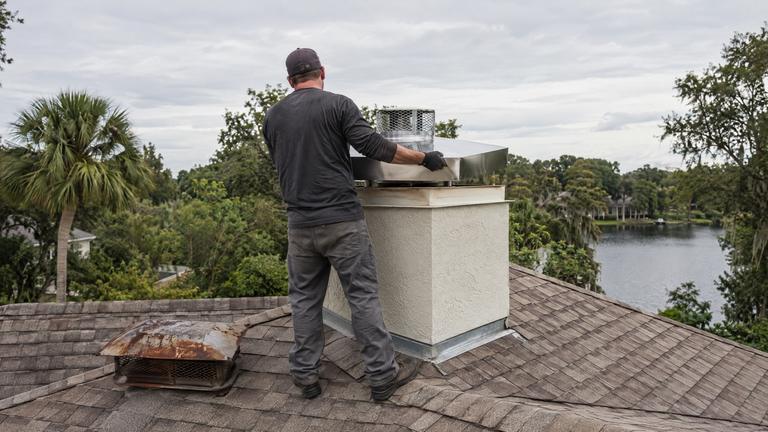
- A screened cap or other exclusion to keep it empty
How animals get into factory-built chimneys
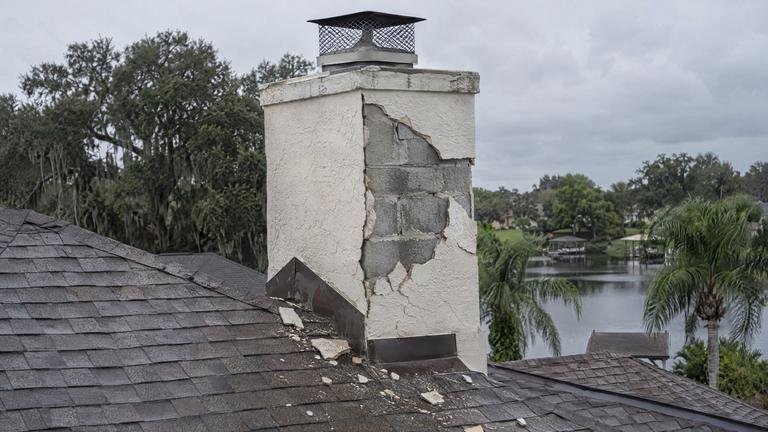
Factory-built chimneys have a metal pipe with a listed cap on top, running inside a framed chase. Animals get in through a damaged cap into the pipe, or through gaps at the chase cover into the chase itself. Each route needs a different fix. We identify which one the animal used and quote the listed cap, the chase cover work or both. Closing only one of the two routes leaves the other open for the next animal. The cap for the pipe must be the listed one, while the chase cover is made to the chase's own measurements.
Other work in Pineloch
-
-
-


Chimney wildlife answers for Pineloch homeowners
Do I get anything in writing after the work?
Yes. You get a written record of the work we did, including the cleanup and the cap we fitted. It is useful for your house file or when you sell.
Do you need access to the roof?
Usually. Most of the assessment and all of the cap work happen at the chimney top, so we need safe roof access. We also look from the firebox and tell you if any part has to wait for a second visit.
Request your free estimate
Share the job details and arrange a free inspection with our local team.
- Free inspection
- No hidden fees
- Family owned and operated
Need an answer now? Call (352) 675-6376
Your request is received
Thank you. We will contact you to discuss the job and confirm an appointment.