
Chimney sweep for fireplaces and wood stoves in Richmond Heights
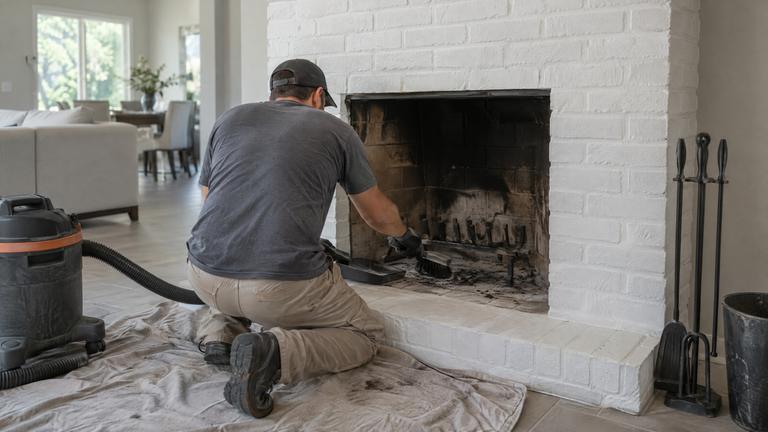
Get the chimney swept before the next fire, with drop cloths down and the soot bagged and carried out.
- Licensed & insured
- Locally run
- Family owned and operated
- Same-day service available



Your chimney cleaning, itemized
- Firebox, grate and old ash cleaned out
- Glazed creosote treatment quoted as its own line
- Stove connector pipe cleaned and joints reset
- Roof area around the chimney covered
Sweeping details that matter for your fireplace
Which flue gets swept in a multi-flue chimney
Some chimneys carry more than one flue inside a single stack. From the roof you may see two or three openings side by side. Each serves a different fireplace or appliance, and each holds its own deposits.
Before cleaning, our technicians match every flue to what it serves, by checking the draft from each opening or tracing each one from the top, so the flue brushed is the one connected to the fireplace you use.
The written estimate names each flue by what it serves, such as the living room fireplace or a stove in the family room, so you know which ones are included. A flue that serves nothing, or one you stopped using, is noted too, since it may still need a cap. With several openings on the roof, no Richmond Heights homeowner pays for a flue that was never touched.
When the brush finds gaps in the flue lining
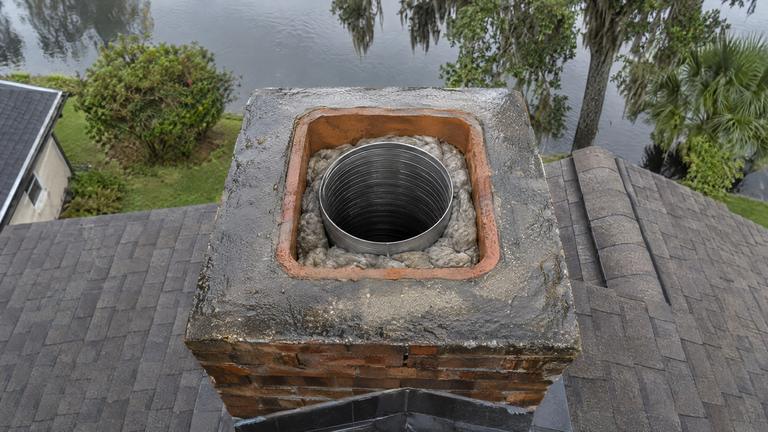
A clean flue shows its lining clearly. In a masonry chimney that lining is usually clay tile, and the Florida Building Code describes it laid in refractory mortar with tight joints, carried up the chimney as a smooth passage.
Sometimes brushing reveals something else. Joints with the mortar gone, a tile that has slipped out of line, or a stretch where the chimney brick shows with no lining in front of it. Each of those breaks the smooth, tight-jointed passage the code describes.
Patching a lining is not part of the sweep. Our crew notes where the gap is and how far up it sits, which shapes the repair options. The finding goes on your Richmond Heights estimate as flue repair or relining, and the fireplace should stay unused until you decide.
Sweeping a fireplace in a condo or townhouse
A fireplace in a condo or townhouse often shares a roof, a wall or a chimney structure with neighbors. The flue serving your unit may run beside others, and the roof may be managed by the building rather than by you.
Access comes first. Our crew confirms whether roof access needs permission from the building's management, and whether the flue can be cleaned from inside the unit instead. Matching your fireplace to the right flue on the roof matters even more here, since the flue next to yours belongs to someone else.
The written record names your unit, your fireplace and your flue, which is useful if the building asks when the flue was last cleaned. Any finding that touches shared structure is written up so you can take it to the people responsible for it.
Why creosote in the flue is a fire hazard
Creosote is fuel. EPA guidance describes it as a highly combustible black or brown residue and says that if enough builds up in the chimney it could cause a chimney fire. One chimney maker adds that ignited creosote makes an extremely hot fire.
A fire belongs in the firebox. A thick layer of deposits in the flue gives heat and sparks from below something else to catch, out of sight and above the room. The thicker that layer grows, the more fuel sits waiting in the flue.
Removing the fuel is what a sweep does. Our technicians clear deposits from every surface the brushes reach and tell you plainly if any part of the flue still holds buildup they could not remove. In Richmond Heights, a glazed section is quoted for its own removal treatment, and the fireplace is best left cold until that is done.
Other work in Richmond Heights
-
-
-
-
-
-


Learn more about chimney sweep and chimney cleaningRichmond Heights services
Related chimney sweep work

What homeowners ask before a sweep
What if the flue has a hard, shiny coating the brushes cannot remove?
That is glazed creosote, and it calls for a separate removal treatment applied per the product label. We quote it as its own line, and the treated material is swept out on a second visit once it dries.
Will a sweep fix a fireplace that smokes?
It fixes the part caused by deposits in the flue. A damper that does not open fully, a clogged cap screen or wet wood can also cause smoke, so we check those too and note the results on the written record.
Request your free estimate
Share the job details and arrange a free inspection with our local team.
- Free inspection
- No hidden fees
- Family owned and operated
Need an answer now? Call (352) 675-6376
Your request is received
Thank you. We will contact you to discuss the job and confirm an appointment.