
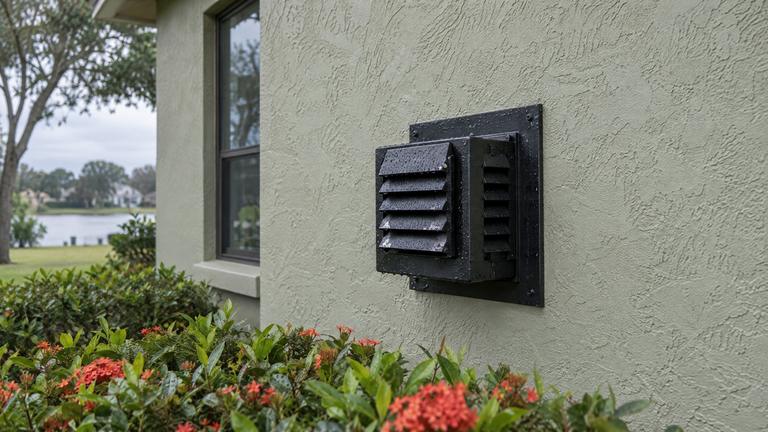
Gas fireplace venting by local pros in Rose Isle
Vent inspections the same day you call when the calendar has room. Our family-owned team repairs gas fireplace vents across Rose Isle with a workmanship warranty.
- Licensed & insured
- Locally run
- Family owned and operated
- Same-day service available



Inside your gas fireplace vent quote in Rose Isle
Noted by our family-owned team in Rose Isle and explained in plain words before you decide anything.
- Vent type confirmed as direct vent or B-vent
- Clearance from the cap to windows and doors that open
- Run length compared with the maker's vent graph
- Wall, ceiling or roof access, listed as its own line
How we handle gas fireplace venting in Rose Isle
Notes from our gas fireplace vent technicians in Rose Isle.
Twist-lock joints that lock all the way
Twist-lock vent pipe joins by lining up the beads on the male end with the grooves on the female end and turning until the flanges meet. One maker says sealant is not needed on these joints and warns against silicone at the inner exhaust connections.
Screws are recommended in the same manual but not required. What matters is that every joint is fully turned and seated. A half-turned joint can look fine from the room and still leak, so our pros check each one they can reach by hand.
Counting the turns in a vent run
Every elbow adds resistance to a vent. One maker caps the total of all elbow angles in a direct-vent system at 270 degrees, so a run with two 90 degree elbows and two 45 degree elbows has used its whole allowance.
Remodels tend to add elbows as the pipe is steered around new framing. Our pros count every elbow they can see or trace and compare the total with your manual. An extra turn hidden behind a wall is one of the reasons a relocated fireplace starts misbehaving.
Height and elbow limits on a B-vent run
Vertical height has a floor and a ceiling in one B-vent fireplace manual, at least 8 feet and at most 40 feet between the top of the fireplace and the top of the cap. The same manual caps the turns at two 90 degree elbows, or four at 45 degrees, and treats a pair of 45s as one 90.
Each extra elbow is a place for draft to weaken. Our technicians count them along the reachable run and check the total height before blaming the controls for a fireplace that will not stay lit.
Manufactured homes and gas fireplaces
Not every gas fireplace is listed for a manufactured home. One direct-vent manual allows its unit in an aftermarket, permanently located manufactured home where local codes do not prohibit it, and it names the federal standard such installations must meet.
Our specialists check the model's listing and vent kit before recommending any repair in a manufactured home in Rose Isle. If the unit is not listed for that use, we say so plainly in the written estimate.
What the free venting inspection covers
The inspection costs nothing and carries no obligation. Our pros identify the fireplace and the vent type, check the cap and the space around it, measure the key clearances, look at every reachable joint and confirm the glass seal on direct-vent units.
You get a clear explanation on the spot and a written estimate for anything that needs work. If the vent is sound and the problem lies elsewhere, we tell you that too, so your money goes to the repair that fixes the fireplace.
Other work in Rose Isle
-
-
-
-
-
-


Asked in Rose Isle about gas fireplace venting
Quick answers from our gas fireplace vent team in Rose Isle. Anything else, just call.
Can a gas fireplace share a vent with another appliance?
No. One maker's direct-vent manual says each gas appliance needs its own vent system and that the vent must never be attached to a chimney serving a separate solid-fuel appliance. A shared vent is also a listed cause of poor draft on natural-vent units.
What does a B-vent fireplace need from its vent?
Type B pipe listed to UL 441, a listed cap and enough height. The Florida fuel gas code asks for the vent to end at least 5 feet above the draft hood, and the manual adds limits on offsets, elbows and slope.
Request your free estimate
Share the job details and arrange a free inspection with our local team.
- Free inspection
- No hidden fees
- Family owned and operated
Need an answer now? Call (352) 675-6376
Your request is received
Thank you. We will contact you to discuss the job and confirm an appointment.