
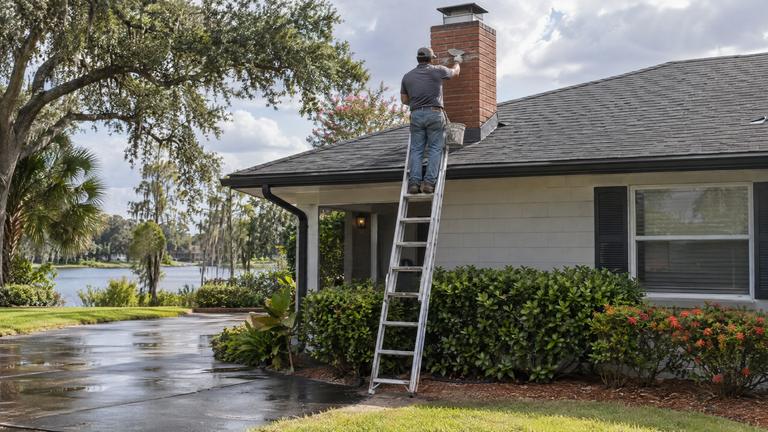
Chimney repair and diagnosis in Rosemont North
Locally owned chimney repair for Rosemont North homes, with a 24/7 emergency line for damage that cannot wait.
- Licensed & insured
- Locally run
- Family owned and operated
- Same-day service available



The lines on your chimney repair quote
- Base flashing and counterflashing at the roof line
- Step flashing along the chimney sides
- Spalled or broken brick to replace
- Chase top, collar and cap on metal chimneys
Chimney repair from the cap down to the firebox
Masonry chimney or factory-built system
Two chimneys can look alike from the yard and be built in completely different ways. A masonry chimney is built on site from solid brick, block grouted solid, stone or concrete, and the Florida Building Code sets how it is constructed, anchored, supported and lined. A factory-built chimney is a metal system that is listed and labeled, and the code requires it to be installed and terminated according to its maker's instructions.
That difference decides every repair method and every part. Masonry is repaired with mortar, brick, flue lining and a sloped cap on top. A factory-built system stays within its listing, so repairs follow the maker's instructions for that model and use the parts they call for.
The outside finish does not settle the question, because the code also covers masonry used as a veneer over a framed chimney. Our crew confirms the construction at the start of each visit and names it at the top of the estimate, so every line below it follows the right rules.
Precast crown or one cast on the chimney
A new crown can be made two ways. A precast cap is formed off the chimney and set in place on a mortar bed. A cast-in-place cap is formed and poured right on top of the chimney.
BIA guidance says a prefabricated cap generally performs better and is more easily made water resistant. A cast-in-place cap should take the same shape, with thickened sides and overhangs, carry reinforcement to help control cracking, and have flashing beneath it, which BIA calls highly recommended. With a precast cap, a bond break between the brickwork and the setting bed lets the cap move without distressing the brick.
The right choice depends on the top's size and shape, how the flues sit and how a cap can be lifted into place. Our technicians explain which type suits your Rosemont North home, and the estimate names the type, its shape and how it will be flashed.
Step flashing on a shingle roof
On an asphalt shingle roof, the sides of a chimney are flashed with the roofing. The Florida Building Code allows flashing against a vertical sidewall by the step-flashing method or with continuous L flashing, and it sends chimney flashing on a shingle roof to the shingle manufacturer's instructions.
Step flashing is a run of short bent pieces, each tucked in with a course of shingles and turned up the chimney, so every piece sheds water onto the shingle below it. Continuous L flashing is one long angle along the side instead. Where the code spells out an L flashing method, it starts the flashing at the lower part of the roof so every metal lap sheds water.
The shingle maker's instructions control the details, and our crew follows the ones for the shingle on your roof. Your estimate spells out the method, the metal and how the counterflashing will lap over it.
Cracked clay tile flue liners
Clay tile is the traditional masonry flue liner, set in stacked sections that run up inside the chimney from the smoke chamber's top to a point above the chimney walls. The Florida Building Code has the lining carried up close to vertical and supported on all sides. A cracked tile breaks what should be one continuous passage for smoke.
Brick Industry Association guidance calls for checking liners before they go in for cracks that could let smoke and flue gas leak. Once a liner is in service, a crack can do exactly that. Smoke and heat can then reach the masonry around the flue, which the liner is there to protect.
Whatever caused the crack, one cracked section high in the flue and a run of broken tiles call for different fixes. Our chimney flue repair service decides between replacing sections and relining the whole flue, and the fireplace stays unused until that repair is done. The decision is written down with the reason behind it.
Other work in Rosemont North
-
-
-
-
-


Quick answers on chimney repair
Do you find the cause before recommending a repair?
Yes. We follow the symptom to the part that failed, since a ceiling stain or loose debris can start well above where it shows. The written estimate names that part and its repair instead of a general fix for the whole chimney.
Do you repair factory-built metal chimneys as well as brick ones?
Yes. A factory-built chimney is a listed system, so repairs use the maker's listed parts and follow its installation instructions, as the Florida Building Code requires. Masonry chimneys are repaired to the code's masonry rules, and the estimate says which approach applies.
Request your free estimate
Share the job details and arrange a free inspection with our local team.
- Free inspection
- No hidden fees
- Family owned and operated
Need an answer now? Call (352) 675-6376
Your request is received
Thank you. We will contact you to discuss the job and confirm an appointment.