
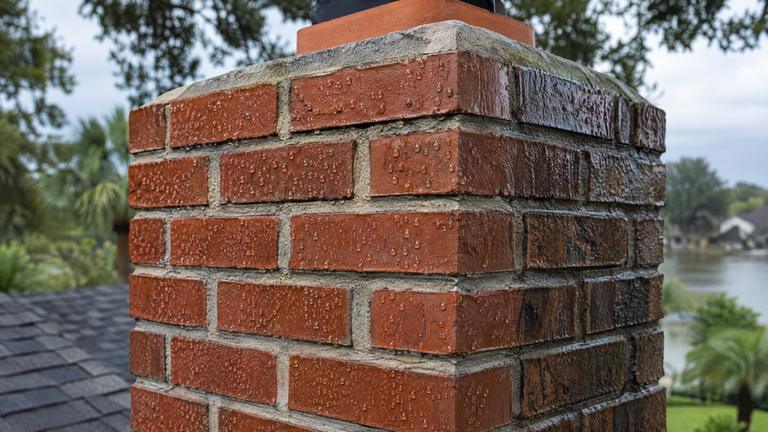
Local chimney waterproofing in Sky Lake
Repairs first, then a breathable water repellent on sound masonry. Our local family-owned team in Sky Lake starts with a free inspection.
- Licensed & insured
- Locally run
- Family owned and operated
- Same-day service available



Your free waterproofing inspection in Sky Lake looks at
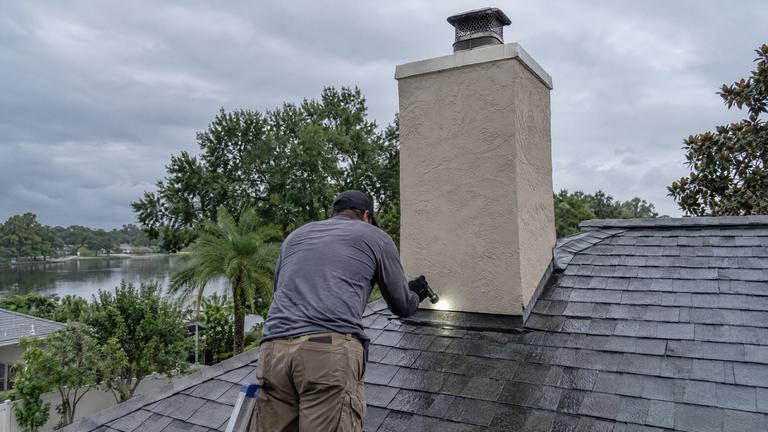
Our crew in Sky Lake looks at these points on the chimney itself, then writes them into your proposal.
- Condition of the brick faces above the roofline
- Which chimney faces receive the repellent
- Protection for roof shingles, windows and plants
- White salt deposits and the moisture behind them
Our approach to chimney waterproofing in Sky Lake
Practical points from our waterproofing crew in Sky Lake.
Flooding the masonry from the bottom up
The ChimneySaver water-base data sheet describes the vertical application: agitate the product, then apply from the bottom up with a low-pressure sprayer at 10 to 25 psi or a roller, flooding the surface until excess runs down six to eight inches below the spray pattern.
Working upward lets the rundown pre-wet the masonry below the spray, so no band is starved of product. Our crew follows that method face by face. It looks simple from the ground, but steady pressure, a consistent wet edge and patience at each course are what give an even result.
White salt deposits and what they mean
White deposits on brick are salts carried out by water as the masonry dries. They are a symptom: water is moving through that part of the chimney. Masonry guidance advises coating walls with a history of these deposits only after the source of moisture has been addressed.
The reason is simple. A coating does not stop salts forming inside the brick, and if they crystallize behind the treated layer they can push the face off. We find the moisture source first, clean off the deposits and only then decide whether a repellent belongs on the chimney. The white stains guide explains the salts in more detail.
Sealant where masonry meets other materials
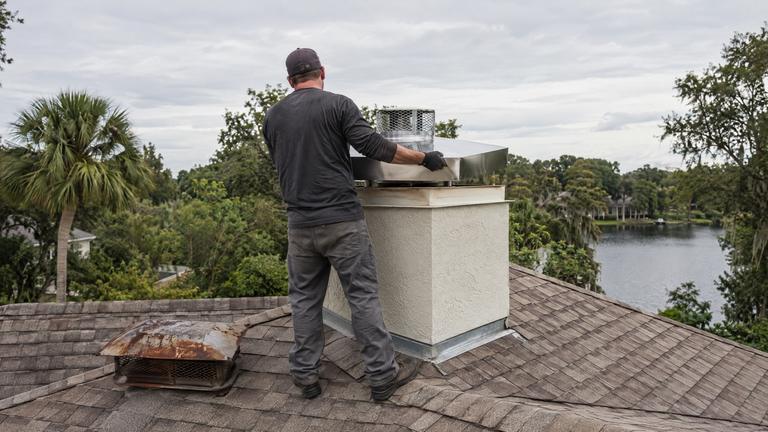
Where masonry meets metal, wood or siding, a flexible sealant usually fills the joint. When that sealant cracks or pulls away, water runs straight into the gap. Masonry guidance lists replacing failed sealant among the repairs a repellent should not replace.
On a chimney, those joints can be around a cricket, at the counterflashing or where a chase meets brick. We check them during the inspection and replace failed sealant as a separate item. The masonry repellent then handles what it is made for, which is the water the brick and mortar absorb.
The same local crew from start to finish
When you book chimney waterproofing with us, the team that inspects your chimney is the team that repairs it and applies the treatment. There is no hand-off to a crew that has never seen your house.
That continuity matters on a job like this, where the order of work and small details decide the result. The person who noticed the eroded joint on the north face is the same person who checks it before the sprayer comes out. As a local, family-owned company, that is simply how we work.
Other work in Sky Lake
-
-
-
-
-


Asked in Sky Lake about chimney water repellent
Short answers from our chimney team in Sky Lake. Call for anything not covered here.
Does waterproofing include the crown and flashing?
No, those are separate repairs. A repellent treats the brick, mortar or stucco faces. If the crown is cracked or the flashing has pulled away, we write that up on its own line so you can see what each item costs and what it fixes.
Why not use a glossy sealer on the chimney?
Film-forming products such as acrylics, waxes, stearates and urethanes can stop rain at the face but slow drying from inside. Water that gets behind them can leave a white haze, trapped salts and flaking brick, and masonry guidance discourages them on exterior brick. We use breathable penetrating repellents instead.
Request your free estimate
Share the job details and arrange a free inspection with our local team.
- Free inspection
- No hidden fees
- Family owned and operated
Need an answer now? Call (352) 675-6376
Your request is received
Thank you. We will contact you to discuss the job and confirm an appointment.