
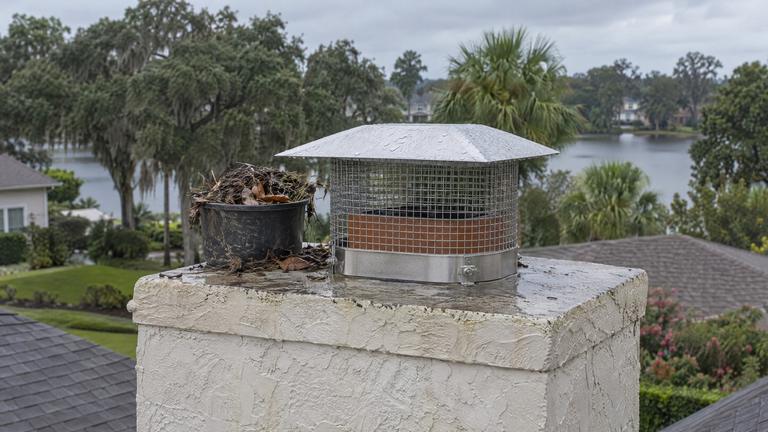
Chimney animal removal and cleanup in Stone Crest
Your Stone Crest chimney assessed for free, cleaned after the animal is gone and capped so it stays empty.
- Licensed & insured
- Locally run
- Family owned and operated
- Same-day service available



Step by step for your Stone Crest chimney
- Damper and fireplace doors secured
- Nest material removed from the flue
- Written record of the work
- Workmanship warranty on the cap
Keeping Stone Crest chimneys empty and clean
The damper is your barrier
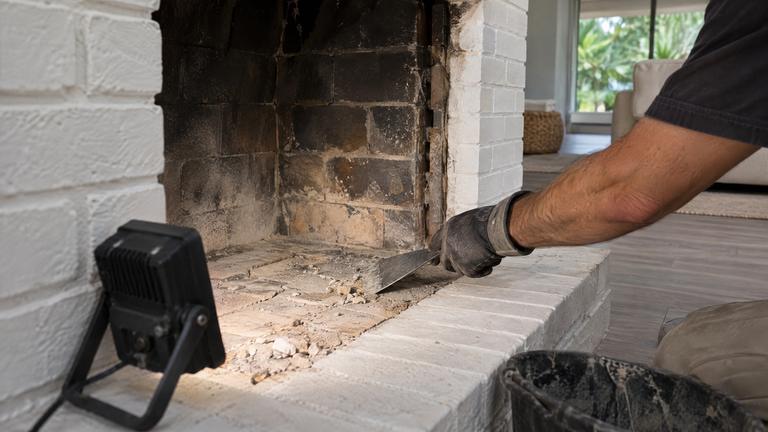
A closed damper separates an animal in the flue from your living space. Leave it shut, and keep glass doors closed if the fireplace has them. Opening the damper to look up the flue invites a frightened bird or bat into the room, and an animal that falls onto the grate is harder to handle inside the house. Our assessment starts at the chimney top and in the firebox, with the damper left where it is. If the damper does not close fully, stuff an old towel into the gap below it and tell us when you call.
Enough open area for the flue to work
A screened cap must still let the chimney breathe. The same code section sizes the screen's open area, its net free area, at four times or more that of the flue outlet below it, and it calls for screen material with heat and corrosion resistance equal to set gauges of galvanized or stainless steel. A cap that is too small or too fine chokes the flue. We size each cap to the flue it covers. A screen that meets the area rule still needs cleaning, since soot can close it down over time.
Why the cap goes on last
Capping a chimney with an animal still inside traps it, and a trapped animal dies in the flue or tears at the cap. That is why the cap is always the last step. We confirm the chimney is empty by inspection and by the history of sounds, and for protected birds and bats we wait for the lawful window. Then the flue is cleaned and the cap is fitted. If you need the chimney closed sooner, we explain what can be done lawfully in the meantime, such as sealing the damper.
Liner problems found during cleanup
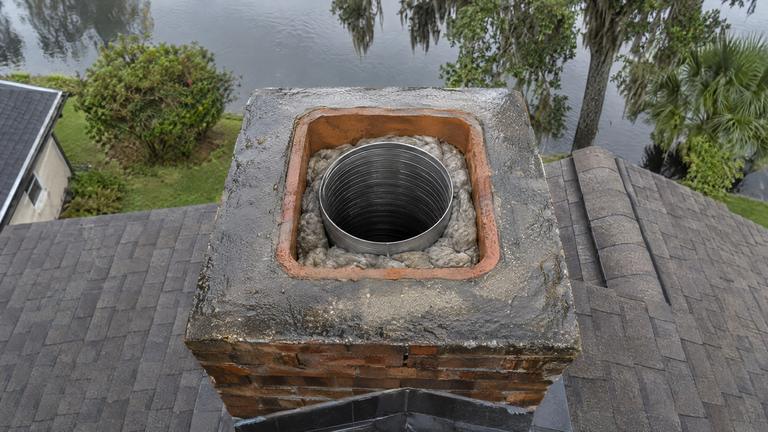
Clearing a nest sometimes reveals flue problems that were hidden behind it, such as cracked tile, open joints or a damaged liner section. Those were not necessarily caused by the animal, but they matter before the next fire. We describe what we find, explain whether the fireplace should stay unused, and quote any liner or flue repair as its own item. Finding it now, with the flue open and clean, is easier than finding it after the next fire.
Other work in Stone Crest
-
-
-
-
-


Asked in Stone Crest about chimney animal removal
Are chimney swifts protected?
Yes. The Migratory Bird Treaty Act protects chimney swifts, and an active nest of theirs cannot be taken out. The chimney is cleaned and capped after the birds have left for the season.
Do I get anything in writing after the work?
Yes. You get a written record of the work we did, including the cleanup and the cap we fitted. It is useful for your house file or when you sell.
Request your free estimate
Share the job details and arrange a free inspection with our local team.
- Free inspection
- No hidden fees
- Family owned and operated
Need an answer now? Call (352) 675-6376
Your request is received
Thank you. We will contact you to discuss the job and confirm an appointment.