
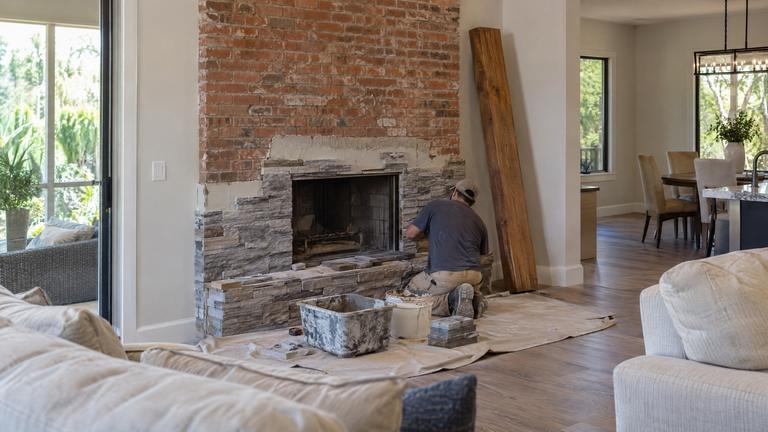
Firebox repair in Summerlake
Spot repair, relining or a rebuild, explained in writing by our pros before you decide.
- Licensed & insured
- Locally run
- Family owned and operated
- Same-day service available



Every wall of the firebox, on paper
- Back wall relining or relaying
- Brick around the damper frame
- Moisture signs and their source, noted separately
- Dust containment and full cleanup
From one cracked brick to a new lining
Thin joints between firebricks
Firebox joints are meant to be thin. The Florida residential code, section R1001.5, limits the joints between firebricks to no more than a quarter inch wide. Thin joints put more of the heat against the brick and less against the mortar.
Past repairs sometimes leave wide, smeared joints where a patch filled a gap instead of a brick being reset. We check joint width as part of the free inspection and explain whether resetting or replacing brick would bring the lining back to a sound, tight pattern.
Where the grate and logs should sit
The grate keeps the fire off the floor and lets air reach it. Pushed hard against the back wall, it holds the hottest part of the fire right on the lining, and logs leaning on the wall concentrate heat in one spot.
We check the grate for size and condition during a firebox visit. A grate that fits the firebox with space at the back spreads the heat more evenly, and it is one of the simplest ways to protect a repaired lining.
The joint between the firebox floor and the hearth
Where the firebox floor meets the hearth extension, two different parts share one edge. That joint often opens as the parts move differently with heat, leaving a gap where embers can settle.
Our technicians check that edge during a firebox repair. If the gap sits in the firebox, we repair it with refractory material. If the hearth itself is cracked or loose, we note it for hearth repair on the estimate.
Glass doors and the edge of the firebox
Glass doors mount to the fireplace opening, and their frame often sits against the firebrick or the facing. Loose or crumbling brick at the edge of the opening can stop doors from sitting square.
Our technicians repair the brick at the opening so the edge is sound and true. Door replacement or adjustment is separate work, and we note on the estimate if the doors will need attention once the brick is repaired.
Damage hidden behind the lining
Sometimes the lining looks acceptable but the masonry behind it has cracked or shifted. Signs include a lining that sounds hollow over a wide area, bricks that move as a group or cracks in the facing around the opening.
When those signs appear, our technicians explain what they suggest and what opening up a section would show. The estimate treats hidden damage honestly, with the known work priced and the possible extra described in advance.
Other work in Summerlake
-
-
-
-


Plain answers about firebox repair
Why can't ordinary mortar be used inside the firebox?
Ordinary mortar is made for normal temperatures and can crumble after repeated fires. The Florida residential code calls for firebrick to be laid with medium-duty refractory mortar, and that is what our crew uses.
How soon can I use the fireplace after a firebox repair?
It depends on the refractory product used. Its data sheet sets the drying time and any first-fire steps, and we write that guidance on your job sheet. A repair should not be used just because it looks dry.
Request your free estimate
Share the job details and arrange a free inspection with our local team.
- Free inspection
- No hidden fees
- Family owned and operated
Need an answer now? Call (352) 675-6376
Your request is received
Thank you. We will contact you to discuss the job and confirm an appointment.