
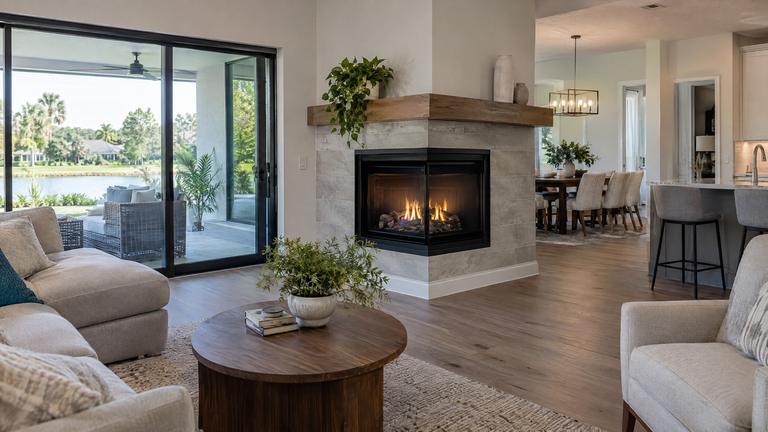
Gas inserts installed in Summerlake fireplaces
A gas insert installed to the maker's instructions in Summerlake, with the barrier screen in place and the controls explained.
- Licensed & insured
- Locally run
- Family owned and operated
- Same-day service available



Measured at your Summerlake fireplace, priced in writing
Our installer takes a tape, a light and the insert manual to your Summerlake fireplace. These are the kinds of items that come back in writing.
- Firebox width, height and depth against the insert's minimum opening
- Vertical vent height checked against the insert's minimum and maximum
- Shutoff valve location and service slack in the gas line
- Mantel and side wall clearances checked against the manual's tables
The engineering behind a gas insert in Summerlake
Each point below comes from the insert manuals and the gas code, and each one shapes your Summerlake estimate.
Sealing the liner at the collar
Where each flexible liner meets its collar, the joint has to be tight. The Supreme manual says to fix each liner with three screws and, for a good result, seal the joint with stove cement or aluminum foil tape. It adds a specific instruction: do not use silicone at that joint.
Details like that come straight from the manual, and we follow them the same way on every insert. The sealed joints are looked at again at startup, once the insert is running and warm.
Full-length intake or a shorter one
Some insert vent kits let the intake liner stop partway and draw air from the chimney space. Others run the intake all the way to the cap. The Supreme manual describes both and notes that, depending on how clean the chimney is, a full-length intake lessens the chance of fouling the flame sensor.
The same manual says the full-length arrangement may perform better, with less cold-air infiltration, in houses with negative pressure. We explain both options for your chimney and recommend the one that suits its condition and your home.
Blue flames that turn yellow
When a gas insert first lights, the flames often look blue. The owner's manual explains that this is normal operation and that the flames begin to turn yellow once the appliance has burned for twenty to forty minutes.
We let the insert run long enough at startup to see the flame settle. If it stays blue, lifts off the burner or leaves heavy soot, we adjust it before we leave.
How install day runs
Install day follows a set order: protect the room, remove the old doors and grate, clean and prepare the firebox, set the damper, run and connect the liners, fit the cap, make the gas and electrical connections, set the insert, fit the surround and start it up.
Our crew keeps to that order because each step depends on the one before it. You get a short walkthrough at the end and a clean room.
Other work in Summerlake
-
-
-
-
-


Learn more about gas fireplace insert installationSummerlake services
Gas insert questions we hear in Summerlake
No sales script, only what we tell homeowners in Summerlake at the fireplace.
Do I need a new liner for a gas insert?
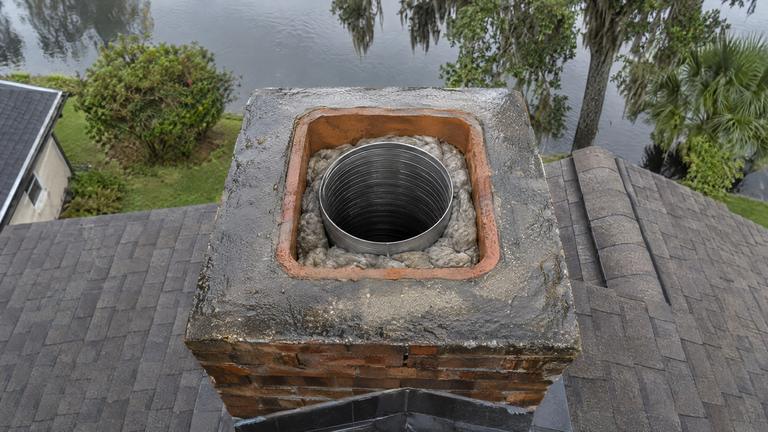
Yes. A direct-vent insert uses its own liners, one for exhaust and one for combustion air, running from the insert to a cap at the chimney top. They come from the vent system named in its manual.
Will a gas insert make my room too hot?
That depends on the size you choose and the room. Inserts are listed with a range of inputs, so we match the model to the space and the way you use it. Many models also let you turn the flame down.
Request your free estimate
Share the job details and arrange a free inspection with our local team.
- Free inspection
- No hidden fees
- Family owned and operated
Need an answer now? Call (352) 675-6376
Your request is received
Thank you. We will contact you to discuss the job and confirm an appointment.