
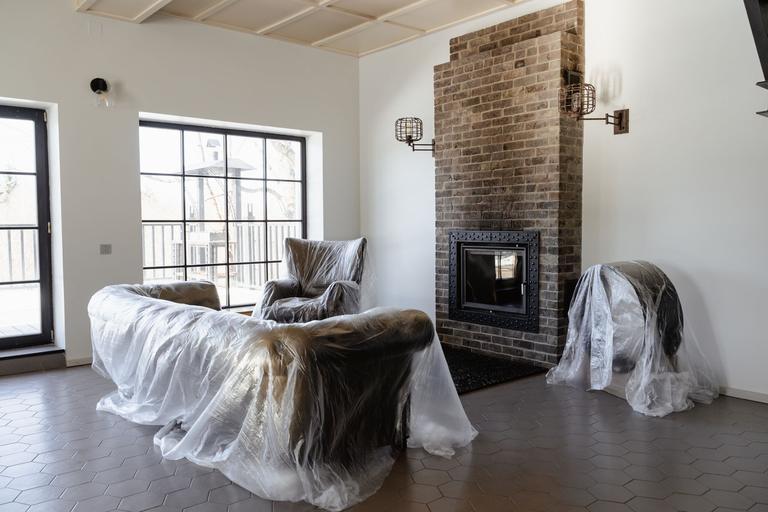
Natural and cultured stone chimney repair in Tangerine
Stone chimney work by local pros in Tangerine who protect your roof, landscaping and walkways while they work.
- Licensed & insured
- Locally run
- Family owned and operated
- Same-day service available



The stonework estimate for your Tangerine home
A handful of lines usually covers the whole stone story for a home in Tangerine.
- Mortar color, sand and joint profile matched
- Cleaning timed after the mortar hardens
- Flue and liner work listed separately
- Care guidance for the repaired stonework
Stonework know-how from our Tangerine crew
Any of these can add or remove a line from a stone chimney estimate in Tangerine.
ASTM C1780 and manufactured stone
ASTM C1780 is the standard practice for installation methods for adhered manufactured stone masonry veneer. Makers publish installation instructions written to comply with it, covering the backing, the barrier, the lath, the scratch coat, the setting bed, the joints and the cleaning.
When veneer fails, comparing what we find against those steps usually shows where the installation or a later repair went wrong. That comparison goes into the findings, so you understand the cause as well as the fix.
The scratch coat under the stone
Over the lath goes a scratch coat, which one maker specifies at a minimum of half an inch up to three quarters of an inch thick, with enough pressure to fully encapsulate the lath so none is visible. The maker notes that encapsulation and thickness are key to the lath resisting corrosion.
A thin scratch coat with lath showing through is a weak point we look for when veneer fails. Rebuilt areas get a full scratch coat, scored and allowed to set as directed before stone is applied.
The top of a solid stone chimney
Section R1003.9.1 of the residential code tops a masonry chimney with concrete, metal or stone, edged with a drip, and seals a bond break with caulk at every flue liner per ASTM C1283. A stone chimney is covered by that rule.
A cracked cap, a missing drip edge or a failed bond break lets water into the top courses, where it works down behind the stone. We inspect the top every time and quote cap or crown work separately from the stone.
Filling deep joints a layer at a time
Where the old mortar came out more than about an inch deep, the brief has the deep spots filled first, packing mortar in layers of roughly a quarter inch and letting each reach thumbprint hardness before the next goes on. Most shrinkage happens as mortar hardens, so layering keeps it small.
Deep stone joints take several layers and more time. We price that time honestly, because a deep joint filled in one go shrinks, cracks away from the stone and lets water straight back in.
Resetting a loose stone
A loose stone comes out carefully, by hand, without prying against its neighbors. The old mortar is cleaned off the stone's back and the bed it came from, down to sound material.
Then the stone goes back with fresh mortar filling the whole bed, pressed in until mortar squeezes out around its edges, and the joints are tooled to match. Before any of that, we find out why it loosened, since a reset over the same water problem will not hold.
- Removed by hand, neighbors protected
- Old mortar cleaned off stone and bed
- Reset with full mortar coverage
- Joints tooled to the existing profile
Other work in Tangerine
-
-
-
-
-
-


What people in Tangerine ask before repointing
No sales talk, just stonework answers from our specialists in Tangerine.
Can you replace just the loose stones on my chimney?
Often, yes. When the backing and the surrounding stones are sound, we remove the loose pieces, clean them and reset them in a full bed of fresh mortar. We check why they came loose first, because a stone reset over the same problem will loosen again.
Can I pressure wash my stone chimney?
We advise against it. One manufactured stone maker rules out power washing, sandblasting, wire brushes and acid cleaners, and high pressure can erode mortar joints on natural stone too. A mild detergent and a bristle brush are the safer start.
Request your free estimate
Share the job details and arrange a free inspection with our local team.
- Free inspection
- No hidden fees
- Family owned and operated
Need an answer now? Call (352) 675-6376
Your request is received
Thank you. We will contact you to discuss the job and confirm an appointment.