
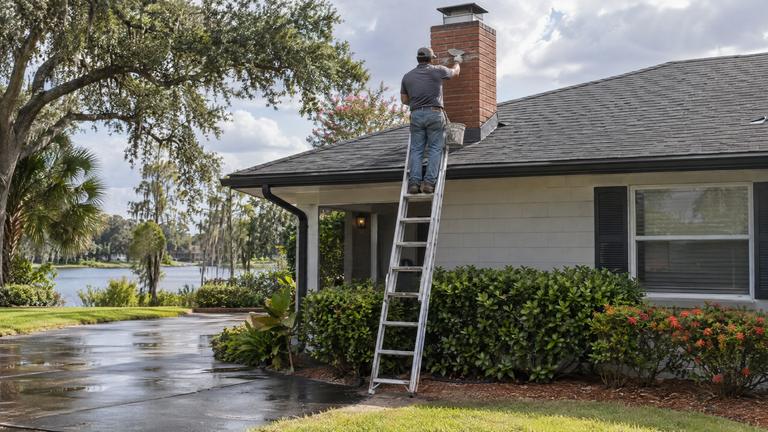
Chimney repair and diagnosis in The Willows
Locally owned chimney repair for The Willows homes, with a 24/7 emergency line for damage that cannot wait.
- Licensed & insured
- Locally run
- Family owned and operated
- Same-day service available



Every repair named before work begins
- Base flashing and counterflashing at the roof line
- Spalled or broken brick to replace
- Cleanout door and any stovepipe entry
- Chase siding, barrier and framing condition
Getting your The Willows chimney back in shape
Water, heat and movement wear a chimney out
Three forces wear a chimney down over time. Water gets in at the top and at the roofline, soaking mortar, rusting metal and staining the rooms below. Heat works from the inside, on the flue lining and the chamber above the damper. Movement shows up as cracks and gaps where masonry has shifted or pulled away from the house.
One visible symptom can come from more than one force. A cracked joint may be years of water working into the mortar, or masonry moving because something beneath it has shifted. BIA guidance on maintaining brick says the origin of a problem should be found and both the cause and the visible effect corrected, which is why a patch over the mark alone does not settle it.
At your The Willows home, each finding is sorted by the force behind it before anything is priced. The written estimate groups the repairs the same way, so you can see which lines stop water, which deal with heat damage and which address movement.
Offsets and corbeled sections in a chimney
Not every chimney rises in a straight line. Some step out from a wall or jog sideways partway up, built by corbeling, where each course of brick projects a little past the one below. The Florida Building Code limits how far a chimney may be corbeled from a wall or foundation and how far any single course may project.
It limits offsets as well. In a chimney with a clay flue liner and one wythe of masonry around it, the center of the flue above an offset may not extend beyond the center of the chimney wall below, unless approved masonry support sits under the offset.
Because the code limits both, cracks at a corbel or an offset get a closer look than cracks in a straight run. When cracks show there, the estimate says whether the section is sound enough to repair or has to be rebuilt.
Cracks in a stucco chimney finish
A crack in stucco is a break in the outer skin, and the real question is what sits behind it. On a framed chimney, the Florida Building Code puts a water-resistive barrier behind the plaster. Over wood-based sheathing that barrier is normally two separate layers, with flashing directed between them so water that gets in has a way to drain.
Caulking a crack from outside can look tidy for a season. If water has already reached the barrier or the sheathing, the bead just seals it in. Brown streaks below the crack, spots that give when pressed and paint that bubbles can mean the damage runs deeper than the finish.
That is the decision our stucco chimney repair service makes first. When the layers behind are sound, the crack is cut out and patched in coats that match the wall. When they are not, the section is opened, the barrier and flashing are rebuilt and the plaster goes back on. The estimate states which case applies.
Chimney questions to ask when you buy a home
A chimney can look fine from the street and still need work. Before closing, ask the seller a few direct questions, and ask for receipts or past estimates rather than a verbal answer. Paperwork tells you what was done and when.
The general home inspection that comes with a purchase may only cover what can be seen from the ground and the firebox. If there is no history at all, treat the chimney as unknown rather than sound, and budget for what a closer look may find.
A chimney inspection before closing turns those unknowns into lines with prices. Our crew can look at the chimney you are buying and write an estimate you can use in negotiation or for planning. Start with the seller questions below.
- When the chimney was last swept and inspected
- Repairs to the crown, flashing, flue or firebox
- Whether the flue was relined, and for which appliance
- Any past leaks or stains around the chimney
Other work in The Willows
-
-
-
-
-


Quick answers on chimney repair
What should I look for in a chimney repair company?
Look for a company that finds the cause before quoting and names each damaged part in writing. You should see the fix, the material and the price for every line, and nothing should start until you approve. Our family-owned team works that way, and the inspection that begins it is free.
Can you turn a home inspector's notes into a repair plan?
Yes. We check each chimney item the report mentions, name the component and write the repair on the estimate with its price. The estimate is ready to share with the other side of a sale.
Request your free estimate
Share the job details and arrange a free inspection with our local team.
- Free inspection
- No hidden fees
- Family owned and operated
Need an answer now? Call (352) 675-6376
Your request is received
Thank you. We will contact you to discuss the job and confirm an appointment.