
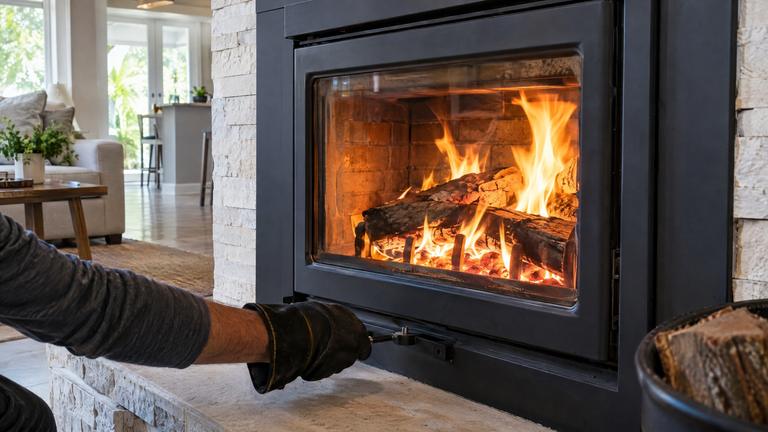
Wood stove inserts installed and lined in Timberleaf
A wood insert measured, lined and installed to its manual by our local family-owned team in Timberleaf, starting with a free inspection.
- Licensed & insured
- Locally run
- Family owned and operated
- Same-day service available



Measured at your Timberleaf fireplace, then written down
None of this comes from a brochure. Our installers confirm it at your fireplace during the free visit.
- Fireplace measured against the manual's minimum sizes
- Full-length stainless liner sized to the insert collar
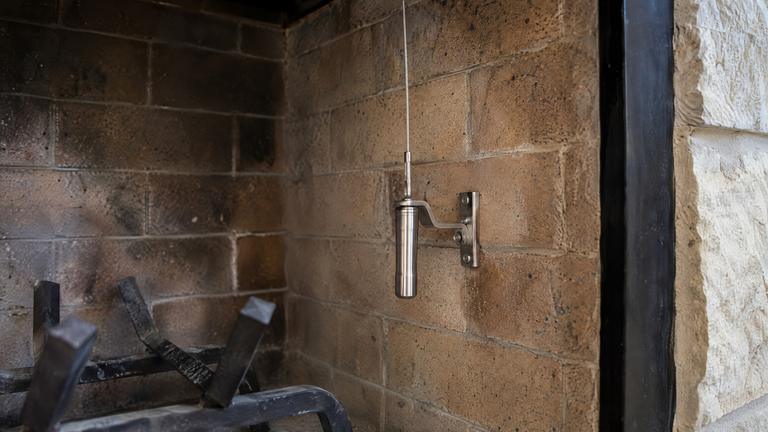
- Metal altered-fireplace tag fastened to the back wall
- Your 10% off for booking within 72 hours, written on the estimate
Before an insert slides into your Timberleaf fireplace
Explained by the crew that lines and fits inserts in Timberleaf.
No chiseling into the fireplace to make a unit fit
Insert manuals warn against removing bricks or mortar from an existing fireplace. The exception in the Pacific guide is narrow: masonry or steel at the smoke shelf and the damper frame may come out to accommodate a liner, provided the structure is not weakened and protection for nearby combustibles is not reduced.
If a model only fits by cutting into the firebox walls, it is the wrong model for that fireplace. Our specialists would rather say so during the visit than weaken the masonry that separates your fire from the framing behind it.
How the blower moves heat into the room
An insert blower draws room air through channels around the firebox and returns it warmer. Pacific's blower starts and stops on a temperature switch, and a manual switch overrides it with a speed control.
We show you both modes at the walkthrough, including how to turn the blower off before you service it or clean around it. A blower that is left running as the insert cools simply moves less warm air, and the manual explains how the automatic setting handles that.
Catalytic and non-catalytic inserts
Wood inserts that meet the current limits use one of two approaches. A catalytic unit passes smoke through a coated combustor that burns it at a lower temperature. A non-catalytic unit uses a baffle and heated secondary air to burn the smoke inside the firebox.
Each has its own care. A combustor needs periodic inspection and eventual replacement, while a non-catalytic baffle and air tubes need checking for damage. We explain which your model uses and what the manual asks of you over the years.
Yearly inspection with a liner in place
NFPA 211, the national standard for chimneys, fireplaces, vents and solid fuel-burning appliances, puts chimneys and vents on a yearly inspection for soundness, deposits and clearances, with cleaning and repair when that inspection finds them due.
The Travis manual goes further and asks owners to look at the connector and chimney twice a month during use. We note the install date and the liner type in your records so the yearly visit starts with the facts.
Other work in Timberleaf
-
-
-
-
-


Learn more about wood-burning fireplace insert installationTimberleaf services
Asked by Timberleaf homeowners before an insert goes in
What people in Timberleaf ask us before an insert is ordered.
Does a new wood insert have to meet EPA limits?
From May 15, 2020, every wood heater made or sold at retail, inserts among them, has had to meet EPA's Step 2 particulate limit. Look for the permanent label on the unit and its listing in EPA's public database.
How should I get rid of the ashes?
Scoop them into a metal container with a tight-fitting lid, and leave it on a noncombustible surface, clear of anything that burns, until the ashes are cold. Insert manuals give the same instruction.
Request your free estimate
Share the job details and arrange a free inspection with our local team.
- Free inspection
- No hidden fees
- Family owned and operated
Need an answer now? Call (352) 675-6376
Your request is received
Thank you. We will contact you to discuss the job and confirm an appointment.