
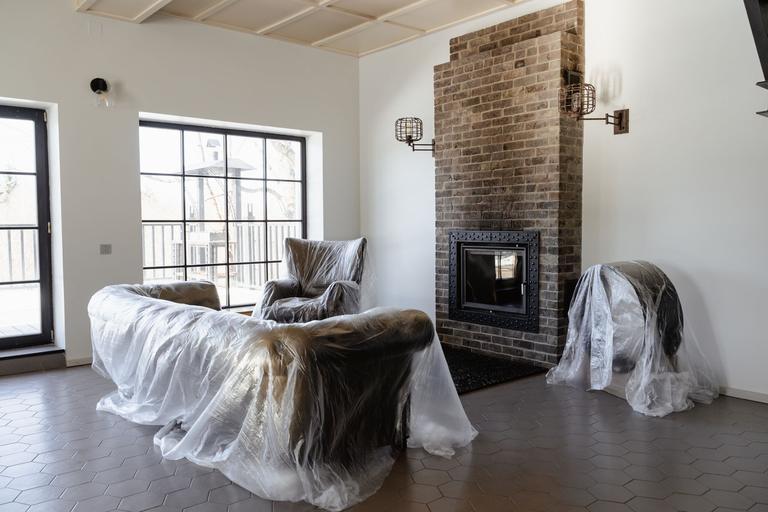
Firebox repair and relining in Union Park
Firebrick to ASTM standards, refractory mortar and thin joints, with prices set before the first brick comes out.
- Licensed & insured
- Locally run
- Family owned and operated
- Same-day service available



Every wall of the firebox, on paper
- Masonry or factory-built firebox check
- Crack mapping and movement check
- Cracked or spalled firebrick replacement
- Brick around the damper frame
Firebox repair the way the code describes
Loose firebricks in the back wall
A firebrick that moves when pressed, or one that has shifted out of line with its neighbors, has lost its bond. Loose bricks can fall into the fire, and the gap they leave exposes the masonry behind them.
Leave the fireplace unused until a loose brick has been reset or replaced. Our technicians remove the loose units, clean the bed, reset or replace them in refractory mortar and check that the bricks around them are still tight.
A back wall that leans or bulges forward
A back wall that has bowed toward the room is more than a cosmetic problem. It usually means the lining has separated from the masonry behind it, often after years of heat and moisture working on the joints.
Our technicians check how far the wall has moved and whether the lining can be taken down and relaid or the whole back needs rebuilding. The fireplace should stay unused until then, and the written estimate explains the scope and what stays in place.
When the firebox walls need rebuilding
A firebox rebuild goes further than relining. When the masonry behind the lining has cracked, shifted or lost its strength, the walls are taken down and rebuilt with a new lining to the code's requirements.
It is the largest firebox repair, and we only recommend it when the inspection shows the smaller options will not hold. Our estimate explains why, which parts come out, what stays and how the rebuild keeps the depth and opening the fireplace needs.
Using a fireplace with a damaged firebox
Open cracks, loose bricks or missing joints let heat reach places it should not. Until the firebox has been assessed, the careful choice is to leave the fireplace unused, even if it still seems to draw normally.
Book a free inspection and our technicians tell you whether the damage is minor enough to wait or needs repair before the next fire. You get the answer in writing, so the decision is yours and based on facts.
A yearly check includes the firebox
NFPA 211, the national standard for chimneys and fireplaces, calls for them to be inspected at least once a year, and the U.S. Fire Administration gives the same yearly advice. The firebox is part of every one of those checks.
Catching an eroded joint or a single cracked brick at a yearly check keeps the repair small. Our technicians look at the lining every time they inspect your fireplace and tell you what can wait and what should not.
Other work in Union Park
-
-
-
-
-
-


Plain answers about firebox repair
How soon can I use the fireplace after a firebox repair?
It depends on the refractory product used. Its data sheet sets the drying time and any first-fire steps, and we write that guidance on your job sheet. A repair should not be used just because it looks dry.
Does a firebox rebuild mean tearing out the whole fireplace?
No. A firebox rebuild works inside the opening, and the facing, mantel and hearth extension usually stay in place. The estimate explains exactly what comes out and what stays.
Request your free estimate
Share the job details and arrange a free inspection with our local team.
- Free inspection
- No hidden fees
- Family owned and operated
Need an answer now? Call (352) 675-6376
Your request is received
Thank you. We will contact you to discuss the job and confirm an appointment.