
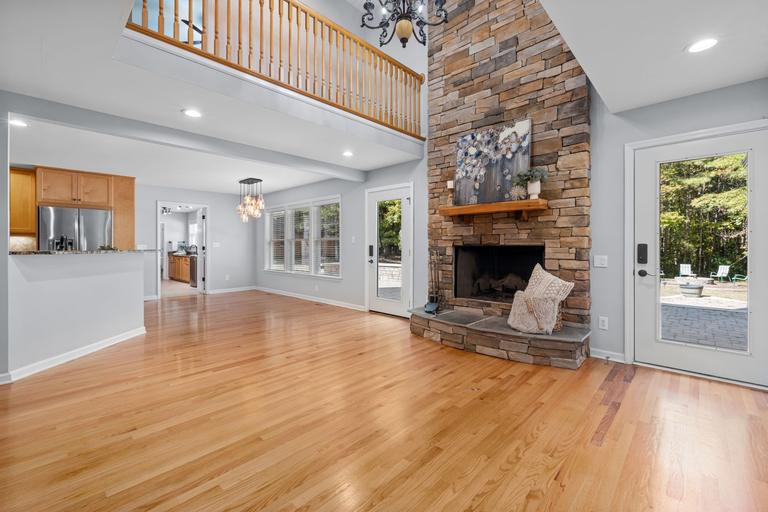
Family-owned fireplace restoration in University
Bring an unused fireplace in University back with a free inspection and a clear, itemized restoration plan.
- Licensed & insured
- Locally run
- Family owned and operated
- Same-day service available



Restoration details settled in writing in University
What we confirm in University so the finished fireplace does what you expect.
- Hearth extension size against the code
- Mantel and trim distance from the opening
- Test area before full face cleaning
- Lintel condition over the opening
Before an old fireplace is lit again in University
Homeowners in University ask about points like these on almost every restoration we quote.
Letting new refractory work cure
Fresh refractory mortar and new firebrick joints need time and gentle heat before a full fire. Mortar makers publish their own curing steps, and those directions decide when the fireplace is ready for use.
At the end of a restoration in University, we tell you when the first fire can be lit and how small it should be. A big fire in fresh work can crack joints that would otherwise have lasted, so the guidance is kept simple and written into your handover notes.
The ash dump and cleanout door
Many masonry fireplaces have an ash dump, a small metal door in the firebox floor that drops ashes into a pit below, emptied through a cleanout door lower down. These doors rust, stick open or go missing, and an open ash dump lets air and embers into the pit.
We check that the ash dump door closes and that the cleanout door below is in place and shut. Rusted doors are replaced with frames sized to the opening. On restorations in University, these small parts are easy to forget and easy to put right.
Where the damper belongs
Under the Florida Building Code, a masonry fireplace gets a ferrous metal damper set 8 inches or more above the top of its opening, in the fireplace or in the chimney that vents it, and it has to work from inside the room.
When a damper is missing, cut out or replaced with something that cannot be worked from the room, it goes into your notes. The replacement choices, from a new throat damper to a sealing damper at the top of the flue worked from below, are set out in the written proposal.
Rust marks in the firebox
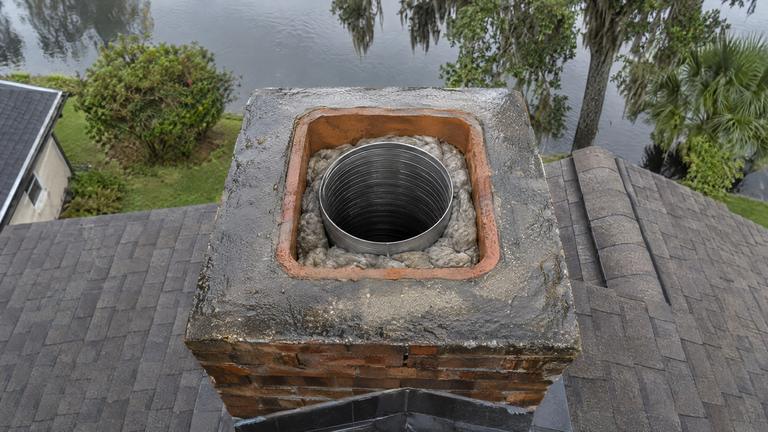
Orange streaks on the firebox walls, a rusty damper and a rust ring on the firebox floor point to water coming down the flue. That water usually gets in at the top, through a missing cap or damaged masonry near the chimney top.
Restoring a firebox that keeps getting wet is money poorly spent. The water is traced first, and any repair at the top of the chimney is listed as its own item, so the restoration below can last in your University home.
Other work in University
-
-
-
-
-
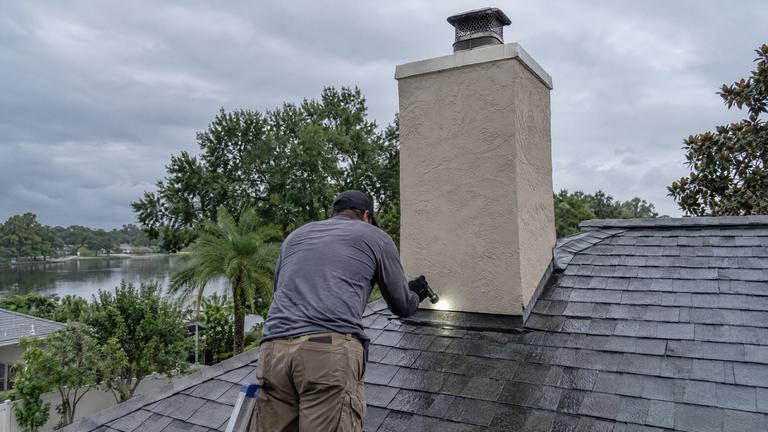


Restoration answers for University homeowners
Two common questions from our restoration visits in University.
Do you restore factory-built fireplaces?
Yes, within the maker's listing. Panels, screens and other parts come from the maker's parts list for your model. If a needed part is no longer made, we explain what that means for the unit.
Why does our unused fireplace smell musty?
Damp air and old soot in the flue often cause a musty smell when the house is closed up and cooled. A damper that does not seal lets it in. Cleaning, a sealing damper and a sound cap usually solve it.
Request your free estimate
Share the job details and arrange a free inspection with our local team.
- Free inspection
- No hidden fees
- Family owned and operated
Need an answer now? Call (352) 675-6376
Your request is received
Thank you. We will contact you to discuss the job and confirm an appointment.