
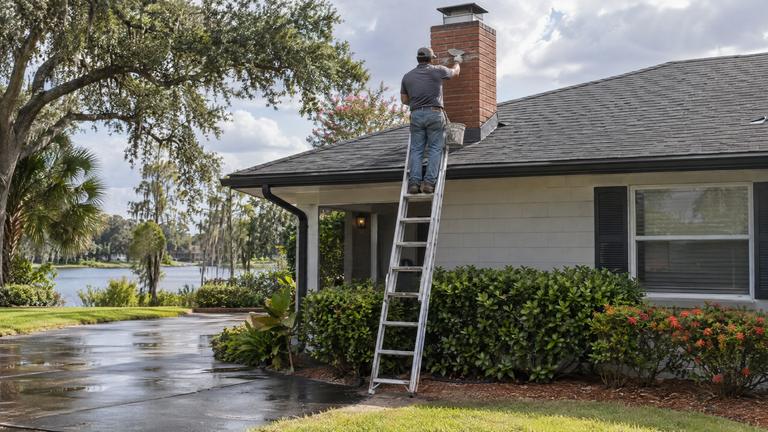
Chimney repair with a free inspection in Westfield
Leaks, loose brick or a cracked crown? We trace the damage to its source and repair it properly.
- Licensed & insured
- Locally run
- Family owned and operated
- Same-day service available



Every repair named before work begins
- Cracks mapped by location and pattern
- Weep holes and through-flashing at a veneer base
- Listed replacement parts for factory-built systems
- Old mounts and anchor holes to remove and patch
Our approach to chimney repair in Westfield
Hairline cracks in a concrete crown
Fine cracks in a concrete crown do not always mean it was built badly. BIA guidance on chimney construction calls shrinkage of concrete as it cures a certainty, and it recommends reinforcement in a cast crown to help control cracking from shrinkage and from heating and cooling.
What matters is what the cracks let through. A few fine lines in a crown with a good slope and sound edges are a different case from cracks that cross the full width, reach the flue liner or have let water stain the brick underneath. The first is a small repair. The second can mean water is reaching the masonry, and the crown may need replacing rather than patching.
Width, length and pattern are all checked, along with the brick directly below. The estimate names one of the two options and sends the work to our chimney crown repair service, with the reasoning written beside it.
Sealant at the top is a detail, not a cure
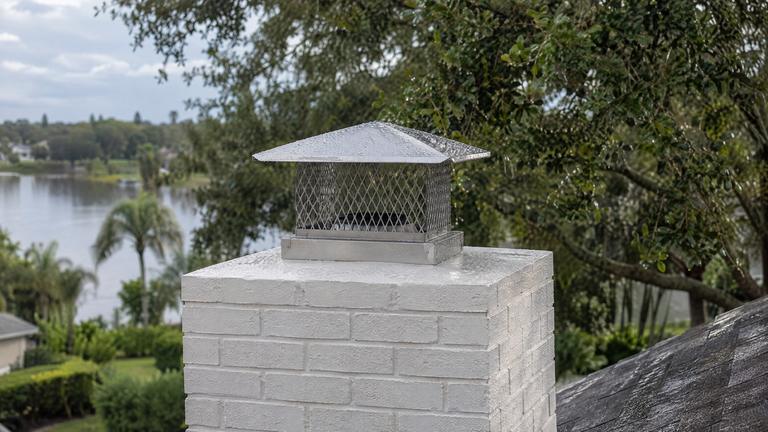
Sealant has a proper place on a chimney top, chiefly the joint where the cap meets the flue liner. BIA guidance treats it as part of the construction, to be detailed and installed with the same care as everything else, with proper priming and backing rope behind the bead. It also says oil-based sealants should not be used.
The same guidance warns that caulking is often treated as a way to correct or hide poor workmanship. A thick bead smeared over a cracked crown or a loose top course may look like a repair from the ground. It covers the defect rather than fixing what caused it, and it hides the damage from the next person who looks.
Sealant goes only where it belongs, and old caulk covering a defect comes off so the defect can be judged. The estimate says where sealant is used and what it is sealing.
A chimney leaning or pulling away from the house
A gap opening between a chimney and the wall of the house, or a stack that no longer looks plumb, is a sign of movement. BIA maintenance guidance names out-of-plane movement of masonry as a structural condition, one that generally calls for a professional engineer to find the cause.
A bead of sealant or foam in the gap is not a repair. It hides the gap while whatever is moving the chimney carries on. The cause can sit at the footing, in the connection to the house or in the stack itself, and each one calls for a different fix.
Our crew in Westfield checks where the chimney has moved, at the base, at the roofline or both. The estimate names the movement as a structural concern, recommends an engineer's evaluation and leaves sealing or patch work off the list until the cause is known.
Insulation and a metal chimney in the attic
Where a factory-built chimney passes through an insulated ceiling, the Florida Building Code calls for an insulation shield that holds insulation back at the clearance the chimney maker specifies. In an attic, the shield has to stand above the insulation and be secured so it cannot shift.
Attic work is where this gets undone. Blown insulation is topped up and piles against the pipe, a shield gets knocked loose or wiring is run along the chimney. DuraVent's instructions for one of its chimneys say never to fill the required air space with insulation or any other material, and to keep wiring and building insulation away from all chimneys.
Our technicians check the attic run whenever the chimney is part of a repair. They look for the three things below, and anything out of place goes on the estimate with its fix.
- A shield in place where the pipe enters the attic
- Insulation held back from the pipe on every side
- No wiring, boxes or stored items against the chimney
Other work in Westfield
-
-
-
-
-


Your chimney repair questions, answered
What parts of the chimney does your repair service cover?
All of it, from the cap and crown down through the flashing, brick, mortar, flue lining, smoke chamber and damper, plus framed chases and factory-built chimneys. Each damaged part gets its own line on the written estimate. When a part has its own specialist service with us, such as liner installation, the estimate says so.
What happens when the chimney has several problems at once?
We list each problem on one written estimate and put them in order, safety items first, then anything letting water in, then finish work. You can approve everything together or plan it in phases. Items that have to be done together are marked that way.
Request your free estimate
Share the job details and arrange a free inspection with our local team.
- Free inspection
- No hidden fees
- Family owned and operated
Need an answer now? Call (352) 675-6376
Your request is received
Thank you. We will contact you to discuss the job and confirm an appointment.