
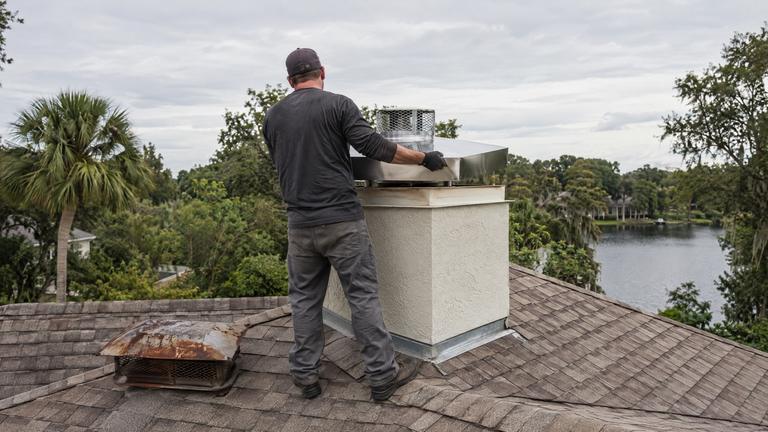
Chimney chase repair from framing to finish in Westyn Bay
Chase siding repaired or replaced to match, with the barrier and flashing behind it done right.
- Licensed & insured
- Locally run
- Family owned and operated
- Same-day service available



Your chase repair scope, layer by layer
- Damage boundary marked on each face
- Replacement siding matched to the existing profile
- Apron and back flashing at the chase base
- Paint on new siding and trim
The wall behind the siding
Giving water that gets past the siding a way out
Siding and stucco both let a little water through. Section R703.1.1 of the Florida Building Code describes an exterior wall that keeps water from building up inside it, using a water-resistive barrier plus a way to drain water that gets past the cladding back to the outside.
On a chase, that drainage path ends at the bottom edge of the siding or at the flashing on the roof. If the bottom edge is caulked shut or buried in roofing cement, water that should drain out stays in the wall.
We check that the base of each chase wall can drain. Sealant that blocks the path comes out, and the bottom edge is detailed so water leaves the wall at the flashing. That detail is written into the estimate, so it does not get lost between trades.
Stucco that sounds hollow or bulges
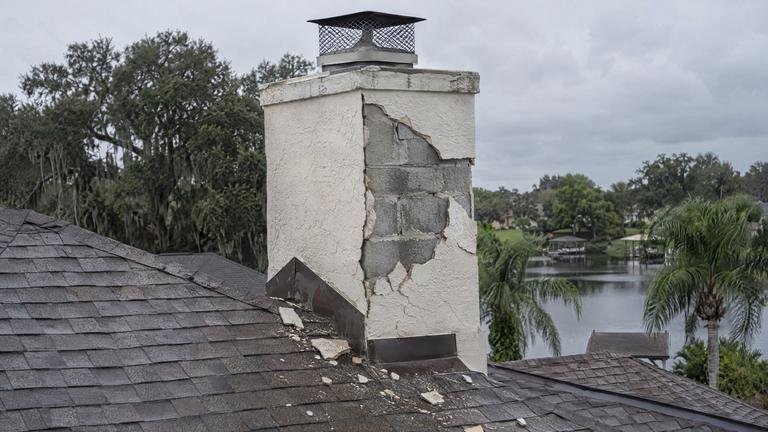
Tapping stucco tells a lot. Sound stucco gives a solid, dull knock. Stucco that has let go of its lath or sheathing sounds hollow and may flex under light pressure. Tapping works best in a grid across each face, since hollow areas seldom show to the eye.
Hollow areas and bulges on a chase usually mean water has reached the lath, or the sheathing has swollen and pushed the stucco out. A bulge near the base or just under the top tends to line up with soft wood behind it. Left in place, a loose section can keep growing.
During the inspection on your Westyn Bay home, our technicians tap each face of a stucco chase and mark the hollow areas. Those areas are opened first, since they show how far the damage goes. Each hollow area is marked on the written estimate, and what turns up behind it is shown to you before the work goes further.
Plywood panel siding with swollen edges
Many chases are sided with grooved plywood panels, the kind that looks like vertical boards. It goes up fast, but its bottom edges and horizontal joints take on water easily. Once the face layers start to separate, the panel seldom recovers.
Swollen or flaking bottom edges, loose face layers and dark stains along the grooves are signs the panel has been wet for a long time. One of the first things to check is whether the panels have sheathing behind them or are nailed straight to the studs, since that changes how much of the wall needs work.
Our crew replaces failed panels full height where they are soft and flashes horizontal joints so water cannot sit on a cut edge. If you would rather move to a different siding, we price that as an option on the written estimate. Panel edges and cut ends are primed before the panels go up.
A fireplace you never use still has a chase
In some houses the fireplace has sat unlit for years. The chase around its chimney still takes the same rain and sun as the rest of the house, and it can rot just as badly when nobody is watching it.
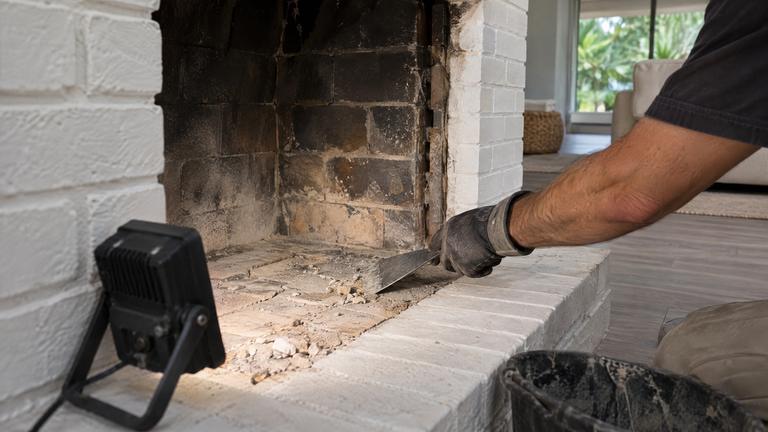
An unused fireplace can hide a chase leak for a long time, because nobody sees the rust or damp ash in the firebox. The first sign may be a ceiling stain or soft siding.
Our technicians inspect the chase whether or not you burn fires. If you plan never to use the fireplace, we can talk through the upkeep the chase still needs and the options the chimney maker allows at the top. For Westyn Bay homeowners, we treat the chase as a wall that has to stay dry.
Other work in Westyn Bay
-
-
-
-


Chase repair answers for Westyn Bay homes
Can you repair only the rotted part of my chase?
Often, yes. When rot is limited to the base, a corner or the top, our crew removes siding in that area, replaces the damaged wood and laps new barrier and flashing into the old. If probing shows rot running through most of the framing, we price a rebuild alongside the repair so you can compare.
Do you work with my roofer?
Yes. Flashing at the chase base sits between the roof and the chase, so we agree with your roofer on who replaces which pieces before work starts. The written estimate spells out that split.
Request your free estimate
Share the job details and arrange a free inspection with our local team.
- Free inspection
- No hidden fees
- Family owned and operated
Need an answer now? Call (352) 675-6376
Your request is received
Thank you. We will contact you to discuss the job and confirm an appointment.