
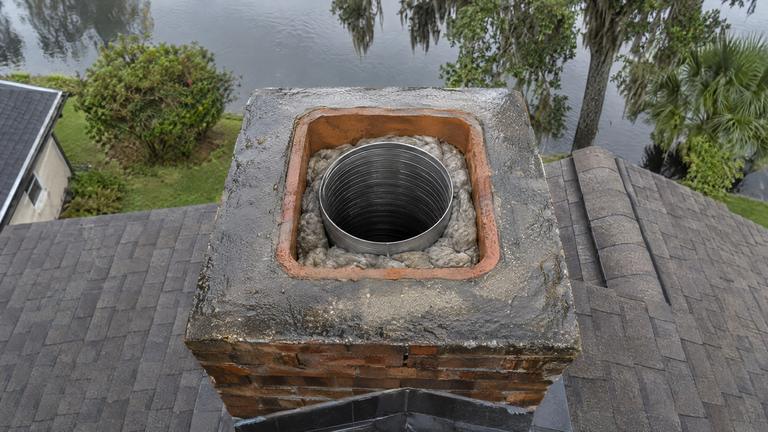
Chimney liner installation for homes in Williamsburg
A liner sized to your appliance and proven through your flue before ordering. Free inspection from our local family-owned team in Williamsburg.
- Licensed & insured
- Locally run
- Family owned and operated
- Same-day service available



Line by line, your liner proposal in Williamsburg
Checked on the roof and at the appliance in Williamsburg, then written into your free estimate.
- Fireplace opening measured against the flue
- Liner length from base to top
- Connector pipe route and clearances
- Masonry repairs needed before relining
Relining explained for Williamsburg homeowners
From our family-owned relining team serving Williamsburg, the reasoning behind the work.
The fuels a listed liner is made for
Stainless flexible liners are listed for venting the products of combustion from appliances burning oil, gas or solid fuel, within limits written into each product's instructions. Those limits include a maximum continuous flue gas temperature.
The limits are part of the listing, not fine print. We match them to your appliance and write the fuel and the product together in the scope. If you later change appliances, that line in your paperwork is the first thing to check against the new unit's needs.
The metal in a stainless relining system
In one listed stainless flexible system, the liner, top plate and rain cap are all 300 series stainless steel, with worm-drive clamps securing the parts. Knowing the alloy matters when an appliance produces corrosive condensate, since some products exclude those appliances.
We record the product and alloy in your paperwork, and we tell you in the estimate why that alloy suits the appliance you use. If a different alloy is called for, the reason is written down beside it.
Inserts have their own installation
A fireplace insert connects to a liner through an adapter on its collar, with elbows where the geometry needs them. Installing the insert itself is a separate service, and its manual sets the venting.
When relining is part of an insert project, we coordinate the liner with that installation rather than treating them as unrelated jobs. The estimate shows which lines belong to the liner and which to the insert, so both can be checked against their own instructions.
Why a non-conforming chimney needs insulation
One manufacturer explains that UL 1777 requires insulation where a chimney does not conform to code, for example one with zero clearance to combustibles or another defect. A chimney that meets NFPA 211 construction requirements may not need it.
That is why we look at how the chimney was built before deciding on insulation, instead of adding it by default or leaving it out to lower a price.
Other work in Williamsburg
-
-
-
-
-
-


Learn more about chimney liner installation and reliningWilliamsburg services
Related chimney liner work

Relining answers for Williamsburg homeowners
Straight answers on relining from our Williamsburg team. Call if yours is not here.
What happens to my fireplace during relining?
We protect the hearth and nearby floor, keep the opening covered while we work above and clean up afterwards. The fireplace cannot be used again until the installation is finished and checked.
What paperwork do I get after relining?
The product name, size and length, any insulation, the completed scope and the care guidance. Keep them with your home records for future sweeps, inspections or a sale.
Request your free estimate
Share the job details and arrange a free inspection with our local team.
- Free inspection
- No hidden fees
- Family owned and operated
Need an answer now? Call (352) 675-6376
Your request is received
Thank you. We will contact you to discuss the job and confirm an appointment.