
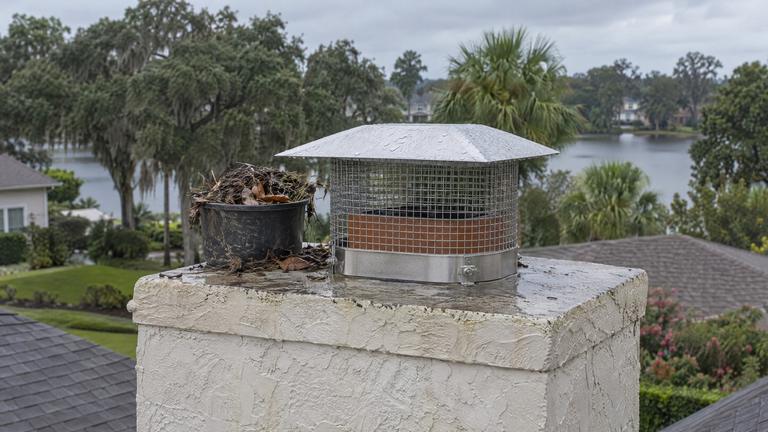
Animals in the chimney? Removal help in Windermere
Chimney animal removal in Windermere done in the right order, from assessment and cleanup to a screened cap, backed by our 100% satisfaction guarantee.
- Licensed & insured
- Locally run
- Family owned and operated
- Same-day service available



Inside the chimney animal plan for Windermere
- Rules that apply to that animal, explained
- Damper and fireplace doors secured
- Specialist coordination where needed
- Cap fitted only after the flue is empty
Chimney animal work in Windermere homes
A blocked flue and carbon monoxide
A flue partly blocked by nest material may not carry combustion gases out of the house the way it should. A working carbon monoxide alarm near sleeping areas is a sensible precaution in any home with a fuel-burning appliance. If a carbon monoxide alarm sounds, get everyone outside and call 911 first. Chimney questions come after everyone is safe. Leave the fireplace unused until the flue has been cleared and checked from top to bottom. Test the alarm with its button after the chimney work, and replace its batteries as its maker directs.
Chimneys that are never used
A fireplace that sits idle for years gives animals a quiet, sheltered space, and without regular use nobody notices the early signs. If you inherited or bought a home with an unused fireplace, have the chimney inspected before anyone lights it. We check for nests, droppings and debris, confirm the flue is clear and fit a screened cap if the top is open. An idle chimney that is capped and clean stays ready for the day someone wants a fire.
Animal noises at a rental property
Tenants often notice chimney noises first. Ask them to keep the fireplace off and the damper closed, and to note when they hear the sounds. We coordinate access with them, report our findings to you and send the estimate for approval. Once the work is done, the written record tells you what was found and what was installed. If the tenant hears sounds again, the record also tells the next visitor what to check first. Letting tenants know the timing rules up front also helps when some of the work has to wait.
Birds perching or nesting on top of a cap
Birds sometimes perch on a cap or build on its hood without entering the flue. That is usually a lesser concern, though nest material on the hood can blow into the screen and clog it. We look at the hood and screen during the inspection. If nest material is restricting the screen, clearing it is part of the cleanup, while the timing rules for protected birds still apply. A cap hood with a nest on top can also trap heat and debris, so we note it even when the flue is clear.
Other work in Windermere
-
-
-


Your Windermere chimney animal questions, answered
Are chimney swifts protected?
Yes. The Migratory Bird Treaty Act protects chimney swifts, and an active nest of theirs cannot be taken out. The chimney is cleaned and capped after the birds have left for the season.
Can I clean up the droppings myself?
It is better to leave them. The CDC notes that histoplasmosis spreads through spores in bird and bat droppings when they are disturbed. We remove and bag droppings with care as part of the cleanup.
Request your free estimate
Share the job details and arrange a free inspection with our local team.
- Free inspection
- No hidden fees
- Family owned and operated
Need an answer now? Call (352) 675-6376
Your request is received
Thank you. We will contact you to discuss the job and confirm an appointment.