
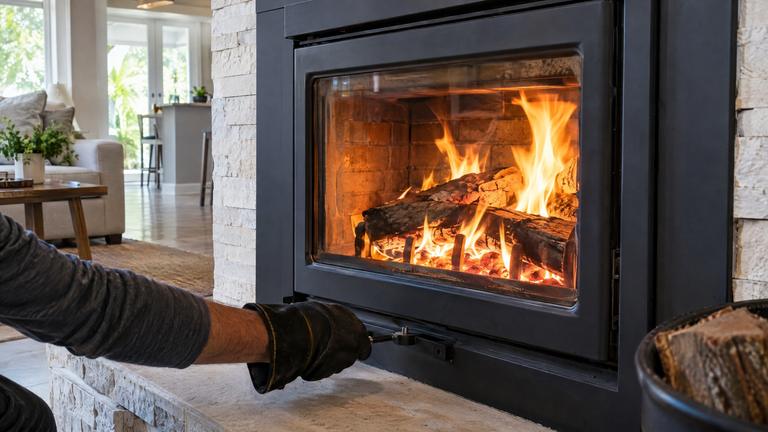
Wood-burning inserts installed by local specialists in Winter Garden
Our Winter Garden insert specialists read your model's manual before anything is measured, ordered or installed.
- Licensed & insured
- Locally run
- Family owned and operated
- Same-day service available



Measured at your Winter Garden fireplace, then written down
None of this comes from a brochure. Our installers confirm it at your fireplace during the free visit.
- Connector to the collar made as the manual shows
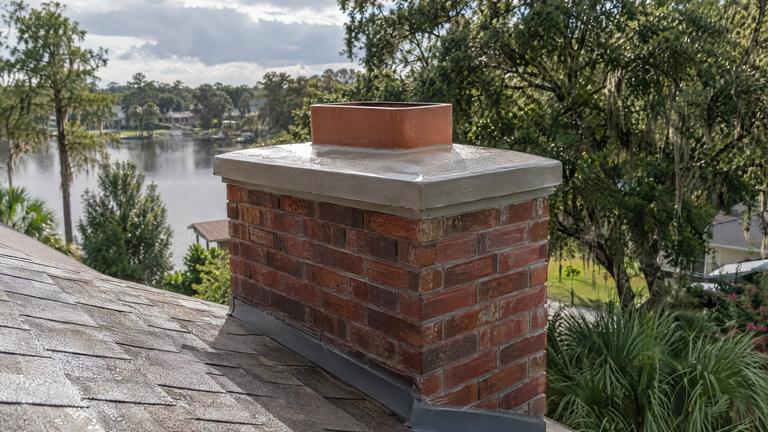
- Top plate sealed on the flue tile with a rain cap
- Blower cord route and outlet, electrician work listed separately
- First fire lit together and controls explained
Before an insert slides into your Winter Garden fireplace
Explained by the crew that lines and fits inserts in Winter Garden.
No chiseling into the fireplace to make a unit fit
Insert manuals warn against removing bricks or mortar from an existing fireplace. The exception in the Pacific guide is narrow: masonry or steel at the smoke shelf and the damper frame may come out to accommodate a liner, provided the structure is not weakened and protection for nearby combustibles is not reduced.
If a model only fits by cutting into the firebox walls, it is the wrong model for that fireplace. Our specialists would rather say so during the visit than weaken the masonry that separates your fire from the framing behind it.
A quick check on whether a split is dry
A simple test from the Pacific guide tells dry wood from wet. Place a piece on a good bed of coals. It is dry if it catches on more than one side within about a minute, damp if it blackens and takes up to three minutes to light, and wet if it sizzles and hisses.
A moisture meter gives a firmer answer, and EPA recommends one. Either way, the point is to find wet wood before it goes in the insert, where it smolders, darkens the glass and wastes heat that should be warming the room.
Water in the firebox before installation
Staining, rust on the old damper or a damp firebox floor are signs that water is entering the flue. An insert placed into a wet fireplace inherits that problem, and its steel body is less forgiving of standing water than brick.
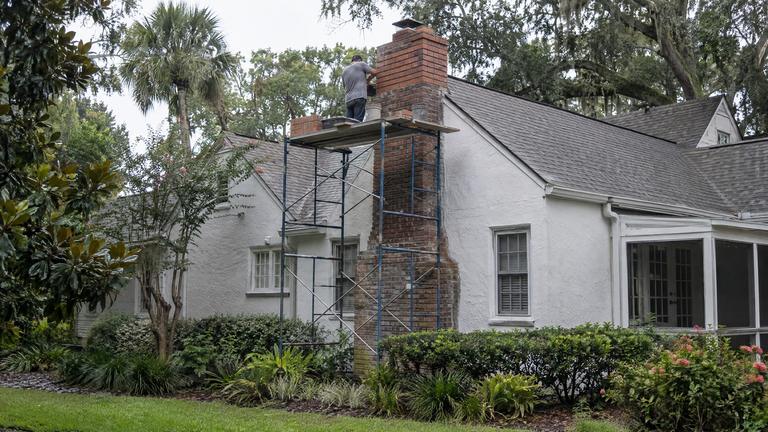
When we see signs of water, we trace the likely source at the top of the chimney and include the fix in the scope. The liner cap then keeps rain out of the insert itself once the work is done.
Reading the air control
Insert air controls are marked for their ranges, with high for starting and fresh loads and lower settings for steady burning. The Pacific guide uses these markings in its operating instructions.
We set the control with you on the first fire and explain the signs of too little air: lazy flames, dark glass and smoke at the chimney top. Those signs are your cue to open it up a little. A few evenings of watching the flame teach more than any chart.
Other work in Winter Garden
-
-
-
-
-


Learn more about wood-burning fireplace insert installationWinter Garden services
Asked by Winter Garden homeowners before an insert goes in
Answered by the family-owned team that fits inserts in Winter Garden.
Do I need a liner for a wood insert?
Most insert makers call for a stainless liner from the insert collar to the top of the chimney, and some also allow a short direct connection into the first flue tile. In a factory-built fireplace, one maker requires the full liner. We follow your model's manual.
Can you remove my old insert?
Yes. We take out the old unit and its surround, disconnect its pipe and any wiring, and haul it away when that is part of the scope. Then we look at the firebox and flue it was covering.
Request your free estimate
Share the job details and arrange a free inspection with our local team.
- Free inspection
- No hidden fees
- Family owned and operated
Need an answer now? Call (352) 675-6376
Your request is received
Thank you. We will contact you to discuss the job and confirm an appointment.