
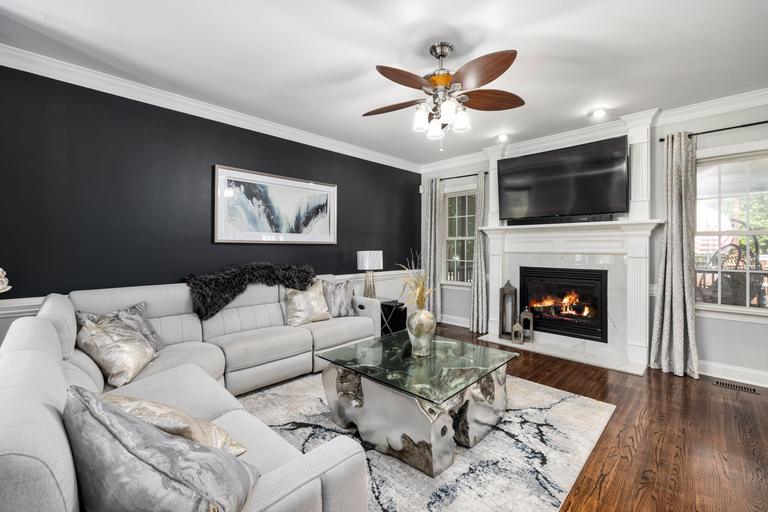
Local gas fireplace repair with a free inspection in Countryside
Clicking, soot or a flame that looks wrong? We trace it to the part and fix what we find.
- Licensed & insured
- Locally run
- Family owned and operated
- Same-day service available



Parts and checks we list for Countryside
- Thermocouple and thermopile readings at the valve
- Gas valve operation and a maker-specified replacement
- Log positions and damage checked against the diagram
- Remote, receiver, wall switch and control wiring
The repair and service behind a reliable fireplace
The pilot assembly and its parts
The pilot is a small burner with several parts built around it. The troubleshooting charts in two manuals we have read call for the whole pilot assembly to be replaced when certain parts fail a test, such as a thermocouple with low output or an electrode that will not spark.
The direct vent parts list from that maker also lists a thermocouple, thermopile and igniter on their own. Which route fits depends on the model and on what the test showed.
Each pilot part is tested on its own first, and the estimate then quotes either the single part or the full assembly, with the reason written beside it. These are the parts in question, depending on the ignition family.
- The pilot hood
- An orifice, or spud, that meters its gas
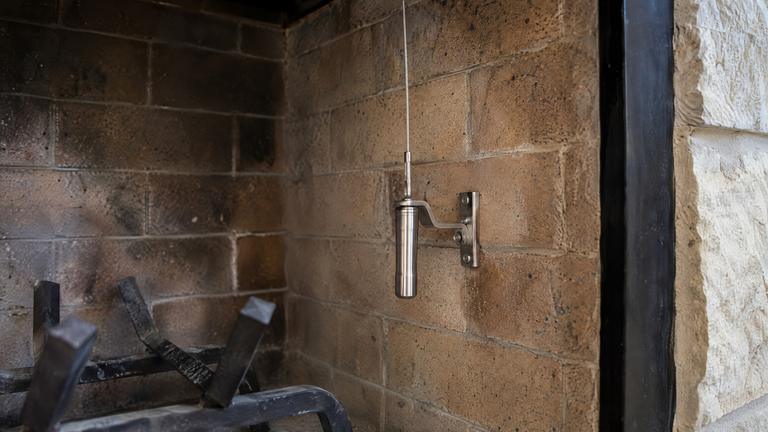
- A thermocouple and thermopile on a millivolt pilot
- A spark electrode and flame sensing rod on an electronic pilot
Fog on the glass when the fireplace starts
Many owners see the glass fog up just after the burner lights and worry that something is leaking. The owner's manuals we have read explain it. Burning gas produces water vapor, and when the inside of the glass is cooler than the dew point, that vapor condenses on it. As the glass warms, the fog disappears.
One of them describes a second case. When air conditioning has cooled the glass, warm outdoor air inside the firebox can condense on it even while the fireplace is off. The manual answers it under the same normal-condensation heading.
Fog that clears on its own is normal operation, so it does not need a repair. It is worth mentioning at a service visit if it comes with something else, such as a flame that looks unusual or glass that sits loose. The glass seating and the burner are then checked together, since those are the parts the manuals connect to how the flame behaves.
What a yearly gas fireplace service covers
Makers recommend annual service by a qualified service technician, and one direct vent manual asks for the burner system to be inspected annually. The work behind that advice is specific. The owner's manual for one insert line lists the technician tasks, and the groups below follow that list.
Each item is compared with the manual for your model rather than a generic checklist. Air shutter settings, ember placement and pilot flame patterns differ from one fireplace to the next.
A yearly service is not a repair visit. If our technician finds a worn part along the way, it is written on the estimate as a separate repair line, and you decide on it before it is replaced. For homes in Countryside, the service itself is priced upfront.
- Gasket, glass assembly and seal plate checked
- Logs placed correctly, embers renewed, burner ports cleared
- Lighting, carryover and pilot flame pattern observed
- Orifice, pressures and accessible gas fittings checked
A fireplace that seems to give less heat
Some heat complaints start with the controls rather than a fault. On one insert, the remote acts as the thermostat, so where it sits matters. The owner's manual says to keep it close to the appliance but not directly in front of it, and out of the path of drafts and vents. In thermostat mode the flame also turns itself down as the room nears the set temperature, which the manual calls normal behavior.
Expectations matter too. That maker lists the fireplace as supplemental room heat or a decorative appliance, not a primary heat source.
When the controls are not the answer, the causes are physical, and our technician checks the ones the manuals point to. Each finding is priced on its own line.
- Burner ports partly plugged
- Inlet or manifold pressure below the rating plate
- A fan that no longer runs
- An air shutter set away from the manual's setting
Other work in Countryside
-
-
-
-
-


Learn more about gas fireplace repair and serviceCountryside services

Your gas fireplace questions, answered
Can one estimate cover both a repair and yearly service?
Yes. The written estimate lists repair findings and the maker's yearly service tasks as separate lines, so you can approve one, the other or both. No work begins without your go-ahead.
Do I pay anything for the gas fireplace inspection?
No. There is no charge for the inspection or the written estimate that follows, and no obligation to book the work. If you do go ahead within 72 hours after the inspection, 10% comes off.
Request your free estimate
Share the job details and arrange a free inspection with our local team.
- Free inspection
- No hidden fees
- Family owned and operated
Need an answer now? Call (352) 675-6376
Your request is received
Thank you. We will contact you to discuss the job and confirm an appointment.