
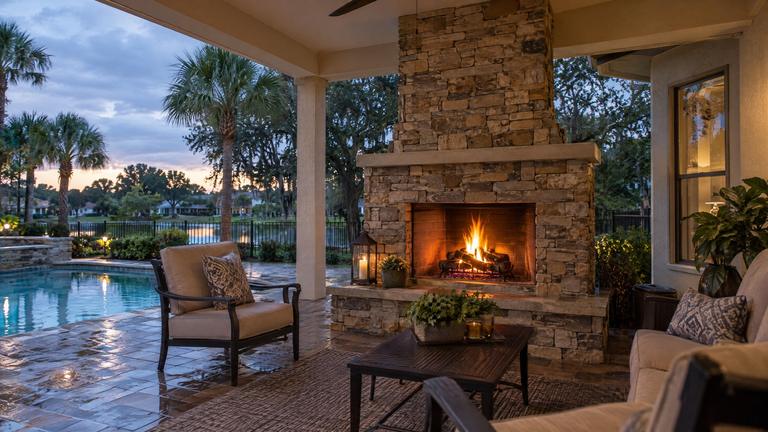
Chimney chase repair with a written estimate in Crescent Park
Protect the chimney inside your chase. Free inspection, upfront pricing and 10% off in Crescent Park when you book within 72 hours after it.
- Licensed & insured
- Locally run
- Family owned and operated
- Same-day service available



Chase repair scope for your Crescent Park home
- Damage boundary marked on each face
- Two-layer barrier behind stucco on wood sheathing
- Wiring or insulation moved out of the clearance
- Roofer coordination at the chase base
Our approach to chase repair in Crescent Park
Stucco that sounds hollow or bulges
Tapping stucco tells a lot. Sound stucco gives a solid, dull knock. Stucco that has let go of its lath or sheathing sounds hollow and may flex under light pressure. Tapping works best in a grid across each face, since hollow areas seldom show to the eye.
Hollow areas and bulges on a chase usually mean water has reached the lath, or the sheathing has swollen and pushed the stucco out. A bulge near the base or just under the top tends to line up with soft wood behind it. Left in place, a loose section can keep growing.
During the inspection on your Crescent Park home, our technicians tap each face of a stucco chase and mark the hollow areas. Those areas are opened first, since they show how far the damage goes. Each hollow area is marked on the written estimate, and what turns up behind it is shown to you before the work goes further.
Swollen or crumbling sheathing behind the siding
Sheathing is the layer of plywood or strand board nailed to the chase studs. It closes the box and gives the siding something to hold. Wetting that happens again and again can leave it swollen, soft or coming apart in layers.
Swollen sheathing can push the siding out, which is why bulges and wavy siding lines tend to show up first. Nails can lose their grip in soft sheathing, and the siding then starts to rattle or pull loose in wind.
We cut sheathing out back to firm wood at the stud lines and replace it with new panels, fastened as the panel maker directs. The estimate lists sheathing by face of the chase, so you can see how much of the box needed new panels. New sheathing is kept dry until the barrier covers it, and every new panel edge lands on framing.
Chases on tile roofs
Tile roofs change how a chase base is flashed and repaired. Tiles sit above an underlayment, and water that gets under the tile runs on that underlayment toward the eave. The flashing at the chase base has to work with that whole system, not only with the tile surface. Its job is to carry water from the chase wall onto the underlayment and out over the tile below.
Tiles can also crack underfoot, so reaching a chase on a tile roof takes planning and sometimes a few spare tiles. Broken tiles are listed on the estimate so nobody is surprised by them.
For a chase base on a tile roof, we work with a roofer who handles tile, or we plan the tile removal and reset with you in advance. Who lifts and resets tile, and who flashes the chase, is settled in writing before anyone steps on the roof of your Crescent Park home.
Selling or renting a home with a framed chase
A chase in poor shape can hold up a sale or cause trouble with a tenant. Visible rot, stained ceilings and a fireplace that cannot be used all come up during showings and walk-throughs. A buyer's inspector is likely to probe the same soft spots we do, and a vague note in a report can stall a deal. Sellers and landlords usually want a clear answer and a fixed scope, done on a schedule that works around move-outs, listing dates or tenants.
Our crew works with owners, agents and property managers to set access times and keep the work inside the agreed scope. You get a written estimate up front that you can hand to a buyer or keep in the rental file. For a rental, we can coordinate entry with the tenant, keep the fireplace out of use during the work and keep the owner updated as each stage is done.
Other work in Crescent Park
-
-
-
-
-


Your chase repair questions, answered
How do you price damage you cannot see yet?
The estimate prices what the inspection can confirm and explains how hidden damage is handled. If opening the chase shows more rot, we stop, show you and write up the added work with its price. Nothing extra is done until you approve it.
Do you charge to look at my chase?
No. The inspection and the written estimate are free, with no obligation to book the repair. If the chase only needs small fixes, we tell you that too.
Request your free estimate
Share the job details and arrange a free inspection with our local team.
- Free inspection
- No hidden fees
- Family owned and operated
Need an answer now? Call (352) 675-6376
Your request is received
Thank you. We will contact you to discuss the job and confirm an appointment.