
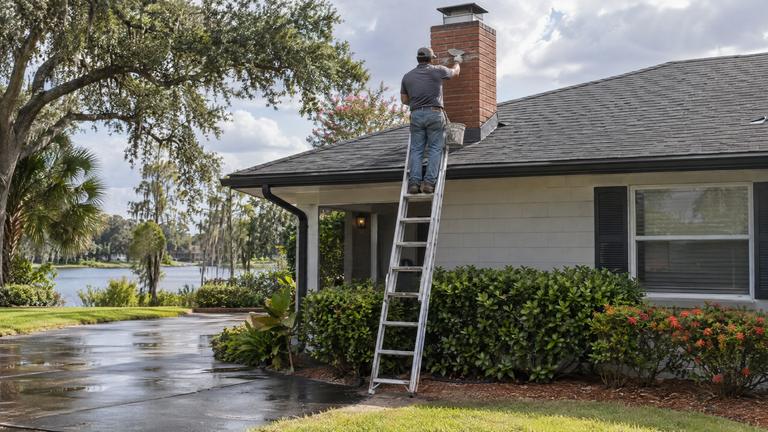
Chimney repair and diagnosis in Delaney Park
Locally owned chimney repair for Delaney Park homes, with a 24/7 emergency line for damage that cannot wait.
- Licensed & insured
- Locally run
- Family owned and operated
- Same-day service available



What the free chimney inspection looks at
- Chimney construction confirmed, masonry or factory-built
- Air space and fireblocking at attic and floors
- Chimney height against the code's termination rule
- Stains and white deposits, cleaned after the water fix
Our approach to chimney repair in Delaney Park
Sealant at the top is a detail, not a cure
Sealant has a proper place on a chimney top, chiefly the joint where the cap meets the flue liner. BIA guidance treats it as part of the construction, to be detailed and installed with the same care as everything else, with proper priming and backing rope behind the bead. It also says oil-based sealants should not be used.
The same guidance warns that caulking is often treated as a way to correct or hide poor workmanship. A thick bead smeared over a cracked crown or a loose top course may look like a repair from the ground. It covers the defect rather than fixing what caused it, and it hides the damage from the next person who looks.
Sealant goes only where it belongs, and old caulk covering a defect comes off so the defect can be judged. The estimate says where sealant is used and what it is sealing.
Tile, metal and shingle roofs need different flashing details
Flashing has the same job on every roof. The Florida Building Code says flashing seals the roofing where it is interrupted and keeps moisture from entering the wall and roof at penetrations such as a chimney. How that job is done depends on what the roof is covered with.
The code has separate sections for asphalt shingles, clay and concrete tile and metal roofing, and each points to its own installation rules and manufacturer's instructions. A shingle roof takes step or L flashing worked into the courses. Tile and metal have profiles of their own, and a detail borrowed from a shingle job may not seal them.
Because the flashing ties into the roofing, some jobs need the roofer who installed or looks after that roof. The roof covering is identified before any flashing is priced, and the estimate spells out which work is ours and where a roofer has to be involved.
The metal top of a framed chase
The top of a chase is sheet metal, and on a factory-built chimney it is part of the system. One maker's instructions, DuraVent's for its DuraChimney II chimney, set the chase top flashing on spacers above the framing, leave a ventilation opening around the pipe, seal a collar to the pipe just above the flashing and place the chimney cap above that.
A flat or sagging top holds water, and rust starts where water sits, then runs down the siding as streaks. A top sealed tight to the pipe or pushed down onto the framing can also close off the ventilation space those instructions call for.
Replacing it means matching the chimney system underneath, not only the size of the box. Our chase cover replacement service checks the points below before a new top is specified, and the estimate lists the top, the collar and any framing repair as separate items.
- The chase size and the pipe diameter
- The collar and its seal to the pipe
- Rot or rust in the framing under the old top
- Clear ventilation space around the pipe
Cracked clay tile flue liners
Clay tile is the traditional masonry flue liner, set in stacked sections that run up inside the chimney from the smoke chamber's top to a point above the chimney walls. The Florida Building Code has the lining carried up close to vertical and supported on all sides. A cracked tile breaks what should be one continuous passage for smoke.
Brick Industry Association guidance calls for checking liners before they go in for cracks that could let smoke and flue gas leak. Once a liner is in service, a crack can do exactly that. Smoke and heat can then reach the masonry around the flue, which the liner is there to protect.
Whatever caused the crack, one cracked section high in the flue and a run of broken tiles call for different fixes. Our chimney flue repair service decides between replacing sections and relining the whole flue, and the fireplace stays unused until that repair is done. The decision is written down with the reason behind it.
Other work in Delaney Park
-
-
-
-
-


Quick answers on chimney repair
Do I need to go up on the roof to show you the problem?
No, please stay off the roof. Tell us what you noticed from inside and from the ground, such as a stain, fallen debris or a leaning cap. Our crew handles the access and the close look during the free inspection.
Can you turn a home inspector's notes into a repair plan?
Yes. We check each chimney item the report mentions, name the component and write the repair on the estimate with its price. The estimate is ready to share with the other side of a sale.
Request your free estimate
Share the job details and arrange a free inspection with our local team.
- Free inspection
- No hidden fees
- Family owned and operated
Need an answer now? Call (352) 675-6376
Your request is received
Thank you. We will contact you to discuss the job and confirm an appointment.